Summary
Cholecystectomy refers to the surgical removal of the gallbladder. It is most often performed for symptomatic or high-risk cholelithiasis and acute cholecystitis. It can also be a component of a more extensive surgical resection (e.g., Whipple procedure). Laparoscopic cholecystectomy is most commonly performed, while open cholecystectomy is typically reserved for select cases. The decision to proceed with surgery and its timing largely depends on patient and disease characteristics. Early complications of the procedure include infection, bleeding, bowel injury, and postcholecystectomy bile leak. Late complications include hernias, strictures, fistulas, diarrhea, and postcholecystectomy syndrome.
See also “Cholelithiasis,” “Cholecystitis,” “Choledocholithiasis,” “Cholangitis,” “Biliary cancer,” and “Pancreatic and hepatic surgery.”
Definitions
Surgical removal of the gallbladder
Indications
- Symptomatic cholelithiasis
-
Asymptomatic cholelithiasis with an increased risk of:
- Gallbladder cancer [1][3][4]
- Developing complications [4][5]
- Becoming symptomatic [4][6][7]
- Acute calculous cholecystitis
- Acalculous cholecystitis
- Resectable pancreatic and/or hepatobiliary neoplasms (often combined with a more extensive resection) (see also “Pancreatic and hepatic surgery”)
Contraindications
- Absolute: none; risks are primarily related to anesthesia
-
Relative
- Hemodynamic or respiratory instability
- Uncorrected coagulopathy or bleeding diathesis
- History of extensive abdominal surgery
- Cirrhosis
- Portal hypertension
- Morbid obesity
- Acute phase of cholangitis
We list the most important contraindications. The selection is not exhaustive.
Technique/steps
Timing
Timing of cholecystectomy depends on the indication and individual surgical risks (See “Surgical procedural risk assessment” and “Preoperative risk stratification tools” for details).
- Symptomatic uncomplicated cholelithiasis: electively, but as early as possible [1][8][9]
- Uncomplicated choledocholithiasis: within 72 hours of ERCP-guided stone clearance [1][10]
- Complicated cholelithiasis or choledocholithiasis: depends on the severity of complication and the patient's anesthesia risks
- Mild biliary pancreatitis: during the same hospital admission [11][12][13]
-
Acute cholecystitis (see ''Treatment'' in “Acute cholecystitis” for details) [14][15]
- Low-risk mild acute cholecystitis: early laparoscopic cholecystectomy
- High-risk or severe acute cholecystitis: interval laparoscopic cholecystectomy
- Acute cholangitis: ∼ 6 weeks after successful ERCP-guided stone clearance [16]
Approach [2]
-
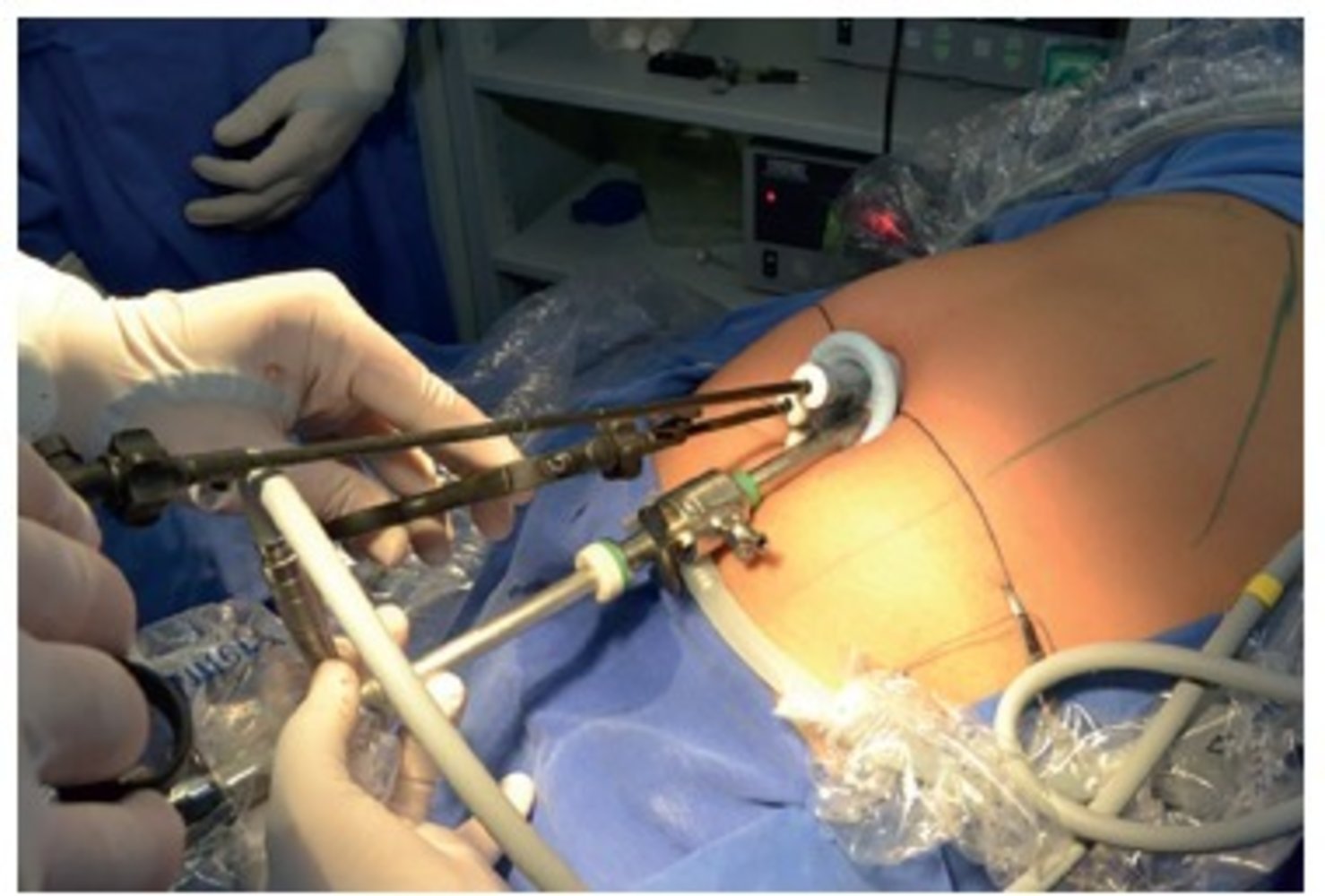
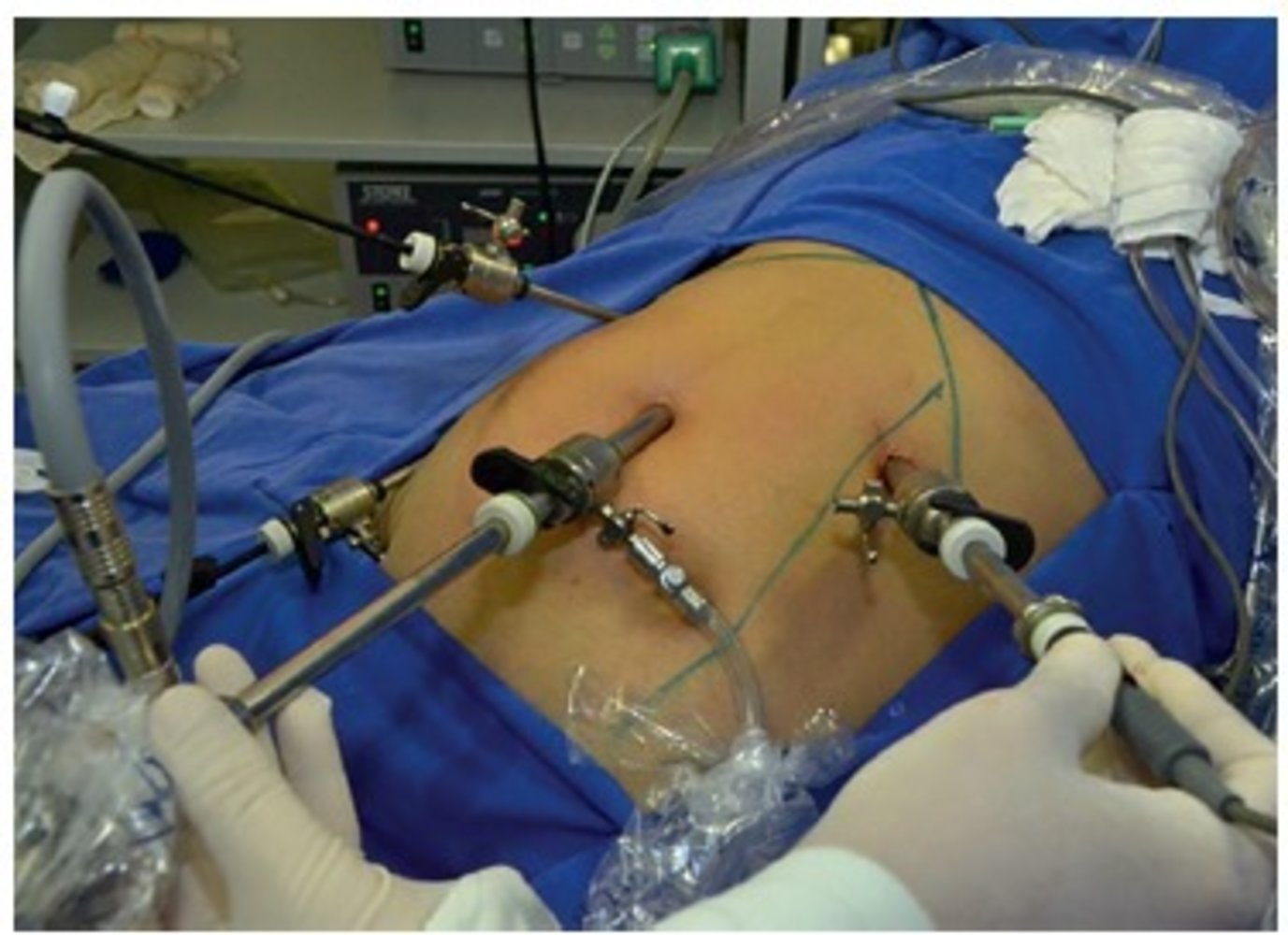
Laparoscopic cholecystectomy
- Removal of the gallbladder via a laparoscopic approach
- Current standard of care for most indications of cholecystectomy [17]
-
Open cholecystectomy
- Removal of the gallbladder via an abdominal incision (typically right subcostal)
- Not routinely performed
- Indications include:
- Unsuccessful laparoscopic cholecystectomy
- Gallbladder cancer
- As part of a bigger operative procedure that requires an open surgery


Complications
Intraoperative and early postoperative complications [1][2][18]
- Hemorrhage
- Transmural bowel injury
- Surgical site infection
-
Postcholecystectomy bile leak [19][20][21]
- Etiology
- Inadequately ligated cystic duct (most common)
- Leak from small biliary ductules from the dissected gallbladder bed
- Injury to bile duct
- Clinical features
- Intraoperatively: golden yellow bile in the operative field
- Postoperatively
- Fever, abdominal pain, persistent paralytic ileus
- Biliary peritonitis
- Subhepatic collection → biloma or abscess
- Treatment
- Intraoperative diagnosis: repair of injured bile duct and/or placement of drain in the gallbladder fossa
- Postoperative diagnosis: ERCP and stenting or surgical repair, depending on the severity
- Etiology
Delayed complications [1][2][18]
- Incisional hernia (at trocar site)
- Biliary stricture
- Biliary-enteric fistula
-
Postcholecystectomy diarrhea
- Definition: chronic diarrhea after removal of the gallbladder [2][22]
-
Pathophysiology: Removal of the gallbladder → no reservoir of bile → entry of excess bile acids into the colon → secretory diarrhea [23][24]
- May also be functional or due to other undiagnosed causes of diarrhea
- Diagnostics: SeHCAT test [2]
- Treatment: Preferred first-line agent is cholestyramine. [22]
-
Postcholecystectomy syndrome: persistent RUQ pain or new symptoms following gallbladder removal [2][25]
- Incidence: 10–15% of patients [2]
- Etiology
- Biliary (e.g., choledocholithiasis, biliary stricture, sphincter of Oddi dysfunction)
- Pancreatic (e.g., pancreatitis, pancreatic pseudocyst, pancreatic malignancy)
- Other gastrointestinal causes (e.g., GERD, IBS, PUD)
- Extraintestinal causes (e.g., coronary heart disease, pain syndromes, wound neuroma)
- Clinical features: Commonly RUQ abdominal pain associated with GI symptoms (e.g., nausea, vomiting, diarrhea), but often variable and often nonspecific
- Diagnostics
- Initial tests: LFTs, transabdominal ultrasound
- Additional tests to rule out bile duct stones: endoscopic ultrasound or MRCP [1]
- Treatment: management of the underlying cause, e.g., ERCP-guided stone extraction for cholelithiasis [1]
We list the most important complications. The selection is not exhaustive.
References
- European Association for the Study of the Liver (EASL). "EASL Clinical Practice Guidelines on the prevention, diagnosis and treatment of gallstones.". J Hepatol. 65(1). :146-181. (2016)
- Jarnagin WR. "Blumgart's Surgery of the Liver, Biliary Tract, and Pancreas". Elsevier. (2016). ISBN: 9780323340625
- Shaffer EA. "Gallbladder cancer: the basics.". Gastroenterology & hepatology. 4(10). :737-41. (2008)
- Shirley A, Rivero H, et al. "Surgical and Nonsurgical Management of Gallstones". Am Fam Physician. (2014)
- Tazuma S, Unno M, Igarashi Y, et al. "Evidence-based clinical practice guidelines for cholelithiasis 2016". J Gastroenterol. 52(3). :276-300. (2016)
- Swartz DE, Felix EL. "Elective cholecystectomy after Roux-en-Y gastric bypass: why should asymptomatic gallstones be treated differently in morbidly obese patients?". Surg Obes Relat Dis. 1(6). :555-60. (2005)
- Baron TH, Garg SK. "Routine cholecystectomy during Roux-en-Y gastric bypass with or without choledocholithiasis". Cochrane Database of Systematic Reviews. (2013)
- Gurusamy K, Samraj K, Davidson B. "Early versus delayed laparoscopic cholecystectomy for biliary colic". Cochrane Database of Systematic Reviews. (2008)
- Duncan CB, Riall TS. "Evidence-based current surgical practice: calculous gallbladder disease.". J Gastrointest Surg. 16(11). :2011-25. (2012)
- Huang RJ, Barakat MT, Girotra M, Banerjee S. "Practice Patterns for Cholecystectomy After Endoscopic Retrograde Cholangiopancreatography for Patients With Choledocholithiasis". Gastroenterology. 153(3). :762-771.e2. (2017)
- Buxbaum JL, Abbas Fehmi SM, Sultan S, et al. "ASGE guideline on the role of endoscopy in the evaluation and management of choledocholithiasis". Gastrointest Endosc. 89(6). :1075-1105.e15. (2019)
- Tenner S, Baillie J, Dewitt J, Vege SS. "American College of Gastroenterology guideline: management of acute pancreatitis". Am J Gastroenterol. 108(9). :1400-1415. (2013)
- Crockett et al. "American Gastroenterological Association Institute Guideline on Initial Management of Acute Pancreatitis". Gastroenterology. 154(4). :1096-1101. (2018)
- Schuster KM, Holena DN, Salim A, Savage S, Crandall M. "American Association for the Surgery of Trauma emergency general surgery guideline summaries 2018: acute appendicitis, acute cholecystitis, acute diverticulitis, acute pancreatitis, and small bowel obstruction.". Trauma surgery & acute care open. 4(1). :e000281. (2019)
- Gutt CN, Encke J, Köninger J, et al. "Acute Cholecystitis". Ann Surg. 258(3). :385-393. (2013)
- Li VK, Yum JL, Yeung YP. "Optimal timing of elective laparoscopic cholecystectomy after acute cholangitis and subsequent clearance of choledocholithiasis". Am J Surg. 200(4). :483-488. (2010)
- Haribhakti SP, Mistry JH. "Techniques of laparoscopic cholecystectomy: Nomenclature and selection.". Journal of minimal access surgery. 11(2). :113-8. (2015)
- Keus F, Broeders IAMJ, van Laarhoven CJHM. "Surgical aspects of symptomatic cholecystolithiasis and acute cholecystitis". Best Practice & Research Clinical Gastroenterology. 20(6). :1031-1051. (2006)
- Ahmad F, Saunders RN, Lloyd GM, Lloyd DM, Robertson GS. "An algorithm for the management of bile leak following laparoscopic cholecystectomy.". Ann R Coll Surg Engl. 89(1). :51-6. (2007)
- Tzovaras G, Peyser P, Kow L, et al. "Minimally invasive management of bile leak after laparoscopic cholecystectomy.". HPB : the official journal of the International Hepato Pancreato Biliary Association. 3(2). :165-8. (2001)
- Omar M, Redwaan A. "Management of postoperative bile leak: Tertiary centers experience". Clinics in Surgery. (2017)
- Lee KJ. "Pharmacologic Agents for Chronic Diarrhea.". Intestinal research. 13(4). :306-12. (2015)
- McNally MA, Locke GR, Zinsmeister AR, et al. "Biliary events and an increased risk of new onset irritable bowel syndrome: a population-based cohort study.". Aliment Pharmacol Ther. 28(3). :334-43. (2008)
- Yueh T-P, Chen F-Y, Lin T-E, Chuang M-T. "Diarrhea after laparoscopic cholecystectomy: Associated factors and predictors". Asian Journal of Surgery. 37(4). :171-177. (2014)
- Schofer JM. "Biliary Causes of Postcholecystectomy Syndrome". J Emerg Med. 39(4). :406-410. (2010)