Summary
Infection with the human immunodeficiency virus (HIV) leads to a complex disease pattern that ultimately results in chronic immunodeficiency. HIV can be transmitted sexually, parenterally, or vertically (e.g., peripartum from mother to child). Infection is most common in the young adult population between 20 and 30 years of age. The virus infects macrophages and other CD4+ cells, leading to the destruction of CD4 T cells, which are one of the key mechanisms of cellular immune defense. The three major stages of HIV infection are acute infection, clinical latency, and acquired immunodeficiency syndrome (AIDS). Detailed classifications of clinical staging have been established by the Centers for Disease Control and Prevention (CDC) and the World Health Organization (WHO). During the acute infection stage, the virus reproduces rapidly in the body, which can lead to the onset of acute, nonspecific (e.g., flu-like) symptoms, also known as acute retroviral syndrome (ARS), within 2–4 weeks. However, approximately half of all infected individuals remain asymptomatic. Once the acute infection stage subsides, the clinical latency stage begins. As with the acute infection stage, many individuals remain asymptomatic during this period while others develop non-AIDS-defining conditions (e.g., oral hairy leukoplakia). The last stage, AIDS, is characterized by AIDS-defining conditions, such as Kaposi sarcoma, and/or a CD4 count < 200 cells/mm3.
HIV infection can be reliably detected using antigen/antibody-based tests. In patients with confirmed infection, treatment with a combination of antiretroviral medications (ART) is started as soon as possible. The effectiveness of the treatment is monitored via regular checks of CD4 count and viral load. Patients in the advanced stages of HIV infection may additionally require treatment of HIV-associated conditions and prophylaxis for opportunistic infections. Significant advances in treatment mean that the average life expectancy of HIV patients receiving ART is approaching that of the general population. Partners of HIV-positive people and individuals at high risk of HIV infection can reduce the risk of contracting the infection by taking ART prior to exposure (preexposure prophylaxis) or following exposure (postexposure prophylaxis) to the virus.

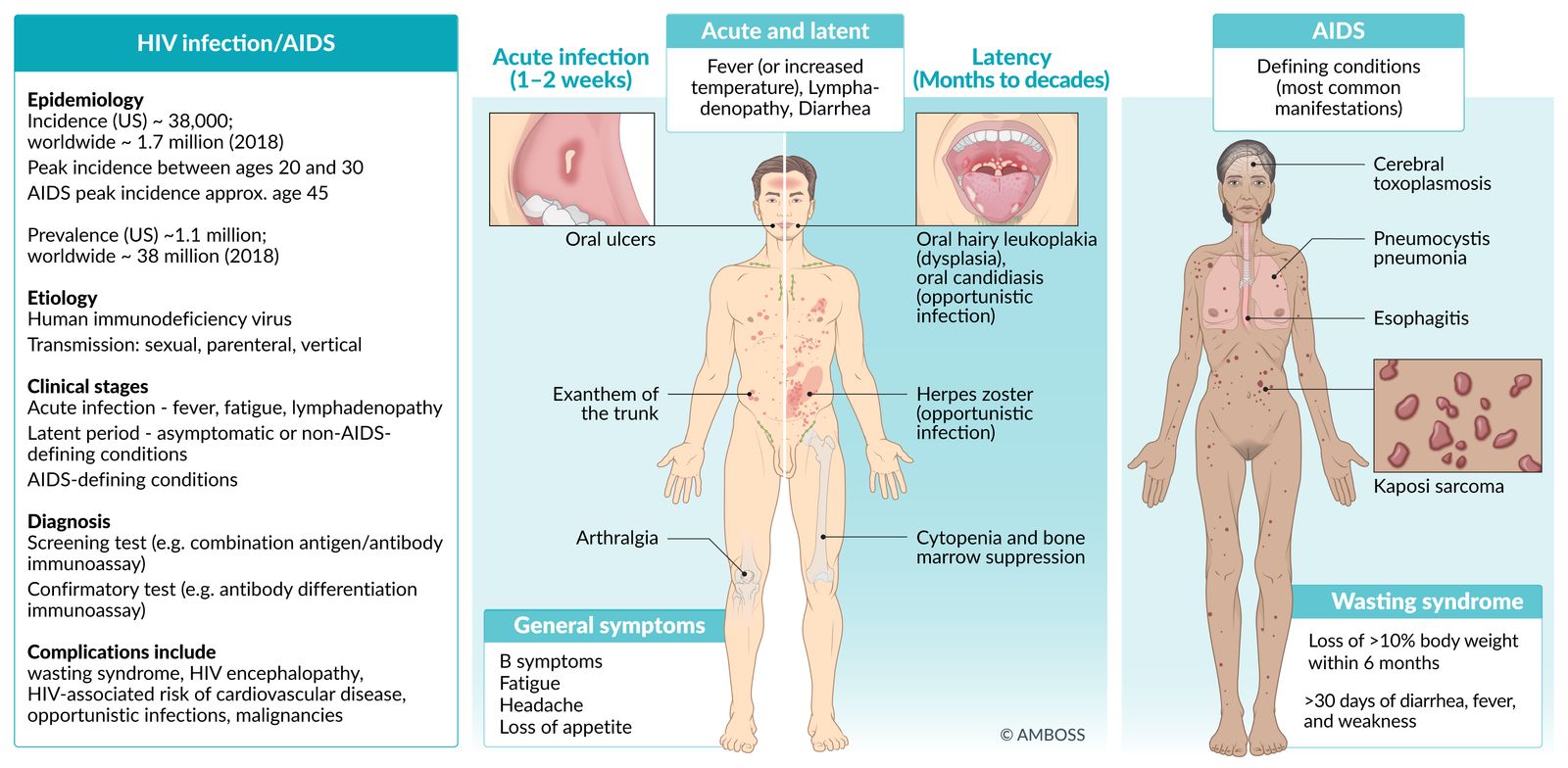
© AMBOSS
Epidemiology
-
Incidence (in the US)
- HIV infection: peak incidence between ages 20 and 30 (∼ 35/100,000)
- AIDS: peak incidence approx. age 45 (∼ 14/100,000)
- Ethnicity: Incidence is significantly higher in the Black population than in other population groups.
-
Prevalence
- US: ∼ 1.2 million
- Global: ∼ 37 million


References:[1][2][3]
Epidemiological data refers to the US, unless otherwise specified.
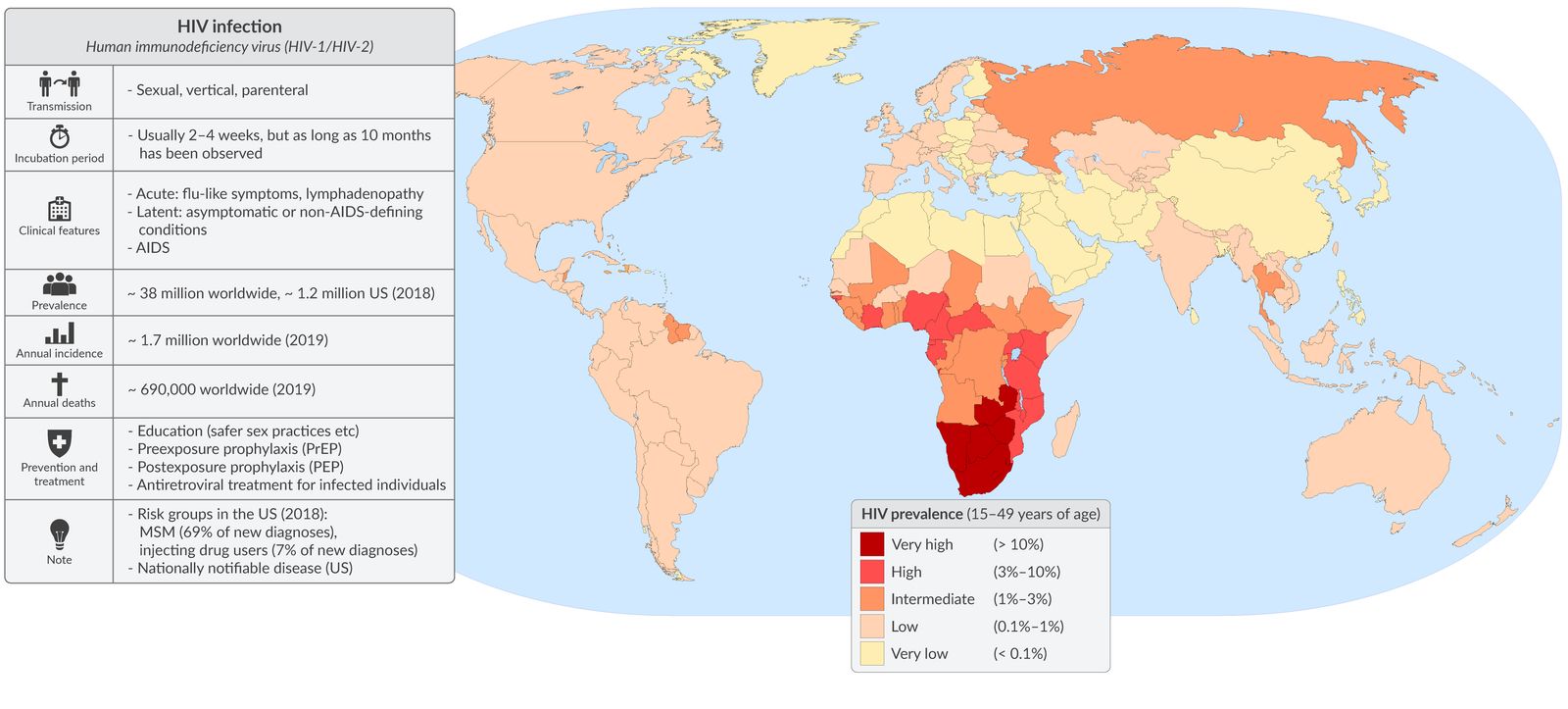
© AMBOSS. Map is based on data from the Joint United Nations Programme on HIV/AIDS (UNAIDS), 2010–2015
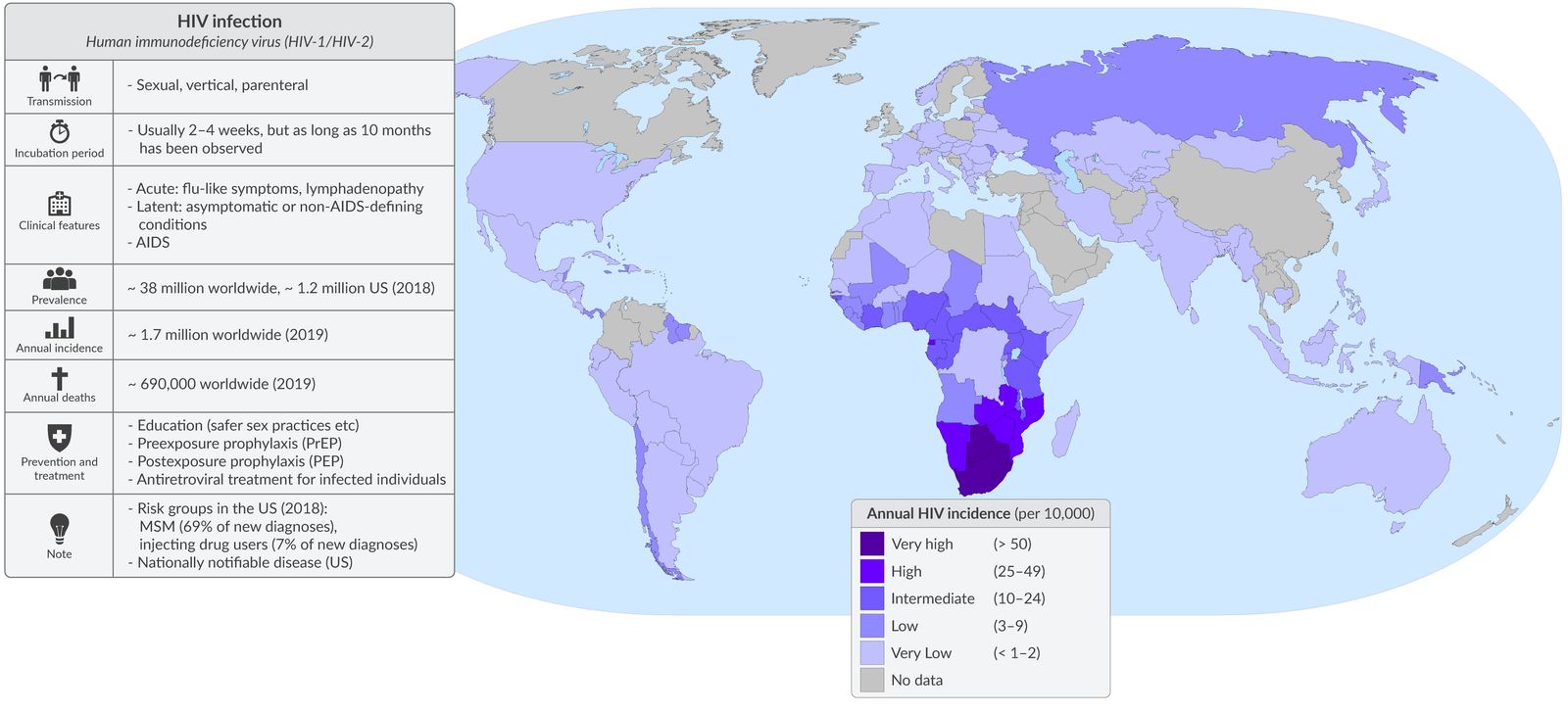
© AMBOSS. US epidemiological figures based on data from the CDC: https://www.cdc.gov/hiv/statistics/overview/index.html. All other epidemiological figures based on data from the WHO: https://www.who.int/data
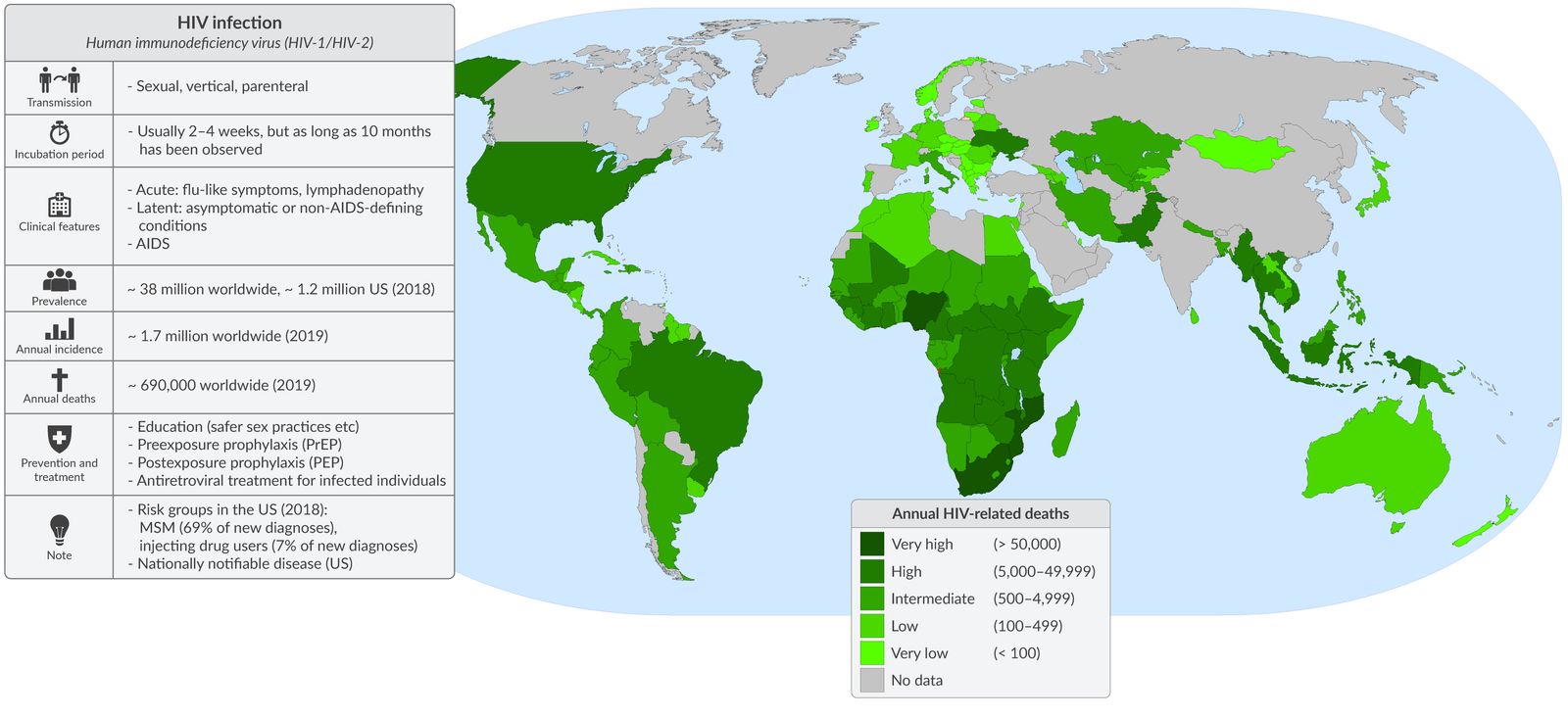
© AMBOSS. US epidemiological figures based on data from the CDC: https://www.cdc.gov/hiv/statistics/overview/index.html. All other epidemiological figures based on data from the WHO: https://www.who.int/data
Etiology
Pathogen (human immunodeficiency virus)
- Family: Retroviridae
- Genus: Lentivirus
-
Species
- HIV-1: most common species worldwide
- HIV-2: restricted almost completely to West Africa
- Structure: icosahedral with a conical capsid and a spiked envelope
-
Genome
- Pseudodiploid (2 RNA molecules yielding 1 DNA molecule)
- 9 genes encoding a total of 15 proteins
-
Function of structural proteins
-
pol gene codes for a polyprotein which consists of
- Protease; : cleavage of gag and gag-pol proteins during maturation of the virion [4]
- Reverse transcriptase: converts viral RNA to dsDNA
- Integrase: helps insert the viral genes into the host genome
-
gag gene codes for gag protein, which consists of
- Matrix protein (p17 protein)
- Nucleocapsids
- Capsid proteins (p24 capsid protein)
-
env gene codes for gp160 which gets cleaved into envelope glycoproteins
- gp120: attaches to host CD4+ T-cells
- gp41: assists in fusion and entry of the virus into the host cell
- tat gene (trans-activator of transcription) codes for tat protein which promotes viral transcription
- rev gene: codes for the rev protein, which regulates translocation of unspliced and incompletely spliced mRNAs
-
pol gene codes for a polyprotein which consists of
“Polly is a Really Important Person.”: the proteins coded by the pol gene are Reverse transcriptase, Integrase, and Protease.
Routes of transmission [5]
-
Sexual: : accounts for ∼ 80% of infections worldwide
- Risk per 10,000 exposures [5]
- Receptive anal intercourse: 138
- Insertive anal intercourse: 11
- Receptive vaginal intercourse: 8
- Insertive vaginal intercourse: 4
- Receptive or insertive oral intercourse: low risk
- Modifying factors
- Viral load: Transmission is unlikely if the viral load is < 200 copies/mL. [6]
- Reduced risk of infection for circumcised male individuals [7]
- Genital mucosal damage increases the risk of transmission (e.g., from coinfection with HPV or HSV).
- Risk per 10,000 exposures [5]
-
Parenteral transmission
- Risk per 10,000 exposures [5]
- Blood transfusion: 9,250
- Needle sharing: 63
- Needlestick injuries: 23
- Risk per 10,000 exposures [5]
-
Vertical transmission
- During childbirth (∼ 5–15%)
- Breastfeeding (∼ 5–20%) [8]
Sexual transmission of HIV is preventable if a viral load of < 200 copies/mL is maintained (i.e., undetectable HIV is untransmittable). [6]
Pathophysiology
Natural history of HIV infection
-
Initial infection and HIV replication cycle
-
HIV enters the body (e.g., via mucosal lesions or via infection of mucosal/cutaneous immune cells.), then attaches to the CD4 receptor on host cells with its gp120 glycoprotein (binding)
- Cells that have CD4 receptors: T lymphocytes (e.g., T helper cells), macrophages, monocytes, dendritic cells.
-
Viral envelope fuses with host cell, capsid enters the cell.
- For fusion, CD4 receptor and a coreceptor (CCR5 in macrophages, and CCR5 or CXCR4 in T-cells) must be present.
- Viral entry into macrophages via CCR5 mainly occurs during the early stages of infection, while entry via CXCR4 occurs in later stages.
- Individuals without CCR5 receptors appear to be resistant to HIV, those patients either have a homozygous CCR5 mutation (substantial resistance) or a heterozygous CCR5 mutation (slower course).
- A virion's RNA is transcribed into dsDNA by viral reverse transcriptase and then integrated into the host's DNA by viral integrase.
- Viral DNA is replicated and virions are assembled
- Virion repurposes a portion of the cell's membrane as an envelope and leaves the cell (budding) → cell death [9]
-
HIV enters the body (e.g., via mucosal lesions or via infection of mucosal/cutaneous immune cells.), then attaches to the CD4 receptor on host cells with its gp120 glycoprotein (binding)
-
Progression to chronic immunodeficiency
-
HIV infects CD4+ lymphocytes, then reproduces and spreads to other CD4+ lymphocytes near the original site of infection → infection of CD4+ lymphocytes concentrated in specialized lymphoid tissue (e.g., lymph nodes or gut-associated lymphatic tissue (GALT) ) → explosive growth and dissemination → acute HIV syndrome with high viral load
- Window period: The time between infection and detectability of HIV antibodies.
- After the acute stage, viral load decreases and remains at roughly that level for approximately 8–10 years (clinical latency stage ).
- During the clinical latency phase, the virus mainly replicates inside the lymph nodes.
- Increasing loss of CD4+ lymphocytes impairs immune function and, thereby, facilitates opportunistic infections and development of malignancies (AIDS). These secondary diseases are usually the cause of death in individuals with HIV.
- Increased viral load generally leads to a decreased number of CD4+ lymphocytes and vice versa, but the relation is not linear.
-
HIV infects CD4+ lymphocytes, then reproduces and spreads to other CD4+ lymphocytes near the original site of infection → infection of CD4+ lymphocytes concentrated in specialized lymphoid tissue (e.g., lymph nodes or gut-associated lymphatic tissue (GALT) ) → explosive growth and dissemination → acute HIV syndrome with high viral load
Viral load predicts the rate of disease progression and CD4 count correlates with immune function.
Acute HIV syndrome does not develop in all patients. Absence of symptoms may delay diagnosis.
The role of immune response
- Because HIV infects cells of the immune system itself, activation of cellular immunity is a factor that paradoxically helps the virus spread and ensures chronic persistence of the infection.
-
HIV evades immune control via:
- Genetic mutation and recombination
- Downregulation of MHC class I surface molecules in infected cells


References:[2][10][11]
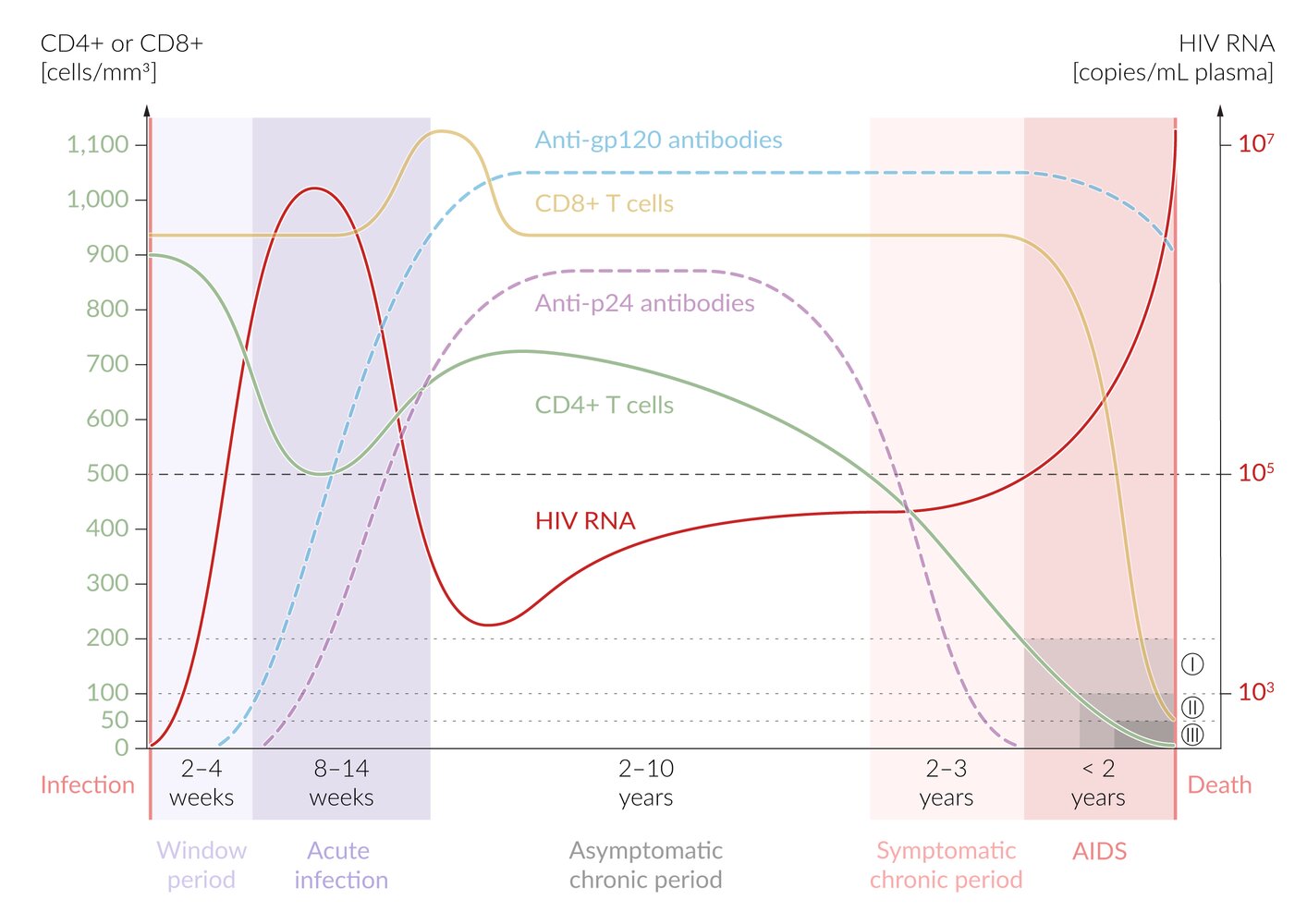
Graph showing typical cell counts, antibody levels, and viral loads during different stages of untreated HIV infection/AIDS
The dashed line at the level of 500 cells/mm3 represents a state of moderate immunocompromise.
CD4+ or CD8+ thresholds at which select common opportunistic infections most frequently occur:
I (< 200 cells/mm3): pneumocystis pneumonia, histoplasma capsulatum
II (< 100 cells/mm3): cryptococcal meningitis, candida esophagitis, cerebral toxoplasmosis
III (< 50 cells/mm3): CMV infection, atypical mycobacterial infections
© AMBOSS
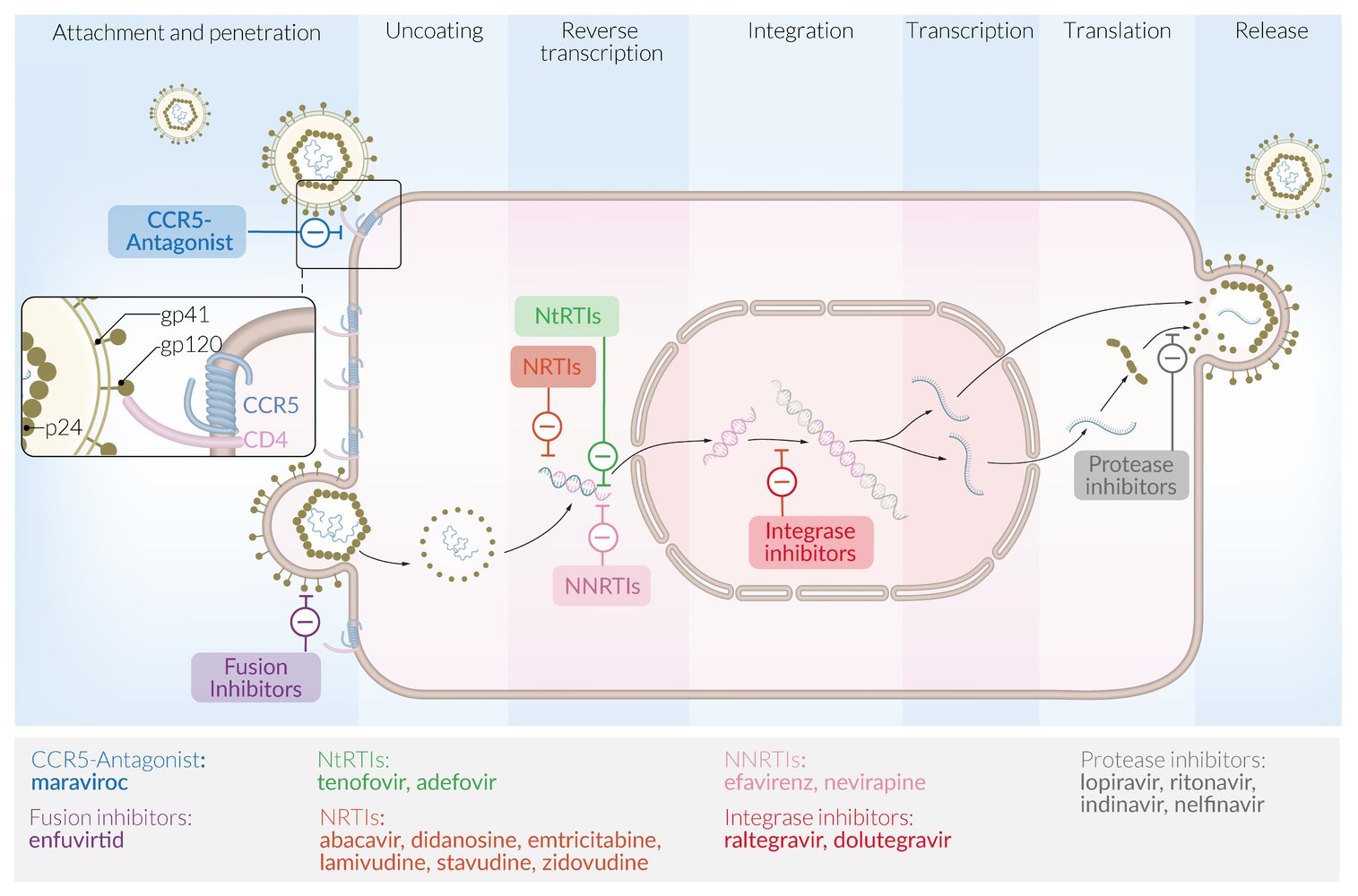
1. Attachment: The viral envelope glycoprotein gp120 (cap) binds to CD4 receptors, which are present on certain cells. The gp120-CD4 complex then binds to the host chemokine receptor 5 (CCR5).
– CCR5 antagonists prevent viral attachment to the host cell.
2. Penetration: Viral binding to CCR5 causes a conformational change in the envelope gp41 (stalk), which enables HIV to fuse with and release its capsid into the host cell.
- Fusion inhibitors competitively bind to gp41 and prevent viral fusion with the host cell.
3. Uncoating of the viral capsid to release viral RNA
4. Reverse transcription: Viral RNA is transcribed into viral DNA by viral reverse transcriptase enzymes.
– Nucleoside reverse transcriptase inhibitors (NRTI), nucleotide reverse transcriptase inhibitors (NtRTI), and non-nucleoside reverse transcriptase inhibitors (NNRTI) inhibit the viral reverse transcriptase enzyme.
5. Integration: Newly transcribed viral DNA is integrated into host DNA by viral integrase.
– Integrase inhibitors inhibit viral integrase.
6. Transcription: Newly integrated DNA is used as a template to create copies of viral RNA that will encode for viral proteins.
7. Translation: Newly transcripted viral RNA acts as templates for the synthesis of new viral proteins synthesis. Viral protease enzyme cleaves the long polypeptide chains into shorter, functional viral proteins (e.g., envelope proteins, enzyme proteins).
– Protease inhibitors inhibit viral protease and prevent the generation of functional viral proteins.
8. Release: New viral RNA and viral proteins use a portion of the host cell membrane as a viral envelope and then leave the host cell.
© AMBOSS
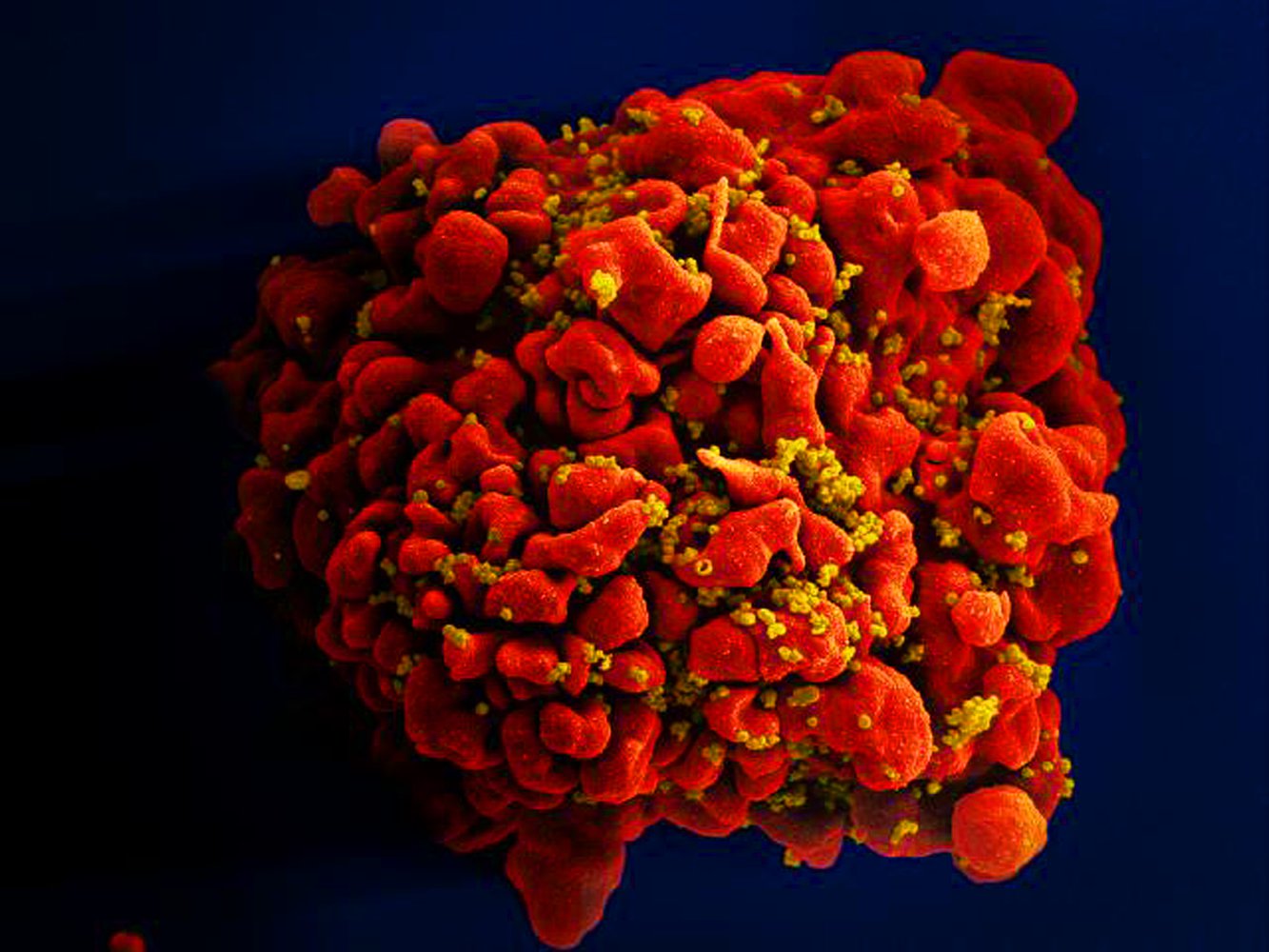
Colorized scanning electron micrograph
The T cell is red and the HIV virus yellow.
Source: "ID#: 18143", National Institute of Allergy and Infectious Diseases (NIAID), Centers for Disease Control and Prevention licensed under Public Domain
Clinical features
General considerations
- There are no clinical features specific to HIV infection
- In early HIV infection, patients are often asymptomatic.
- Incubation period: usually 2–4 weeks [12]
- Infectiousness: two peaks (1st peak: within the first months after infection; 2nd peak: during AIDS-stage)
Acute HIV infection [10]
-
Also referred to as acute retroviral syndrome (ARS) or described as a mononucleosis-like syndrome
- Fever
- Fatigue
- Myalgia and arthralgia
- Headache
- Generalized nontender lymphadenopathy
- Generalized rash
- Gastrointestinal symptoms (nausea, diarrhea, weight loss)
- Oropharyngeal symptoms (sore throat, ulcerations, painful swallowing)
- Aseptic meningitis [13]
Clinical latency and AIDS [10]
- Clinical latency: Infected individuals may still be asymptomatic.
-
Non-AIDS-defining conditions (common when CD4+ count is below 500 cells/mm3)
- Chronic subfebrile temperatures
- Persistent generalized lymphadenopathy
- Chronic diarrhea (> 1 month)
- Localized opportunistic infections
- Oral candidiasis: creamy, white patches on the mucous membranes of the mouth that can be scraped off
- Vaginal infections (e.g., yeast, trichomonads)
- Oral hairy leukoplakia: lesions that cannot be scraped off located mainly on the lateral borders of the tongue; triggered by Epstein-Barr virus
- HPV-related: squamous cell carcinoma of the anus (common in men who have sex with men) or cervix
- Skin manifestations (e.g. molluscum contagiosum, warts; , exacerbations of psoriasis, shingles)
- AIDS: See “HIV-associated conditions.”
Test patients with a history of intravenous drug use who present with otherwise unexplained weight loss, depression, and/or dementia for HIV.
Unlike oral candidiasis, esophageal candidiasis is an AIDS-defining condition.


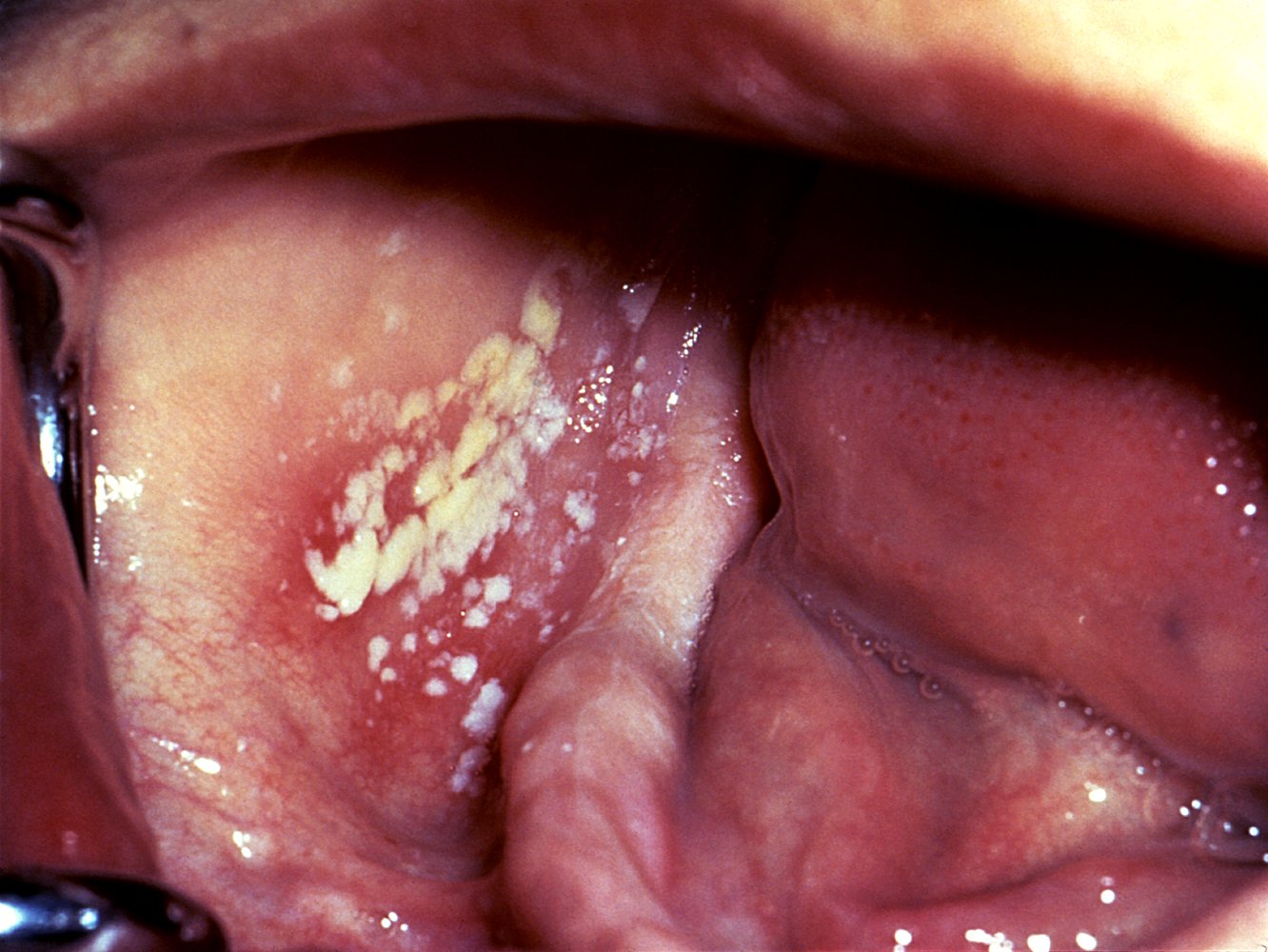
There is a distinct area of white plaque on the oral mucosa that can be scraped off.
This finding is characteristic oropharyngeal candidiasis (oral thrush).
Source: "ID#: 6066", CDC/ Sol Silverman, Jr., D.D.S., Centers for Disease Control and Prevention (CDC) licensed under Public Domain
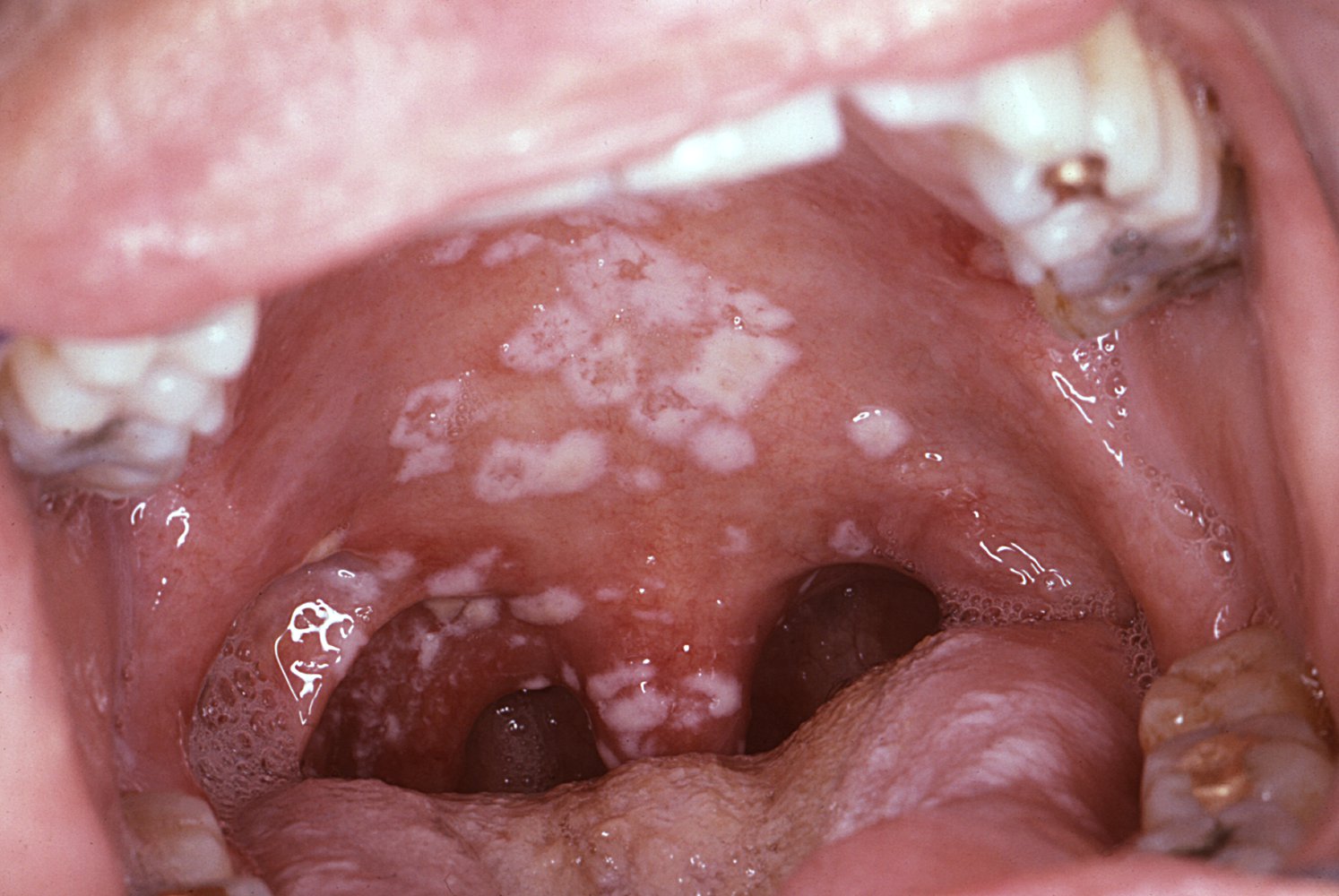
Oral mucosa of an HIV-positive patient
There are several distinct white plaques on the soft palate and uvula.
Source: "ID#: 6053", CDC/ Sol Silverman, Jr., DDS, Centers for Disease Control and Prevention (CDC) licensed under Public Domain
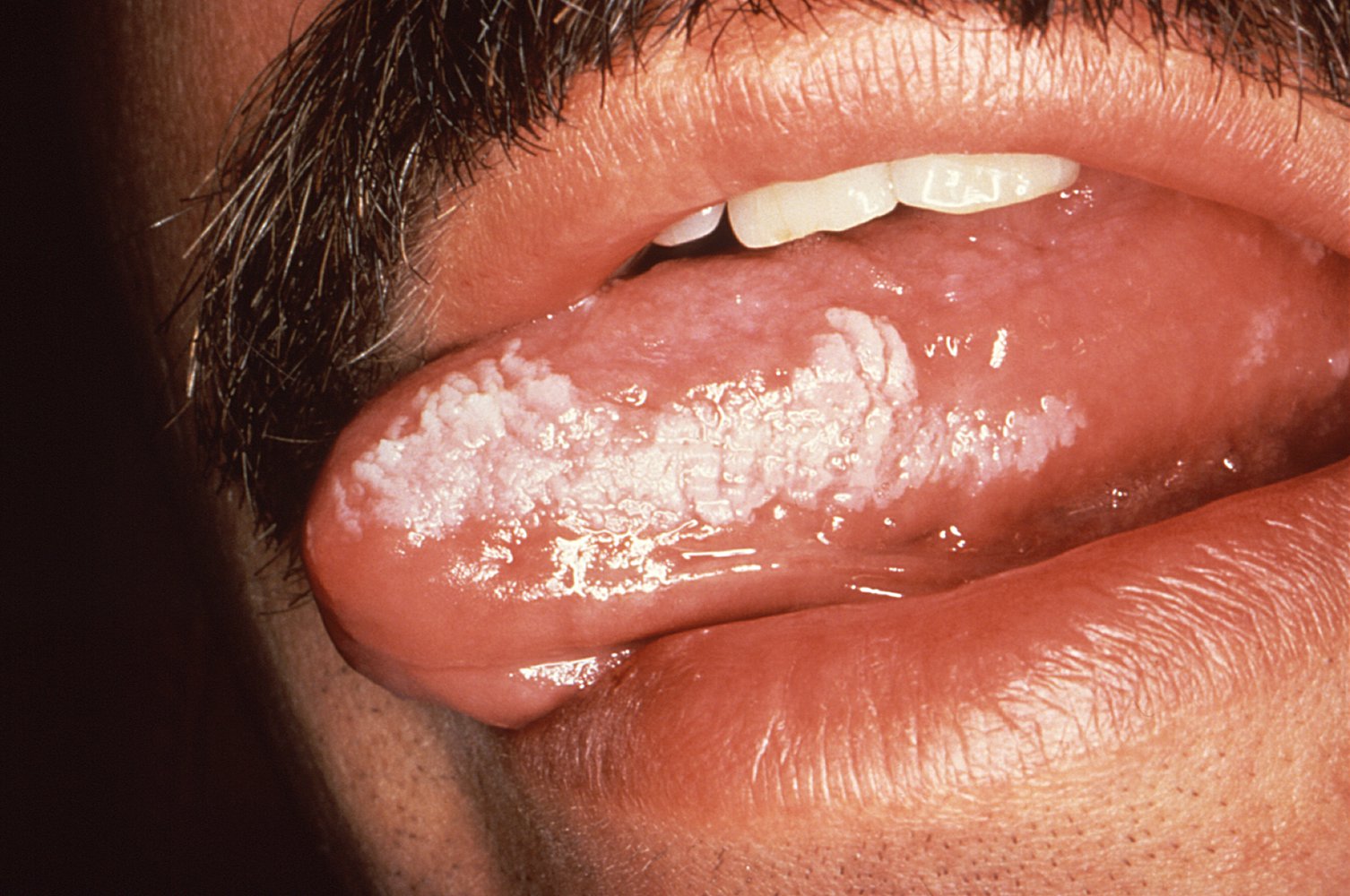
A 3–5 cm confluent, white plaque with a hairy appearance is seen across the left lateral side of the tongue that, in this case, could not be scraped off using a spatula.
This clinical finding is characteristic of oral hairy leukoplakia.
Source: "ID#: 6061", CDC/ J.S. Greenspan, B.D.S., University of California, San Francisco; Sol Silverman, Jr., D.D.S, Centers for Disease Control and Prevention (CDC) licensed under Public Domain
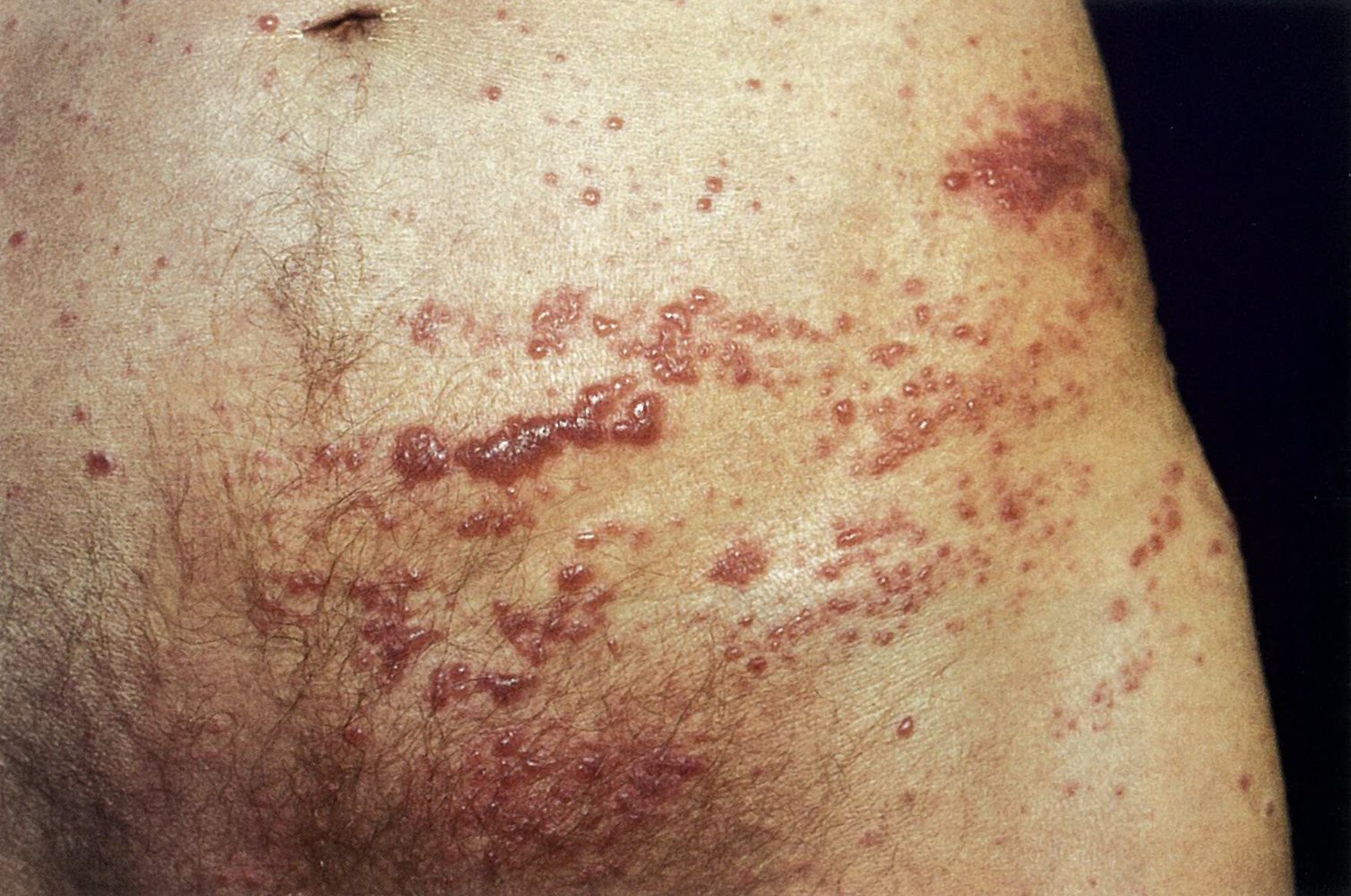
A widespread erythematous papular rash is visible over the left inguinal region. Several individual and confluent vesicles can be seen in a T12-L1 dermatomal distribution. Additional lesions are visible beyond this distribution.
This is the characteristic appearance of shingles (herpes zoster infection).
Source: © IMPP
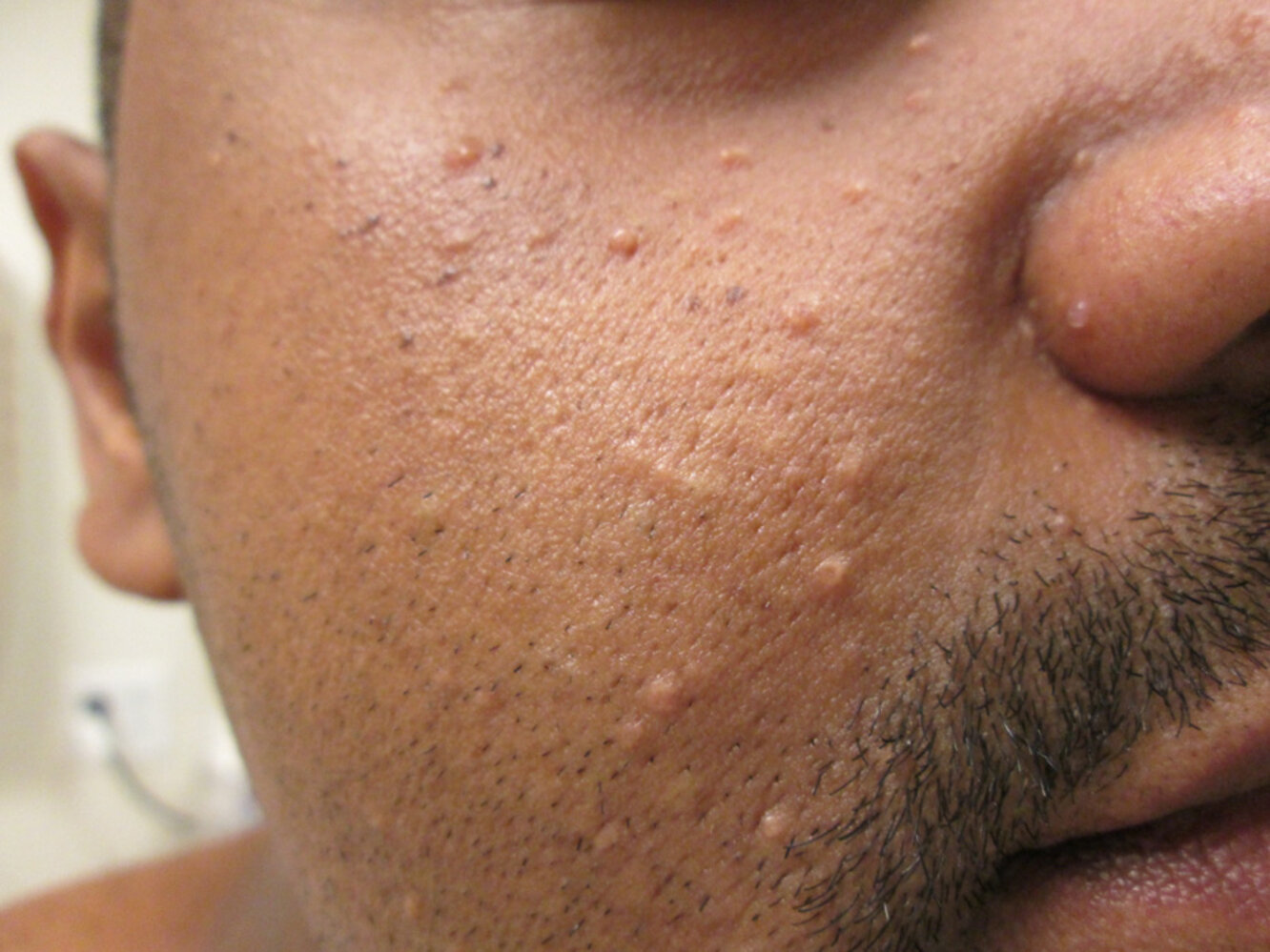
© Massachusetts Medical Society. All rights reserved. AMBOSS SE, exclusive licensee.
Staging
CDC classification system for HIV [14]
- CDC categories of HIV are based on CD4 count in combination with current or previously diagnosed HIV-related conditions.
- Any patient belonging in categories A3, B3 or C1-C3 is considered to have AIDS.
|
CD4 cell count category (normal cell count: 500–1500 cells/mm3) |
Clinical category A Asymptomatic, Acute HIV or PGL |
Clinical category B Symptomatic conditions, not A or C |
Clinical category C AIDS-defining conditions |
|---|---|---|---|
| (1) ≥ 500 cells/mm3 | A1 | B1 | C1 |
| (2) 200–499 cells/mm3 | A2 | B2 | C2 |
| (3) < 200 cells/mm3 | A3 | B3 | C3 |
PGL= Persistent generalized lymphadenopathy
WHO (World Health Organization) classification [15]
WHO classifies individuals with confirmed HIV infection according to clinical features and diagnostic findings:
- Primary HIV infection: acute retroviral syndrome or asymptomatic
- Clinical stage 1: persistent generalized lymphadenopathy (PGL) or asymptomatic
- Clinical stage 2: e.g., unexplained moderate weight loss (< 10%), recurrent fungal/viral/bacterial infections
- Clinical stage 3: e.g., unexplained severe weight loss (> 10%), unexplained chronic diarrhea (> 1 month), unexplained persistent fever (≥ 37.6°C intermittent or constant > 1 month), persistent/severe fungal/viral/bacterial infections , unexplained anemia (< 8 g/dL) and/or neutropenia (< 500 cells/mm3) and/or chronic thrombocytopenia (< 50,000/μL) for more than 1 month
- Clinical stage 4: AIDS-defining conditions (e.g., Kaposi sarcoma, Pneumocystis pneumonia)
Diagnosis
Approach [16]
Specific screening and testing strategies depend on local factors including regional prevalence and testing capabilities.
- Assess for HIV screening indications (below).
- If indications are present, perform a screening test appropriate to the patient age group.
- Negative test
- Individuals without high risk of HIV infection: Further testing is not required.
- Individual with a known or potential exposure: Repeat testing in 4–6 weeks and 3 months after exposure. [17]
- Individuals at high risk of HIV infection (ongoing risk): Repeat screening annually. [18][19][20]
- Positive test: Send confirmatory tests.
- Negative test
- If confirmatory test supports positive HIV diagnosis:
- Obtain laboratory studies to assess baseline organ function prior to starting treatment.
- Obtain additional screening tests for individuals with HIV to assess for complications and comorbidities.
Overview of tests and methods [16]
Serological assays
Serological assays are commonly used for both screening and diagnosis and may detect HIV antigen, antibodies, or both.
- HIV antigen alone: detects HIV p24 antigen
-
HIV antibody assays (i.e., third-generation and below): Detect IgM and IgG antibodies.
-
Laboratory methods
- Enzyme-linked immunosorbent assays (ELISA)
-
HIV-1 and HIV-2 antibody differentiation immunoassay
- Laboratory-based test that can differentiate between HIV-1 and HIV-2 (provides separate results for each analyte)
- Most commonly used confirmatory test in the US
- Western blot: Detects only IgG antibody to HIV-1
-
Laboratory methods
- Combination HIV antibody with HIV antigen test; (i.e., fourth-generation and above): Can detect HIV IgG and IgM antibodies and p24 antigen. [21][22]
| Comparison of HIV serological assays [16][21] | |
|---|---|
| Generation | Test characteristics |
| First-generation HIV test |
|
| Second-generation HIV test | |
| Third-generation HIV test |
|
| Fourth-generation HIV test |
|
| Fifth-generation HIV test [21] |
|
Virological testing [23]
Virological tests are most commonly used for screening infants and confirmation of disease in both infants and adults.
- Can detect HIV-1 RNA and/or DNA (depending on the test)
- Laboratory method: nucleic acid testing (NAT)
Screening and diagnosis
| Recommended laboratory-based HIV studies [23][24] | ||
|---|---|---|
| Age | Preferred test | |
| Screening | Adults and children ≥ 18 months |
|
| Infants < 18 months |
|
|
| Confirmation | Adults and children > 24 months |
|
| Infants ≤ 24 months |
|
|
Indications for HIV testing [18][19]
HIV testing should be offered to patients who have signs that raise concern for HIV infection, prior exposure, and as part of routine screening.
-
Routine screening
- All adolescents and adults and those at increased risk of infection [20][25][26]
- Any individuals (even if previously tested):
- Starting treatment for tuberculosis
- Attending STI clinics or diagnosed with an STI
- One-time testing is recommended early in all pregnancies
-
Targeted testing
- All patients with clinical features of acute or chronic HIV infection or opportunistic infections
- All individuals with possible past exposure, especially individuals at high risk of HIV infection (e.g., sex workers, men who have sex with men, individuals who use IV drugs, partners of HIV-positive individuals)
- Annual screening for individuals at high risk of HIV infection
In most US states, HIV testing requires patient consent (opt-out); in the majority of locations, oral consent is sufficient, but check local guidance.
Screening studies [24]
-
HIV serology
-
Fourth-generation HIV test (combination HIV antibody with HIV antigen) ; [21]
- Timing: Detectable ∼ 14 days after transmission [21]
- Not recommended for suspected neonatal HIV infection (results may be false positive because of maternally transferred anti-HIV antibodies) [23]
- Third-generation HIV test (antibody only): frequently used in rapid tests (point-of-care tests)
-
Fourth-generation HIV test (combination HIV antibody with HIV antigen) ; [21]
-
Virological tests
- HIV-1 NAT; : Used for screening in infants aged < 18 months with peri- or postnatal HIV exposure. [24]
A negative combination antibody/antigen test two weeks after exposure essentially rules out HIV infection (almost 100% sensitivity).
If the result of a rapid test is positive, a laboratory-based screening test should be sent, followed by confirmatory testing if appropriate. [24]
Confirmatory studies
-
Serology
-
HIV-1 and HIV-2 antibody differentiation immunoassay [21]
- Timing: detectable 3 weeks after infection [21]
- Positive result: HIV infection confirmed
- Negative or indeterminate result: Perform HIV-1 NAT.
- Positive HIV-1 NAT: HIV-1 infection confirmed
- Negative HIV-1 NAT: negative for HIV-1 infection [27]
- HIV-1 western blot: The CDC no longer recommends western blot tests for confirmation of HIV infection. [24]
-
HIV-1 and HIV-2 antibody differentiation immunoassay [21]
-
Virological tests
-
HIV-1 NAT ; [24]
- Timing: Can measure the amount of viral RNA in the blood and detect HIV infection earlier than antibody/antigen-based tests (∼ 10 days after transmission).
- Indications
- Neonatal HIV infection
- Patients with indeterminate results [28][29]
- Patients presenting before seroconversion
- Screening of blood donors [30]
- Disease monitoring [31]
- Results [24]
- Positive: HIV confirmed
- Negative: Perform HIV-1/2 antibody differentiation immunoassay or another approved HIV-1 antibody test.
-
HIV-1 NAT ; [24]

Additional evaluation for patients with newly diagnosed HIV [32][33]
Assessment of organ function
Assessing organ function is important to screen for HIV-associated complications, establish a baseline in order to monitor toxicity, and help select an ART regimen.
- CBC
- Assessment of renal function (BMP, urinalysis)
- Liver chemistries
- Lipid panel
- Fasting glucose or HbA1c
- Baseline ophthalmologic evaluation
- Patients of childbearing age: pregnancy test
Advanced HIV studies
The following studies are recommended to screen for drug resistance, assist in the selection of an appropriate ART regimen, and establish a baseline to monitor the efficacy of therapy.
- HIV drug resistance testing: Genotypic assays are preferred over phenotypic assays. [32][34]
-
CD4+ count: correlates with overall immune function ; [35]
- Normal values are > 500 cells/mm3, whereas in the advanced stages of HIV the CD4+ count is often < 200 cells/mm3.
- Critical measurement to determine when to initiate opportunistic infection prophylaxis
- CD4+ counts increase in response to successful ART therapy.
-
Viral RNA load: indicator of ART response
- Decrease in viral loads indicates effective treatment.
- Prognostic marker in long-term treatment (higher viral load → ↑ destruction of CD4+ lymphocytes → more severe immunodeficiency → worse prognosis) [36]
-
CD4 cell percentage: used for the assessment of immune function and less variable than CD4+ count [35]
- Preferred for monitoring children < 5 years of age, as absolute CD4+ count varies more than in adults
- Values of 14–29% are equivalent to a CD4+ count of 200–500 cells/mm3.
- CD4:CD8 ratios (no longer routinely recommended): an increase in the ratio following ART initiation suggests improved immune system functioning
- HLA B*5701 screen: for patients considered for a regimen containing abacavir [33]
Measurement of CD8 cell count and CD4:CD8 ratios is not routinely recommended, as the results are not used to guide treatment. [35]
Graph showing typical cell counts, antibody levels, and viral loads during different stages of untreated HIV infection/AIDS
The dashed line at the level of 500 cells/mm3 represents a state of moderate immunocompromise.
CD4+ or CD8+ thresholds at which select common opportunistic infections most frequently occur:
I (< 200 cells/mm3): pneumocystis pneumonia, histoplasma capsulatum
II (< 100 cells/mm3): cryptococcal meningitis, candida esophagitis, cerebral toxoplasmosis
III (< 50 cells/mm3): CMV infection, atypical mycobacterial infections
© AMBOSS
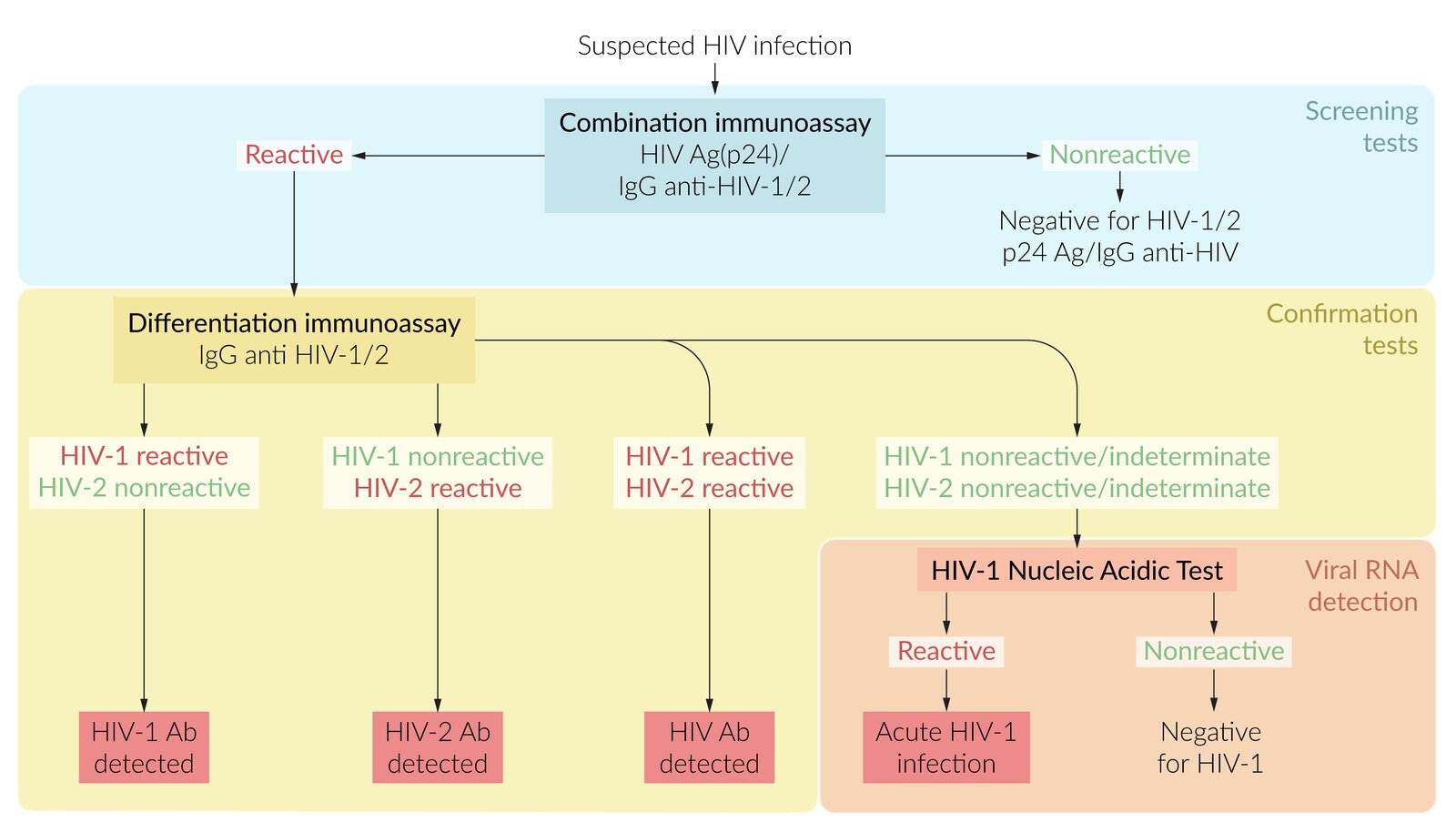
Diagnostic approach to HIV infection
© AMBOSS
Management
General principles [32][37]
-
Antiretroviral therapy
-
All individuals with HIV infection, regardless of CD4 count, should begin antiretroviral therapy (ART) as soon as possible
- Antiretroviral drugs are combined to prevent resistance.
- All antiretroviral drugs are able to target both HIV-1 and HIV-2, except for enfuvirtide and NNRTIs.
- Tailor therapy to the HIV genotype, if needed.
- Establish regular monitoring to assess treatment response.
-
All individuals with HIV infection, regardless of CD4 count, should begin antiretroviral therapy (ART) as soon as possible
-
Prevention and management of coinfections and complications
- Screen patients for STIs and common opportunistic infections (see “Diagnosis”).
- If CD4 count is < 200, start prophylaxis for opportunistic infections.
- Primary preventive measures (e.g., vaccinations, cancer screening)
-
Prevention of onward transmission
- Counsel patients on safe sex practices
- Offer HIV testing for family or sexual partners.
- Referral to needle exchange programs and opioid substitution therapy
- Report infections to the appropriate health department based on local guidance.
-
Counseling and psychosocial support
- Provide counseling regarding diagnosis and management
- Multidisciplinary management recommended
Early treatment is particularly critical in patients with a low CD4 count (< 350 cells/mm3), high viral load, or an AIDS-defining illness.
Adherence to ART can be improved by considering social determinants of health and addressing modifiable factors such as comorbid mental illness or substance use disorder, unstable housing, and barriers to attending regular clinic visits. [32]
In the US, HIV/AIDS is a notifiable disease in every state.
Antiretroviral therapy
- Start ART as soon as possible to prevent further progression of the disease. [32]
- Factors to consider when selecting a regimen include: [32]
- Virological efficacy
- Pill burden and dosing frequency
- Drug toxicity
- Drug interactions
- HIV resistance test results
- Comorbid conditions, e.g., cardiovascular disease, liver disease, osteoporosis, pregnancy (see also "Cautions”)
- Access to, and cost of, care
Initiation of ART should be delayed in the setting of TB meningitis and cryptococcal meningitis because of the high risk of immune reconstitution syndrome!
Initiation of treatment should not be delayed to await results of advanced HIV studies, e.g., drug resistance or hepatitis screening.
Initial ART regimens [32]
- Preferred ART regimens should consist of one of the following combinations:
- 2 NRTIs PLUS 1 NNRTI
- 2 NRTIs PLUS 1 PI (boosted)
- 2 NRTIs PLUS 1 INI
- 1 NRTI PLUS 1 INI
| Recommended initial regimens [32] | |||
|---|---|---|---|
| Regimen | Recommended drug combinations | Combination tablet | Indications/contraindications |
| 2 NRTIs PLUS 1 INI |
|
|
|
|
|
||
|
|
|
|
| 1 NRTI PLUS 1 INI |
|
|
|
Do not use abacavir-containing regimens for patients with an unknown or positive HLA-B*5701 status, because of the risk of abacavir hypersensitivity reaction!
When available, use combination tablets to reduce pill burden and improve adherence. [38]
Special considerations
-
Patients with renal impairment
- Avoid tenofovir disoproxil fumarate.
- Avoid tenofovir alafenamide if CrCl is < 30 mL/min.
- Consider avoiding atazanavir.
-
Patients with hepatic impairment or hepatitis B coinfection
- In patients with moderate to severe cirrhosis: Avoid abacavir, tenofovir alafenamide, nevirapine, darunavir, atazanavir, and dolutegravir.
- In hepatitis B coinfection
- Antiretrovirals that also have anti-HBV activity should be included in the regimen used to treat HIV. These include:
- Emtricitabine
- Lamivudine
- Tenofovir (tenofovir disoproxil fumarate and tenofovir alafenamide)
- Discontinuation of drugs that have anti-HBV activity can lead to reactivation of HBV and cause serious hepatocellular damage.
- Antiretrovirals that also have anti-HBV activity should be included in the regimen used to treat HIV. These include:
-
ART combinations that should be avoided
- Triple-NRTI regimens
- Regimens featuring two NNRTIs
- Tenofovir with abacavir [39]
- Lamivudine with emtricitabine
- Didanosine with tenofovir disoproxil fumarate or stavudine
- Stavudine with zidovudine
- Cobicistat with ritonavir
Stopping NRTIs in patients with hepatitis B coinfection can lead to an acute worsening of their hepatitis!
Overview of antiretroviral drugs [32][40][41]
Nucleoside reverse transcriptase inhibitors (NRTIs)
-
Medications in class
- Abacavir (ABC)
- Didanosine (ddI)
- Emtricitabine (FTC)
- Lamivudine (3TC)
- Stavudine (d4T)
-
Tenofovir (nucleotide analog, also called nucleotide reverse-transcriptase inhibitor; NtRTI)
- Tenofovir disoproxil (TDF)
- Tenofovir alafenamide (TAF)
- Zidovudine (ZDV, formerly AZT)
-
Mechanism of action
- NRTIs act as nucleoside analogs → competitive blockage of nucleoside binding to reverse transcriptase → inhibition of formation of 3' to 5' phosphodiester linkages → termination of DNA chain → inhibition of RNA to DNA reverse transcription
- Activation requires intracellular phosphorylation, thus, NRTI efficacy is reliant on kinase availability and activity, which varies depending on cell functionality and activation state. [40]
- Resistance is caused by mutations in the gene that codes for reverse transcriptase (pol gene) [42]
-
General adverse effects [43][44]
-
Mitochondrial toxicity [45]
- A disruption of mitochondrial function most commonly caused by HIV treatment with nucleoside reverse transcriptase inhibitors
- NRTIs inhibit the enzyme responsible for the replication of mitochondrial DNA.
- Symptoms include:
- Myopathy
- Peripheral neuropathy
- Hepatic steatosis
- Lactic acidosis
-
HIV-associated lipodystrophy (Cushing syndrome-like appearance): abnormal distribution of fat ; [46][47][48]
- Loss of subcutaneous fatty tissue (lipoatrophy) in the face, extremities, and buttocks
- Probable accumulation of fat in liver, muscles, abdomen, breasts, neck (double chin), and upper back (enlarged dorsocervical fat pad)
- Metabolic changes: impaired glucose tolerance, hyperlipoproteinemia (elevated triglycerides, elevated total cholesterol, lowered HDL)
-
Mitochondrial toxicity [45]
-
Additional medication-specific adverse effects [43][44]
-
Abacavir hypersensitivity reaction [43][49]
- Potentially life-threatening systemic reaction consisting of fever, rash, constitutional symptoms, vomiting, diarrhea, and, occasionally, respiratory distress
- Avoid abacavir in HLA-B*5701-positive patients.
- Pancreatitis: didanosine, stavudine
- Cardiovascular disease: abacavir
- Nephrotoxicity : tenofovir
- Osteoporosis: tenofovir
- Bone marrow suppression causing anemia and neutropenia: zidovudine
- Melanonychia: zidovudine
- DNA-depleting mitochondrial myopathy with red “ragged” fiber appearance: zidovudine [50]
-
Abacavir hypersensitivity reaction [43][49]
Most NRTIs end in “-ine,” protease inhibitors in “-navir,” and integrase inhibitors in “-gravir.”
“The nuclear plant is in the vuds (read: “woods”)”: Nucleoside reverse transcriptase inhibitors end in “-vudine.”
Nonnucleoside reverse-transcriptase inhibitors (NNRTIs)
-
Medications in class
- Delavirdine
- Doravirine
- Efavirenz
- Etavirine
- Nevirapine
- Rilpivirine
-
Mechanism of action
- Noncompetitive inhibitors of viral reverse transcriptase that bind to the reverse transcriptase at a different location than NRTIs
- NNRTIs do not require intracellular phosphorylation for activation because they are direct inhibitors.
-
General adverse effects [43][44]
- Hypersensitivity reactions: rash
- Stevens-Johnson syndrome
- Toxic epidermal necrolysis
-
Additional medication-specific adverse effects [43][44]
-
Hepatotoxicity
- Efavirenz
- Nevirapine
- CNS toxicity and vivid or disturbing dreams: efavirenz
-
Hepatotoxicity
HIV protease inhibitors (PIs)
-
Medications in class
- Atazanavir
- Darunavir
- Fosamprenavir
- Lopinavir
- Indinavir
- Nelfinavir
- Ritonavir
- Saquinavir
- Mechanism of action: inhibition of viral HIV-1 protease (encoded by pol gene) → inability to cleave viral polyproteins into functional units → generation of impaired viral proteins → production of immature (noninfectious) virions [51]
-
General adverse effects [43][44]
- GI upset (nausea, vomiting, diarrhea)
- Nephrolithiasis, crystal-induced nephropathy, and hematuria [52]
- Metabolic abnormalities
- Hyperglycemia: inhibition of insulin-dependent glucose transporters (GLUT 4) → peripheral insulin resistance → impaired glucose tolerance [53]
- Dyslipidemia
- Lipodystrophy and fat accumulation
- Increased risk of bleeding in patients with hemophilia [54]
- Changes to hair, e.g., thinning
- Additional medication-specific adverse effects: thrombocytopenia with indinavir (rare) [55]
- Additional medication-specific information: Boosted PI monotherapy (e.g., ritonavir combined with a second protease inhibitor) optimizes ART (i.e., preventing resistance, allowing less frequent dosing, limiting NRTI‐related toxicity) [56]
Subtherapeutic doses of ritonavir (boosting agent) can be used to increase concentrations of other HIV drugs because it is a cytochrome P450 inhibitor. [57]

Integrase inhibitors (INIs or InSTIs)
-
Medications in class
- Bictegravir
- Cabotegravir
- Dolutegravir
- Elvitegravir
- Raltegravir
- Mechanism of action: inhibition of the viral integrase → blockade of viral DNA integration into the host's DNA → inhibition of viral replication [40]
-
General adverse effects [43][44]
- Rash
- Hypersensitivity syndrome in rare cases
- Additional medication-specific adverse effects: : muscle inflammation causing elevated creatinine kinase : raltegravir, dolutegravir [43][44]
An intramuscular injection consisting of cabotegravir and rilpivirine can be used for patients whose HIV is well controlled on oral ART but it should not be used as an initial regimen.
Entry inhibitors [58]
- Description: Hetereogenic class of antiretroviral drugs that inhibit binding or fusion of HIV virions with human cells.
-
Enfuvirtide (fusion inhibitor)
- Mechanism of action: competitively binds to the viral protein gp41, thus preventing fusion with the cell [40]
- Adverse effects: skin irritation at the site of drug injection
-
Maraviroc (CCR5-antagonist): used in infection with drug-resistant HIV-1 [59]
- Mechanism of action: blocks the CCR5 coreceptor on T cells and monocytes that is essential to cell infection; for some HIV genotypes (R5 HIV-1) → inhibition of gp120 interaction → prevention of virus docking [40]
- Adverse effects:
- Cough, upper respiratory tract infections
- Fever
- Hepatotoxicity
“Enfuvirtide provides defusion of viral fusion.”
“Maraviroc will block the viral dock.”

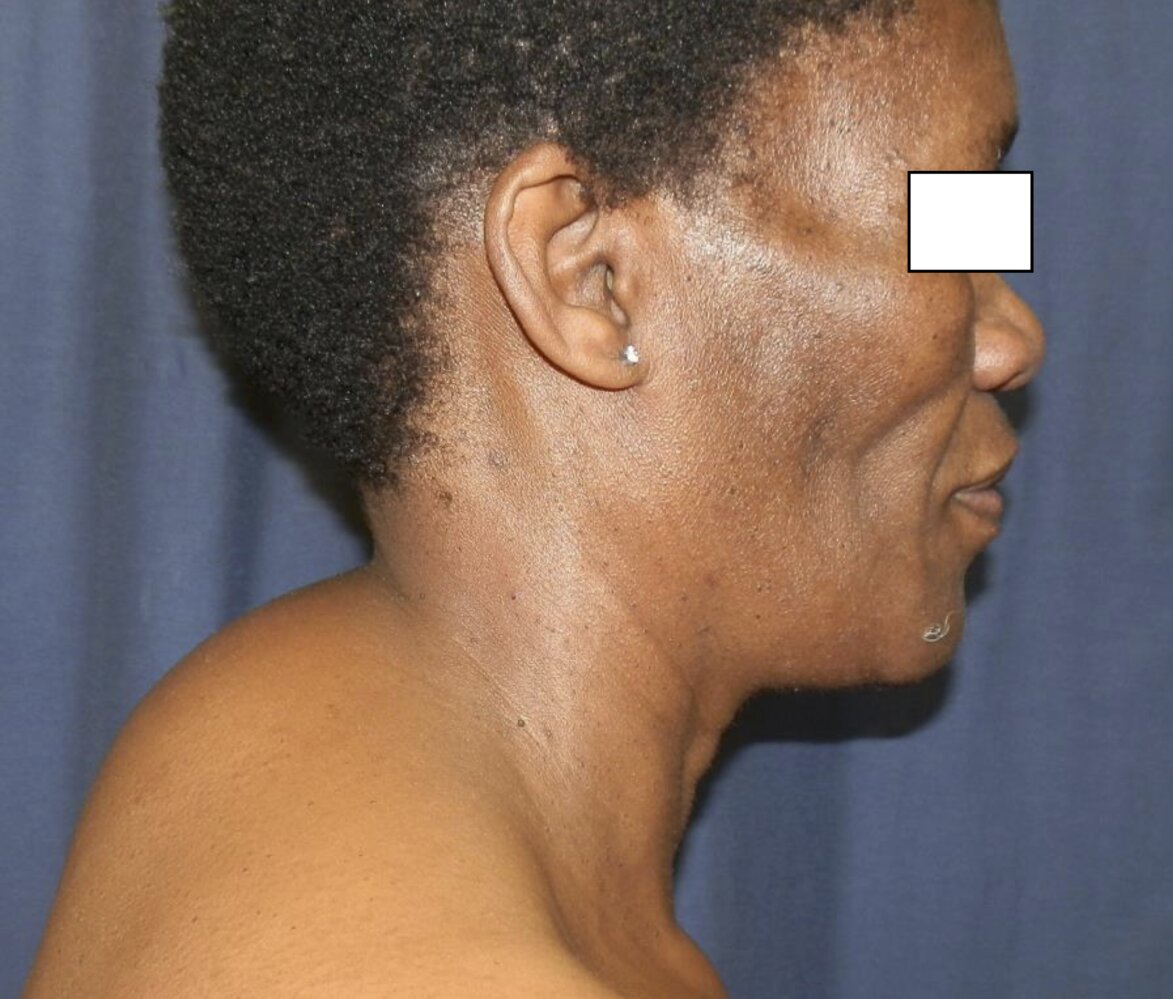
A disturbed distribution of subcutaneous fat with a major loss of buccal and temporal fat results in the appearance of a sunken face while the dorsocervical fat pad is greatly enlarged.
These findings are characteristic of lipodystrophy and can be a side effect of antiretroviral therapy with nucleoside reverse transcriptase inhibitors such as stavudine or tenofovir.
Source: “Figure 85: An adult with stavudine-associated; in: Atlas of Pediatric HIV Infection” by Regina E. Oladokun; Rannakoe J. Lehloenya; Carol Hlela et al., Openbooks, licensed under CC BY-ND 4.0.

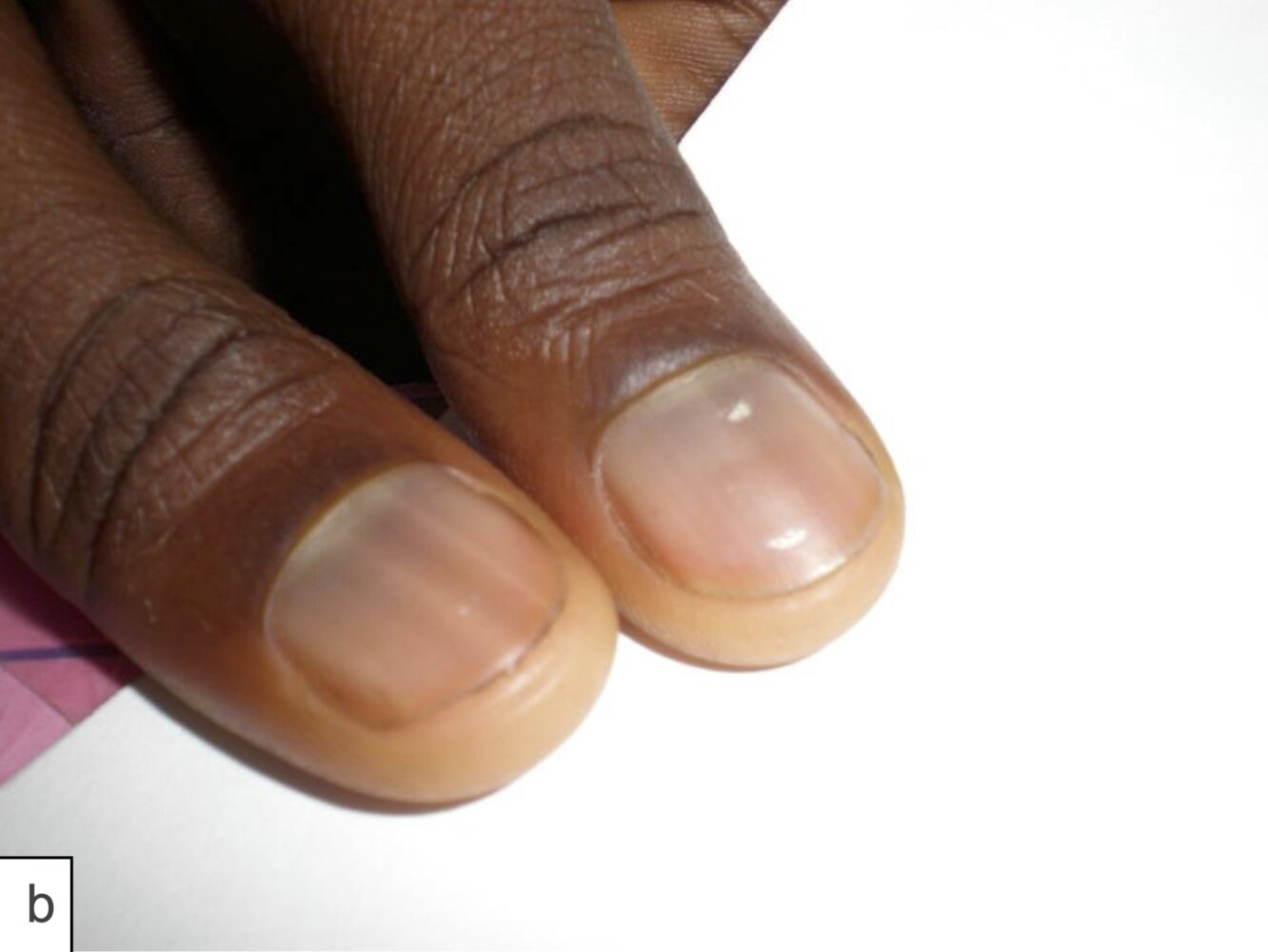
Both nails show narrow, darkened stripes caused by longitudinal hyperpigmentation.
These findings are characteristic of melanonychia, which is the result of increased activation of melanocytes and is more prevalent among people with dark skin color. An extension of the stripes onto the cuticle and proximal nail folds (Hutchinson nail sign) is suggestive of subungual melanoma.
Source: “Figure 97b: Melanonychia” by Regina E. Oladokun; Rannakoe J. Lehloenya; Carol Hlela et al., Openbooks, licensed under CC BY-ND 4.0.

The hairline is high and thinned out (alopecia) and the remaining hair has a very fine texture.
The cause of these alterations is usually multifactorial, resulting from, e.g., antiretroviral therapy (e.g., if treated with indinavir and ritonavir/lopinavir), nutritional deficiency, and inflammatory disorders of the scalp. If drug-induced, the alopecia will generally reverse after substitution with a different drug. Diffuse alopecia is seen in approx. 7% of individuals with HIV.
Source: “Figure 96: Hair changes {...}; in: Atlas of Pediatric HIV Infection” by Regina E. Oladokun; Rannakoe J. Lehloenya; Carol Hlela et al., Openbooks, licensed under CC BY-ND 4.0.
1. Attachment: The viral envelope glycoprotein gp120 (cap) binds to CD4 receptors, which are present on certain cells. The gp120-CD4 complex then binds to the host chemokine receptor 5 (CCR5).
– CCR5 antagonists prevent viral attachment to the host cell.
2. Penetration: Viral binding to CCR5 causes a conformational change in the envelope gp41 (stalk), which enables HIV to fuse with and release its capsid into the host cell.
- Fusion inhibitors competitively bind to gp41 and prevent viral fusion with the host cell.
3. Uncoating of the viral capsid to release viral RNA
4. Reverse transcription: Viral RNA is transcribed into viral DNA by viral reverse transcriptase enzymes.
– Nucleoside reverse transcriptase inhibitors (NRTI), nucleotide reverse transcriptase inhibitors (NtRTI), and non-nucleoside reverse transcriptase inhibitors (NNRTI) inhibit the viral reverse transcriptase enzyme.
5. Integration: Newly transcribed viral DNA is integrated into host DNA by viral integrase.
– Integrase inhibitors inhibit viral integrase.
6. Transcription: Newly integrated DNA is used as a template to create copies of viral RNA that will encode for viral proteins.
7. Translation: Newly transcripted viral RNA acts as templates for the synthesis of new viral proteins synthesis. Viral protease enzyme cleaves the long polypeptide chains into shorter, functional viral proteins (e.g., envelope proteins, enzyme proteins).
– Protease inhibitors inhibit viral protease and prevent the generation of functional viral proteins.
8. Release: New viral RNA and viral proteins use a portion of the host cell membrane as a viral envelope and then leave the host cell.
© AMBOSS
Monitoring antiretroviral therapy
The treatment response of patients with HIV who are on ART should be frequently monitored by assessing their CD4+ count and HIV viral load. Any concerns regarding the failure of treatment should be referred to the infectious disease service. [32]
Monitoring studies [60]
| Frequency of monitoring studies [60] | |
|---|---|
| Frequency of test | Test |
| 4–8 weeks after initiation of ART |
|
| Every 3–6 months |
|
| Every 6 months |
|
| Every 12 months |
|
Patients should have monitoring studies performed more frequently if clinically indicated or in treatment failure!
Virological failure [32]
- Definition: the inability to maintain or achieve viral levels of < 200 copies/mL
- Causes: patient-related factors (e.g., poor drug adherence, cost), HIV-related factors (e.g., drug resistance, high pretreatment viral load), ART-related factors (e.g., drug interactions, suboptimal pharmacokinetics)
- Management: Address any identifiable cause of failure and adjust ART regimen if indicated.
Poor CD4 count recovery [32]
- Definition: CD4+ counts remain persistently low (< 500, although effects are most concerning if CD4 remains < 200) despite adequate suppressive ART. These individuals have increased morbidity and mortality.
- Causes: medication side effects, coinfections such as HIV-2 and HCV, other medical problems such as malignancy
- Management: Identify modifiable causes of CD4 cell lymphopenia. Changing or adding antiretrovirals is not recommended.
Preventive health care
Screening tests for individuals with HIV [33]
The purpose of screening is to identify any AIDS-defining illnesses and coinfection with other bloodborne viruses or STIs, and to guide preventive efforts (e.g., vaccinations).
-
All patients
- STI screening: syphilis, gonorrhea, and chlamydia
- Hepatitis A screening
- Hepatitis B and hepatitis C screening
- Screening for latent TB using PPD or IGRA [33]
-
Additional tests
-
Opportunistic infections: Patients with low CD4 counts are at increased risk of opportunistic infections.
- Toxoplasma gondii IgG: for symptomatic patients or asymptomatic patients with CD4 count < 200 cells/μL
- Cryptococcal antigen: for symptomatic patients or asymptomatic patients with CD4 count < 100 cells/μL
- See “HIV-associated conditions” for further information on prevention and management.
- Other infectious diseases
- Measles, mumps, and rubella serology: for patients born after 1957
- VZV serology: for unvaccinated patients or those without a history of chickenpox or shingles
- HPV screening: See “Malignancy.”
- Trichomoniasis: for patients who have vaginal sex
- Pregnancy test: for individuals who can become pregnant
- G6PD deficiency screening
- Serum testosterone level: for patients with clinical features of male hypogonadism
- Chest x-ray: advised in patients with positive TB screen or as a baseline in patients with preexisting lung abnormalities (e.g., COPD)
-
Opportunistic infections: Patients with low CD4 counts are at increased risk of opportunistic infections.
Early detection of coinfections reduces morbidity and prevents onward transmission. Routine testing for HSV IgG, CMV IgG, or inflammatory markers is not recommended. [33]
Immunizations [33][61]
- Assess previous immunization status (if possible from past medical records), including:
- Childhood vaccinations including MMR
- Hepatitis A vaccine
- Hepatitis B vaccine
- Human papillomavirus vaccine
- Influenza vaccine (annual)
- Meningococcal vaccine
- Pneumococcal vaccine
- Herpes zoster vaccine
- COVID vaccine
- Mpox vaccine
- RSV vaccine
- Any previous travel vaccinations (e.g., yellow fever vaccine)
- For recommended immunizations, see “Immunizations in individuals with HIV.”
Some live vaccinations (e.g., MMR, varicella, typhoid Ty21a, and yellow fever vaccines) should not be given until the CD4 count is ≥ 200; consult with an infectious diseases specialist before vaccinating patients with low CD4 counts. [61]
The live attenuated influenza vaccine should never be given to HIV patients, regardless of CD4 count.
Malignancy
Risk reduction
- Early diagnosis and treatment of HIV with ART is the most important step in preventing HIV-associated malignancies.
- Treat coinfections (e.g., HBV and HCV).
- Ensure patients receive vaccinations for oncogenic viruses (e.g., HPV, hepatitis B).
- Encourage behavioral modifications.
- Avoid needle sharing.
- Smoking cessation
- Maintain a normal BMI.
Screening [62]
- Age-appropriate cancer screening (e.g., for colon or breast cancer).
- Follow modified screening for HPV-associated cancers.
- Cervical cancer screening: perform annual pap smears
- Anal cancer screening: consider annual anoscopy and/or anal cytologic screening
HPV cotesting at the time of a pap smear is not recommended for patients < 30 years of age because of the high prevalence of infection in this age group, which typically self-resolves.
Complications
Patients who start ART are at risk of developing complications related to the recovery of their immune system. Complications relating to immunocompromise (especially if CD4 levels are < 200) and/or HIV infection itself (e.g., chronic immune activation and inflammation) may also be seen (see “HIV-associated conditions”).
Immune reconstitution inflammatory syndrome (IRIS) [63][64]
- Definition: an inflammatory syndrome that can occur after initiation of ART and consists of either the appearance of a new condition or worsening of a preexisting condition
- Epidemiology: common; occurs in ∼ 15–25% of patients starting ART [65]
-
Etiology: believed to result from the restoration of the immune system and its response to antigenic stimulation. The stimulus may be: [63]
- Infectious, e.g., mycobacteria, HSV, CMV, Cryptococcus
- Autoimmune, e.g., sarcoidosis, rheumatoid arthritis, SLE
- Malignant, e.g., non-Hodgkin lymphoma
-
Risk factors [63]
- Low CD4 count (especially CD4 < 50), CD4 percentage, and/or lower CD4:CD8 ratio at ART initiation
- High viral load at ART initiation
- Younger age
- Male sex
- Rapid fall of viral RNA on initiation of ART
- Diagnosis of an opportunistic infection prior to starting ART
- A short interval of time between the initiation of ART and treatment of an opportunistic infection
-
Clinical presentation [64]
- Develops within 4–8 weeks of initiation of ART
- Presentation varies depending on the underlying illness, however, patients often have clinical deterioration and localized tissue inflammation.
-
Diagnosis is clinical and based on presence of the following: : [66]
- Symptoms cannot be explained by the expected clinical course of a known infection, a drug side-effect, or a new infection.
- Symptoms of an infectious or inflammatory (e.g., autoimmune) condition
- Treatment with effective ART (defined by a significant decrease in HIV viral RNA or an increase in CD4 count)
- HIV diagnosis
-
Management [64]
- Provide supportive care and continue treatment of the associated condition, e.g., with antibiotics, chemotherapy.
- Do not interrupt ART except in severe, life-threatening IRIS.
- Consider corticosteroids (e.g., prednisone [64]) for severe IRIS depending on the underlying cause.
-
Prevention
- Initiation of ART: Start within two weeks or as soon as clinically stable in patients being treated for opportunistic infections, except in tuberculous meningitis, cryptococcal disease, and CMV retinitis.
- Corticosteroids should not be used to prevent the development of IRIS.
Corticosteroids should not be given to prevent IRIS, nor should they be used to manage IRIS caused by Kaposi sarcoma or cryptococcal meningitis! [64]

We list the most important complications. The selection is not exhaustive.
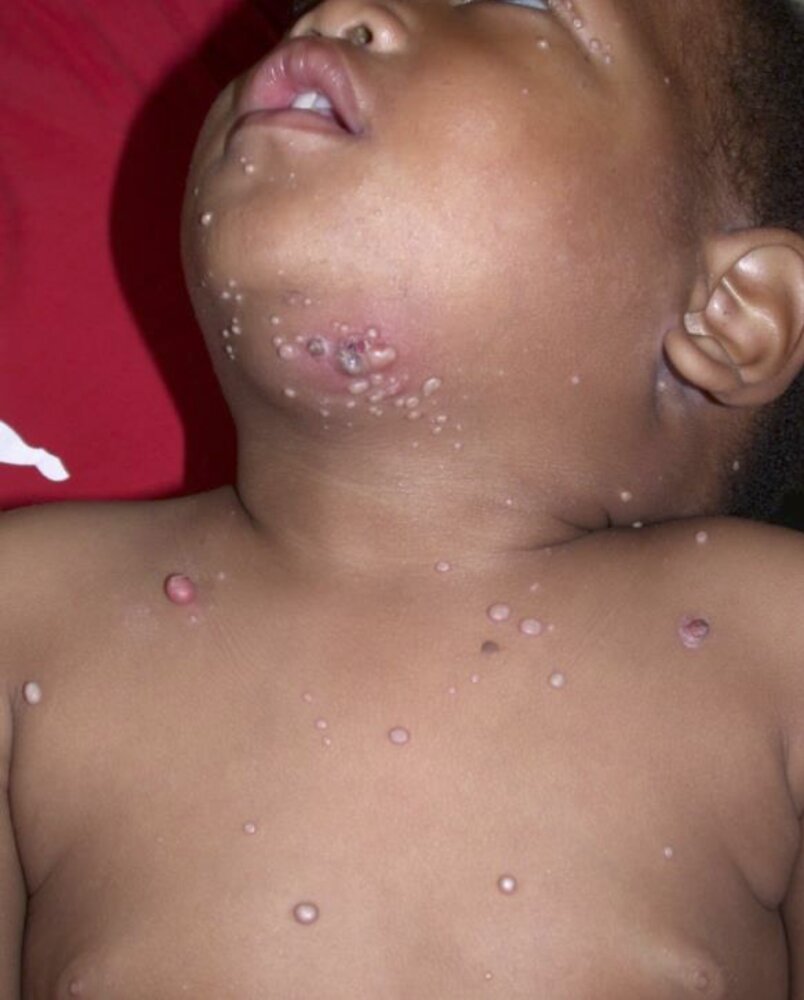
Smooth and mostly dome-shaped papules with central umbilications are visible on the chin and chest of this child. Areas with high concentrations of papules (e.g., chin) show an erythematous ground.
These findings represent the paradoxical flare-up of infection with molluscum contagiosum during antiretroviral therapy (IRIS).
Source: “Figur 95: A flare-up of {...}; in: Atlas of Pediatric HIV Infection” by Regina E. Oladokun; Rannakoe J. Lehloenya; Carol Hlela et al., Openbooks, licensed under CC BY-ND 4.0.
Prognosis
-
Morbidity and mortality among patient subsets
- Untreated, HIV leads to death on average 8–10 years after infection.
- Progression varies among individuals: Some patients may die within a few years while others can remain asymptomatic for decades.
- Untreated individuals with advanced HIV infection usually die within a few years (median survival is 12–18 months).
- Some untreated individuals show only slow progression and can remain asymptomatic for more than 20 years.
- In rare cases, untreated individuals have no detectable viremia and continue to have high CD4 counts for long periods.
- Untreated individuals with advanced HIV infection usually die within a few years (median survival is 12–18 months).
- The average life expectancy of HIV-infected individuals who receive adequate antiretroviral treatment is approaching that of noninfected individuals of the same age. [67][68]
- Individuals with HIV infection on adequate antiretroviral therapy are more likely to develop chronic comorbidities (e.g., cardiovascular disease, diabetes, cancer) than healthy individuals. [69][70]
-
Individual prognosis depends on various factors, including:
- Adequate antiretroviral treatment
- Viral set point; and CD4 count
- Exposure to opportunistic pathogens
- Individual genetic properties
- HIV species and subtype
- Preexisting conditions
Prevention
Risk reduction [71]
All patients should be counseled on the following risk reduction measures.
- Barrier contraception
- Avoiding shared IV drug equipment
- Regular HIV and STI screenings (including in all new sexual partners)
HIV preexposure prophylaxis (PrEP) [72][73]
- Definition: the use of ART to prevent infection in individuals at high risk of HIV infection
-
Eligibility
- Negative HIV test result and no signs or symptoms of acute HIV infection
- Normal renal function test (for oral regimens)
- Fulfillment of at least one indication
-
Indications for HIV PrEP [72]
- Sexually active (i.e., anal or vaginal sex); in the past 6 months with a partner who has HIV and an unknown or detectable viral load
- Inconsistent or no condom use during sexual activity; in the past 6 months with ≥ 1 sexual partner with unknown HIV status
- A bacterial STI (e.g., syphilis, chlamydia, or gonorrhea) diagnosed or reported in the past 6 months
- Individuals who inject drugs with high-risk needle behavior (e.g., sharing needles or equipment)
- Patient request
- Timing: prior to the exposure to HIV and continued for one month after the exposure [74]
-
Pretreatment evaluation: Obtain the following in all patients initiating PrEP. [72][73]
- Combination HIV antibody-antigen test (e.g., fourth-generation HIV test)
- STI testing, including syphilis, gonorrhea, chlamydia
- In patients with oral PrEP regimens
- Hepatitis B testing [73]
- Serum creatinine [73]
- Lipid panel
-
Regimens
- Oral
- All patients: emtricitabine PLUS tenofovir disoproxil fumarate (may be given as a single tablet of Truvada® )
- Patients not at risk via receptive vaginal sex: emtricitabine PLUS tenofovir alafenamide (may be given as a single tablet of Descovy® ) [75][76]
- Injectable (all patients): cabotegravir [73]
- Oral
-
Follow-up
-
Every 3 months
- Testing: HIV screening, STI screening, pregnancy test if indicated
- Assessment and counseling: medication adherence, side effects, risk behaviors
- Every 6 months: Check renal function in patients with oral PrEP.
- Every 12 months: Assess the need for continuing HIV PrEP.
-
Every 3 months
Acute HIV infection should always be ruled out in patients starting PrEP since a two-drug regimen can lead to resistant mutations in patients who already have HIV.
HIV postexposure prophylaxis (PEP) [17][77]
- Definition: a short course of ART taken by patients after a potential exposure to HIV
- Timing: : Initiate as soon as possible (ideally within 1–2 hours of exposure) and within ≤ 72 hours of exposure.
-
Indications for HIV PEP [17]
- Injury with HIV-contaminated instruments or needles
- Contamination of open wounds or mucous membranes with HIV-contaminated fluids
- Unprotected sexual activity with a known or potentially HIV-infected person
-
Pretreatment evaluation: for patients initiating PEP and the source individual (if possible)
- Combination HIV antibody-antigen test (e.g., fourth-generation HIV test)
- Hepatitis B testing
- Hepatitis C testing
- Sexual exposure: pregnancy test and STI testing (e.g., syphilis, gonorrhea, chlamydia)
- Serum creatinine, AST, and ALT
-
Regimens: a three-drug regimen is recommended (similar to ART). Typically, this includes a nucleoside/nucleotide combination NRTI plus an integrase inhibitor, e.g.: ; [17]
- Tenofovir disoproxil fumarate PLUS emtricitabine (may be given as a single combined tablet of Truvada® )
- PLUS one of the following:
- Dolutegravir
- Raltegravir
- Duration: 28 days [17]
-
Further management
- For occupational exposure, follow the procedure for health care personnel exposures (see “Infection Prevention and Control”).
- Counsel patients to use barrier contraception, avoid donation of blood, semen, or tissue, and, if possible, avoid pregnancy and breastfeeding throughout the 6-month follow-up period.
- Ensure patients are educated about the adverse effects of medications and that they have appointments booked for testing (see “Follow-up for exposure to bloodborne viruses”).
- Obtain a combination HIV antibody-antigen test 4–6 weeks and 3 months after exposure. [17]
Special patient groups
HIV in pregnancy
-
Transmission
- Highest risk during birth (perinatal vertical transmission)
- Prenatal transmission is possible.
- The risk depends on maternal viral load.
-
Antepartum and intrapartum management
- Combined antiretroviral therapy (cART) is recommended throughout pregnancy and delivery.
- The mode of delivery and the use of additional IV zidovudine depend on the maternal viral load during the intrapartum period, both of which must be considered to reduce the risk of transmission of HIV to the infant.
- Zidovudine is also one of the few antiretroviral medications approved for HIV postexposure prophylaxis in neonates.
| Intrapartum management of HIV [78][79] | |||
|---|---|---|---|
| Maternal viral load near time of delivery | Delivery method | Intrapartum antiretroviral treatment | Infant prophylaxis |
| > 1000 copies/mL OR unknown viral load OR poor adherence to ARV treatment |
|
|
|
| ≥ 50–≤ 1000 copies/mL |
|
|
|
| < 50 copies/mL |
|
|
|
-
Postpartum management
- Postexposure prophylaxis in neonates: See “Infant prophylaxis” in the table above.
- Breastfeeding should generally be avoided in countries with good food availability and hygienic baby food (e.g., clean drinking water) , because risk of transmission is 5–20%.
- See “Perinatally acquired HIV.”
- Diagnosis in infants: : if < 18 months, diagnosis is confirmed via PCR, not ELISA
Suspect HIV in infants with failure to thrive, diffuse lymphadenopathy, diarrhea, and thrush, especially if the mother is a high-risk patient.
Related One-Minute Telegram
- One-Minute Telegram 119-2025-3/3: Long-acting ART: a good choice for individuals with HIV viremia?
- One-Minute Telegram 104-2024-1/3: Twice-yearly lenacapavir may prevent HIV infection in cisgender women
- One-Minute Telegram 86-2023-2/3: Dex does not pass the test in patients with TB meningitis and HIV
- One-Minute Telegram 82-2023-1/3: Protect with PrEP
- One-Minute Telegram 80-2023-1/3: Pitavastatin to prevent CVD in HIV
Interested in the newest medical research, distilled to just one minute? Sign up for the One-Minute Telegram in the “Tips and links” below.
External Resources
- Sign up for the One-Minute Telegram
- 2024 Guidelines for Prevention and Treatment of Opportunistic Infections in HIV-Infected Adults and Adolescents
- 2023 DHHS Guidelines for the Use of Antiretroviral Agents in Adults and Adolescents with HIV
- Centers for Disease Control and Prevention (CDC), HIV/AIDS
- Centers for Disease Control and Prevention (CDC), HIV in the United States
- WHO statistics
- AETC National HIV Curriculum
- Centers for Disease Control and Prevention (CDC), State HIV Testing Laws
- OSHA, Needlestick/Sharps Injuries
References
- "HIV Surveillance Report"
- "HIV and AIDS in the United States of America (USA)". https://www.avert.org/professionals/hiv-around-world/western-central-europe-north-america/usa. [2017-02-06]
- "2013 World Population Data Sheet"
- Gulnik S, Erickson JW, Xie D. "HIV protease: Enzyme function and drug resistance". Elsevier. :213-256. (2000). ISBN: 9780127098586
- "HIV Risk and Prevention Estimates". https://web.archive.org/web/20250106083443/https://www.cdc.gov/hivpartners/php/riskandprevention/index.html. [2024-11-05]
- "Guidelines for the Use of Antiretroviral Agents in Adults and Adolescents With HIV - Antiretroviral Therapy to Prevent Sexual Transmission of HIV (Treatment as Prevention)". https://web.archive.org/web/20250122034714/https://clinicalinfo.hiv.gov/en/guidelines/hiv-clinical-guidelines-adult-and-adolescent-arv/arv-therapy-as-prevention?view=full. [2019-12-18]
- Prodger JL, Kaul R. "The biology of how circumcision reduces HIV susceptibility: broader implications for the prevention field". AIDS Res Ther. 14(1). (2017)
- "Guideline updates on HIV and infant feeding". https://web.archive.org/web/20250227220344/https://iris.who.int/bitstream/handle/10665/246260/9789241549707-eng.pdf?sequence=1. [2016-01-01]
- Jorgensen JH, Pfaller MA. "Manual of Clinical Microbiology". ASM Press. 2(11). (2015). ISBN: 9781555817374
- Kasper DL, Fauci AS, Hauser SL, et al. "Harrison's Principles of Internal Medicine". McGraw-Hill Education. (2015). ISBN: 9780071802161
- "HIV-1 Gene Map". https://www.hiv.lanl.gov/content/sequence/HIV/MAP/landmark.html. [2017-01-24]
- Bartlett JG. "The natural history and clinical features of HIV infection in adults and adolescents". UpToDate. UpToDate. https://www.uptodate.com/contents/the-natural-history-and-clinical-features-of-hiv-infection-in-adults-and-adolescents?source=search_result&search=hiv%20natural%20history&selectedTitle=1~150#H20. [2016-06-08]
- Newton PJ, Newsholme W, Brink NS, et al. "Acute meningoencephalitis and meningitis due to primary HIV infection.". BMJ. 325(7374). :1225-7. (2002)
- "Terms, Definitions, and Calculations Used in CDC HIV Surveillance Publications". https://web.archive.org/web/20201111224617/https://www.cdc.gov/hiv/statistics/surveillance/terms.html. [2019-10-30]
- WHO. "WHO case definitions of HIV for surveillance and revised clinical staging and immunological classification of HIV-related disease in adults and children". WHO Press. (2007). ISBN: 9789241595629
- "WHO Consolidated guidelines on HIV testing services 2015". https://apps.who.int/iris/bitstream/handle/10665/179870/9789241508926_eng.pdf. [2015-07-01]
- "Updated Guidelines for Antiretroviral Postexposure Prophylaxis After Sexual, Injection Drug Use, or Other Nonoccupational Exposure to HIV". https://web.archive.org/web/20210917193026/http://www.cdc.gov/hiv/pdf/programresources/cdc-hiv-npep-guidelines.pdf. [2016-01-01]
- Branson BM, Handsfield HH, Lampe MA et al. "Revised Recommendations for HIV Testing of Adults, Adolescents, and Pregnant Women in Health-Care Settings". MMWR Recomm Rep. 55(RR14). :1-17. (2006)
- Qaseem A. "Screening for HIV in Health Care Settings: A Guidance Statement From the American College of Physicians and HIV Medicine Association". Ann Intern Med. 150(2). :125. (2009)
- Owens DK, Davidson KW, et al. "Screening for HIV Infection". JAMA. 321(23). :2326. (2019)
- Alexander TS. "Human Immunodeficiency Virus Diagnostic Testing: 30 Years of Evolution". Clin Vaccine Immunol. 23(4). :249-253. (2016)
- "HIV Antibody Assays". http://hivinsite.ucsf.edu/InSite?page=kb-02-02-01#S5.1X. [2006-05-01]
- "Recommendations for the Use of Antiretroviral Drugs in Pregnant Women with HIV Infection and Interventions to Reduce Perinatal HIV Transmission in the United States- Management of Infants Born to Women with HIV Infection". https://clinicalinfo.hiv.gov/en/guidelines/perinatal/diagnosis-hiv-infection-infants-and-children. [2020-12-29]
- "Laboratory testing for the diagnosis of HIV infection : updated recommendations"
- "Getting Tested for HIV". https://web.archive.org/web/20250122065722/https://www.cdc.gov/hiv/testing/index.html. [2025-01-14]
- American College of Obstetricians and Gynecologists. "ACOG Committee Opinion no 596: Committee on Gynecologic Practice: Routine human immunodeficiency virus screening". Obstet Gynecol. 123(5). :1137-1139. (2014)
- "2018 Quick reference guide: Recommended laboratory HIV testing algorithm for serum or plasma specimens". https://stacks.cdc.gov/view/cdc/50872. [2018-01-01]
- Erickson CP, McNiff T, Klausner JD. "Influenza Vaccination and False Positive HIV Results". N Engl J Med. 354(13). :1422-1423. (2006)
- Grusky O, Roberts KJ, Swanson A-N. "Communicating Indeterminate HIV Western Blot Test Results to Clients: An Observational Study of Three Community Testing Sites". AIDS Patient Care STDS. 20(9). :620-627. (2006)
- "Blood Safety Basics". https://web.archive.org/web/20210410125300/https://www.cdc.gov/bloodsafety/basics.html. [2020-03-18]
- "Guidelines for the Use of Antiretroviral Agents in Adults and Adolescents Living with HIV - Laboratory Testing - Plasma HIV-1 RNA (Viral Load) and CD4 Count Monitoring". https://aidsinfo.nih.gov/guidelines/html/1/adult-and-adolescent-arv/458/plasma-hiv-1-rna--viral-load--and-cd4-count-monitoring. [2014-05-01]
- "Guidelines for the Use of Antiretroviral Agents in Adults and Adolescents Living with HIV". https://clinicalinfo.hiv.gov/en/guidelines/adult-and-adolescent-arv/whats-new-guidelines. [2021-02-24]
- Horberg M, Thompson M, Agwu A, et al. "Primary Care Guidance for Providers Who Care for Persons With Human Immunodeficiency Virus: 2024 Update by the HIV Medicine Association of the Infectious Diseases Society of America". Clin Infect Dis. (2024)
- Günthard HF et al. "Human Immunodeficiency Virus Drug Resistance: 2018 Recommendations of the International Antiviral Society–USA Panel". Clinical Infectious Diseases. 68(2). :177-187. (2018)
- Aberg JA, Gallant JE, Ghanem KG, et al. "Primary Care Guidelines for the Management of Persons Infected With HIV: 2013 Update by the HIV Medicine Association of the Infectious Diseases Society of America". Clin Infect Dis. 58(1). :e1-e34. (2013)
- Korenromp EL, Williams BG, Schmid GP, Dye C. "Clinical Prognostic Value of RNA Viral Load and CD4 Cell Counts during Untreated HIV-1 Infection—A Quantitative Review". PLoS ONE. 4(6). :e5950. (2009)
- Bosamiya S. "The immune reconstitution inflammatory syndrome". Indian J Dermatol. 56(5). :476. (2011)
- "Management of Immune Reconstitution Inflammatory Syndrome (IRIS)". https://www.hivguidelines.org/antiretroviral-therapy/iris/#tab_0. [2021-04-01]
- Müller M, Wandel S, Colebunders R, et al. "Immune reconstitution inflammatory syndrome in patients starting antiretroviral therapy for HIV infection: a systematic review and meta-analysis". Lancet Infect Dis. 10(4). :251-261. (2010)
- Shelburne SA, Hamill RJ, Rodriguez-Barradas MC, et al. "Immune Reconstitution Inflammatory Syndrome". Medicine. 81(3). :213-227. (2002)
- Samji H, Cescon A, Hogg RS et al. "Closing the Gap: Increases in Life Expectancy among Treated HIV-Positive Individuals in the United States and Canada". PLoS one. 8(12). :e81355. (2013)
- Singh KP, Lewin SR. "Reducing the gap between the diagnosis and treatment of HIV infection". Med J Aust. 210(6). :261-262. (2019)
- Marcus JL, Leyden WA, Alexeeff SE, et al. "Comparison of Overall and Comorbidity-Free Life Expectancy Between Insured Adults With and Without HIV Infection, 2000-2016". JAMA Network Open. 3(6). :e207954. (2020)
- Alonso A, Barnes AE, Guest JL, et al. "HIV Infection and Incidence of Cardiovascular Diseases: An Analysis of a Large Healthcare Database". Journal of the American Heart Association. 8(14). (2019)
- Cohen MS, Hellmann N, Levy JA, DeCock K, Lange J. "The spread, treatment, and prevention of HIV-1: evolution of a global pandemic". J Clin Invest. 118(4). :1244-1254. (2008)
- "Preexposure prophylaxis for the prevention of HIV infection in the United States – 2021 update: a clinical practice guideline". https://web.archive.org/web/20250131135952/https://www.cdc.gov/hiv/pdf/risk/prep/cdc-hiv-prep-guidelines-2021.pdf. [2021-12-01]
- "Clinical Guidance for PrEP". https://web.archive.org/web/20250121010752/https://www.cdc.gov/hivnexus/hcp/prep/index.html. [2024-08-20]
- Seifert SM, Glidden DV, Meditz AL, et al. "Dose Response for Starting and Stopping HIV Preexposure Prophylaxis for Men Who Have Sex With Men". Clin Infect Dis. 60(5). :804-810. (2014)
- Tanner MR, Miele P, Carter W, et al. "Preexposure Prophylaxis for Prevention of HIV Acquisition Among Adolescents: Clinical Considerations, 2020". MMWR Recomm Rep. 69(3). :1-12. (2020)
- "PrEP to Prevent HIV and Promote Sexual Health". https://www.hivguidelines.org/prep-for-prevention/prep/#tab_0. [2020-02-01]
- Kuhar DT, Henderson DK, Struble KA, et al. "Updated US Public Health Service Guidelines for the Management of Occupational Exposures to Human Immunodeficiency Virus and Recommendations for Postexposure Prophylaxis". Infect Control Hosp Epidemiol. 34(9). :875-892. (2013)
- "Antiretroviral Management of Newborns with Perinatal HIV Exposure or HIV Infection". https://web.archive.org/web/20230205101114/https://clinicalinfo.hiv.gov/en/guidelines/perinatal/management-infants-arv-hiv-exposure-infection. [2021-12-30]
- "Intrapartum Care for People with HIV". https://web.archive.org/web/20240715054736/https://clinicalinfo.hiv.gov/en/guidelines/perinatal/intrapartum-care. [2021-12-30]
- "Guidelines for the Use of Antiretroviral Agents in Adults and Adolescents Living with HIV". https://clinicalinfo.hiv.gov/en/guidelines/adult-and-adolescent-arv. [2023-03-23]
- "WHO Consolidated guidelines on HIV prevention, testing, treatment, service, delivery, and monitoring". https://www.who.int/publications/i/item/9789240031593
- "Guidelines for the Prevention and Treatment of Opportunistic Infections in Adults and Adolescents with HIV: 2021 update". https://web.archive.org//web/20220807093439/https://clinicalinfo.hiv.gov/sites/default/files/guidelines/documents/adult-adolescent-oi/guidelines-adult-adolescent-oi.pdf. [2021-06-22]
- "Guidelines for the Prevention and Treatment of Opportunistic Infections in Adults and Adolescents with HIV". https://web.archive.org/web/20240225045201/https://clinicalinfo.hiv.gov/en/guidelines/hiv-clinical-guidelines-adult-and-adolescent-opportunistic-infections/candidiasis. [2024-01-10]
- Aldir I, Horta A, Serrado M. "Single-tablet regimens in HIV: does it really make a difference?". Curr Med Res Opin. 30(1). :89-97. (2013)
- Hoogewerf M, Regez R, Schouten W, et al. "Change to abacavir-lamivudine-tenofovir combination treatment in patients with HIV-1 who had complete virological suppression". Lancet. 362(9400). :1979-1980. (2003)
- Arts EJ, Hazuda DJ. "HIV-1 Antiretroviral Drug Therapy". Cold Spring Harb Perspect Med. 2(4). :a007161-a007161. (2012)
- Max B, Sherer R. "Management of the Adverse Effects of Antiretroviral Therapy and Medication Adherence". Clin Infect Dis. 30(Supplement 2). :S96-S116. (2000)
- Saini S, Bhalla P, Gautam H, et al. "Resistance-Associated Mutations in HIV-1 among Patients Failing First-Line Antiretroviral Therapy". J Int Assoc Physicians AIDS Care. 11(3). :203-209. (2011)
- "Guidelines for the Use of Antiretroviral Agents in Adults and Adolescents Living with HIV". https://clinicalinfo.hiv.gov/en/guidelines/adult-and-adolescent-arv/whats-new-guidelines. [2019-07-10]
- McNicholl I, Coffey S. "Adverse Effects of Antiretroviral Drugs". HIV InSite Knowledge Base Chapter. (2018)
- Atta MG, De Seigneux S, Lucas GM. "Clinical Pharmacology in HIV Therapy". Clin J Am Soc Nephrol. 14(3). :435-444. (2018)
- Mallon P, Cooper D, Carr A. "HIV-associated lipodystrophy". HIV Med. 2(3). :166-173. (2001)
- Chen D, Misra A, Garg A. "Lipodystrophy in Human Immunodeficiency Virus-Infected Patients". J Clin Endocrinol Metab. 87(11). :4845-4856. (2002)
- Koethe JR, Lagathu C, Lake JE, et al. "HIV and antiretroviral therapy-related fat alterations". Nat Rev Dis Primers. 6(1). (2020)
- Hewitt RG. "Abacavir Hypersensitivity Reaction". Clin Infect Dis. 34(8). :1137-1142. (2002)
- Dalakas MC, Illa I, Pezeshkpour GH, et al. "Mitochondrial Myopathy Caused by Long-Term Zidovudine Therapy". N Engl J Med. 322(16). :1098-1105. (1990)
- Patick AK, Potts KE. "Protease Inhibitors as Antiviral Agents". Clin Microbiol Rev. 11(4). :614-627. (1998)
- Izzedine H, Lescure FX, Bonnet F. "HIV medication-based urolithiasis". Clin Kidney J. 7(2). :121-126. (2014)
- Lee GA, Rao MN, Grunfeld C. "Metabolic Abnormalities Associated with the Use of Protease Inhibitors and Non-nucleoside Reverse Transcriptase Inhibitors". Am J Infect Dis. 2(3). :159-166. (2006)
- Wilde. "Protease inhibitor therapy and bleeding". Haemophilia. 6(5). :487-490. (2000)
- Durand JM. "Indinavir and thrombocytopenia.". AIDS. 13(1). :148-9. (1999)
- Jaoko W, Kredo T. "Boosted protease inhibitor (PI) monotherapy for treating HIV/AIDS". Cochrane Database of Systematic Reviews. (2017)
- Rock BM, Hengel SM, Rock DA, Wienkers LC, Kunze KL. "Characterization of Ritonavir-Mediated Inactivation of Cytochrome P450 3A4". Mol Pharmacol. 86(6). :665-674. (2014)
- Eggink D, Berkhout B, Sanders RW. "Inhibition of HIV-1 by fusion inhibitors". Curr Pharm Des.. 16(33). :3716-3728. (2010)
- Latinovic O, Kuruppu J, Davis C, Le N, Heredia A. "Pharmacotherapy of HIV-1 Infection: Focus on CCR5 Antagonist Maraviroc". Clinical Medicine. Therapeutics. 1. :CMT.S2365. (2009)
- Longmore M, Wilkinson IB, Davidson EH, Foulkes A, Mafi AR. "Oxford Handbook of Clinical Medicine (2010)". OUP Oxford. (2010). ISBN: 341114
- Strutz J, Mann W, Schumacher K. "Praxis der HNO-Heilkunde, Kopf- und Halschirurgie". Thieme Verlag (2009). (2009). ISBN: 9783131169723
- "Consolidated Guidelines on the Use of Antiretroviral Drugs for Treating and Preventing HIV Infection"
- "Preexposure prophylaxis for then prevention of HIV infection in the United States". https://web.archive.org/web/20200924223052/https://www.cdc.gov/hiv/pdf/risk/prep/cdc-hiv-prep-guidelines-2017.pdf. [2018-03-01]