Summary
Vaccinations are one of the most effective methods of disease prevention, drastically reducing illness, hospitalizations, and deaths from infectious diseases. In order to prevent a resurgence of vaccine-preventable illnesses in the US, the Centers for Disease Control and Prevention (CDC) and Advisory Committee on Immunization Practices (ACIP) publish yearly immunization schedule recommendations. These schedules are formulated based on extensive research and aim to protect individuals at the age at which they have the highest risk for infection. Specific recommendations are available for the general population (children and adults), individuals with certain health conditions, and those traveling to areas with high rates of infection. Education on the importance of vaccination and the implementation of catch-up schedules for underimmunized individuals are vital to ensuring herd immunity and preventing infectious diseases.

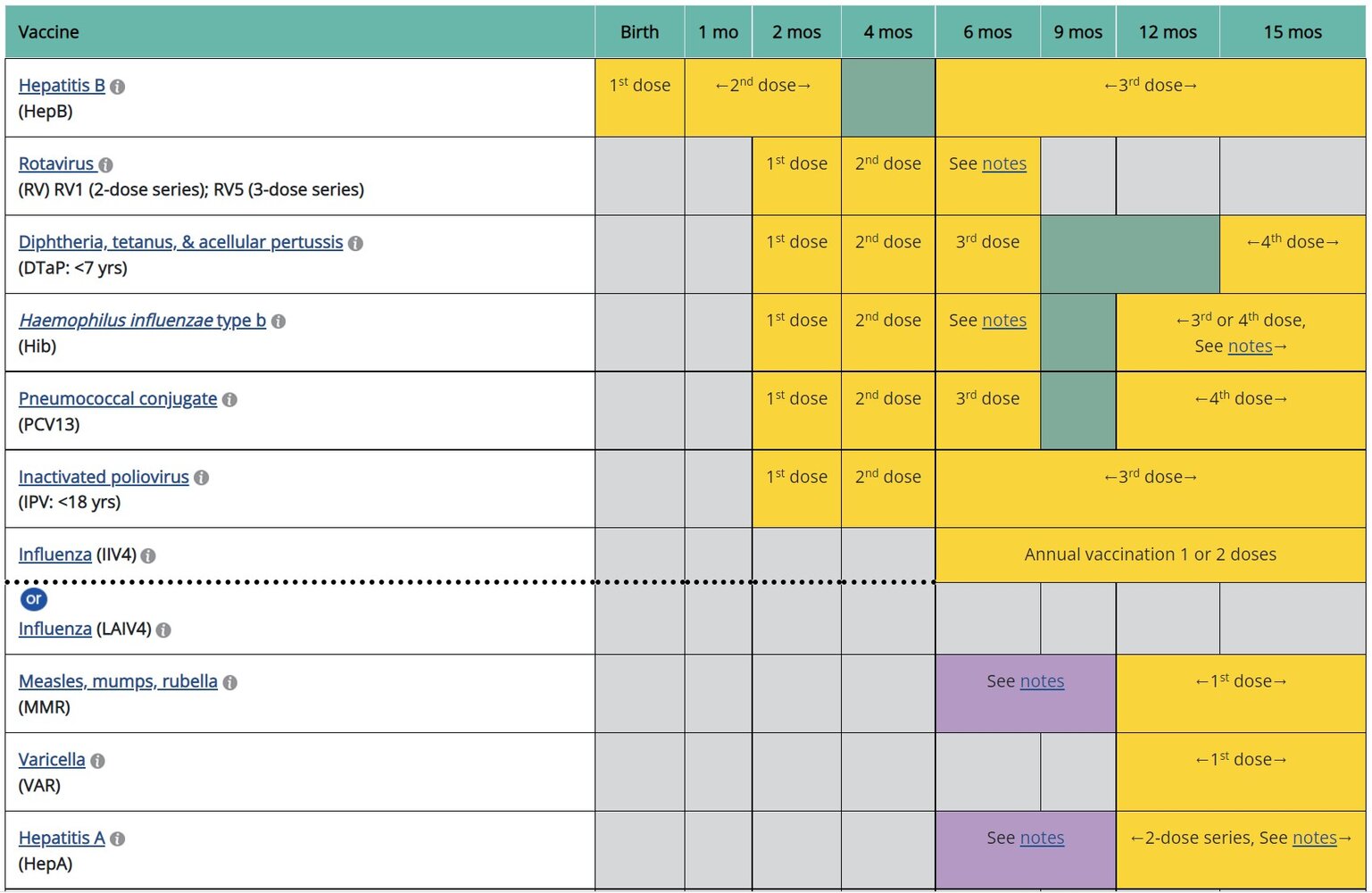
Further notes: Materials developed and hosted by the CDC and available free of charge on the CDC website. Reference to specific commercial products, manufacturers, companies, or trademarks does not constitute its endorsement or recommendation by the U.S. Government, Department of Health and Human Services, or Centers for Disease Control and Prevention.
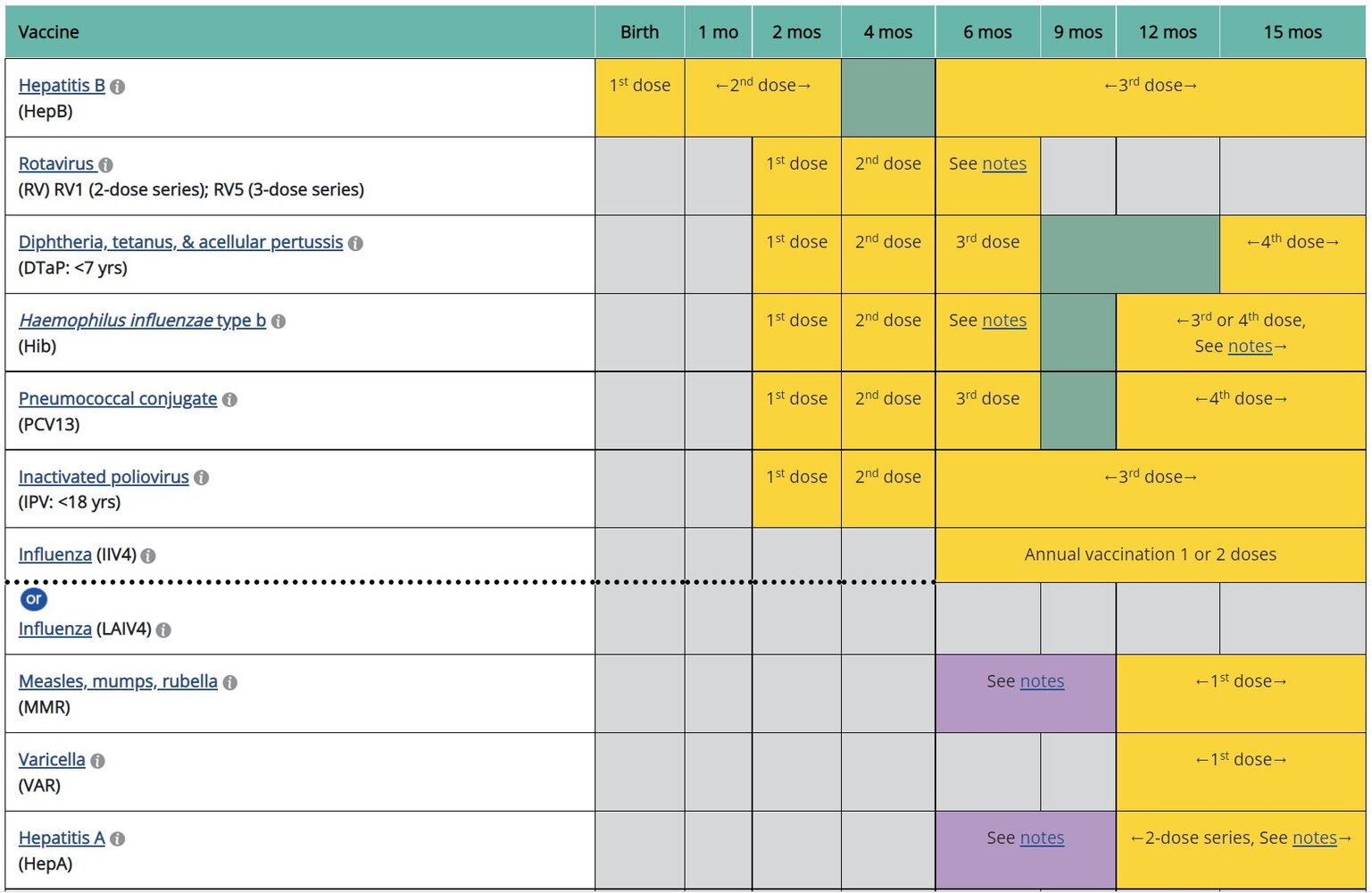
Further notes: Materials developed and hosted by the CDC and available free of charge on the CDC website. Reference to specific commercial products, manufacturers, companies, or trademarks does not constitute its endorsement or recommendation by the U.S. Government, Department of Health and Human Services, or Centers for Disease Control and Prevention.
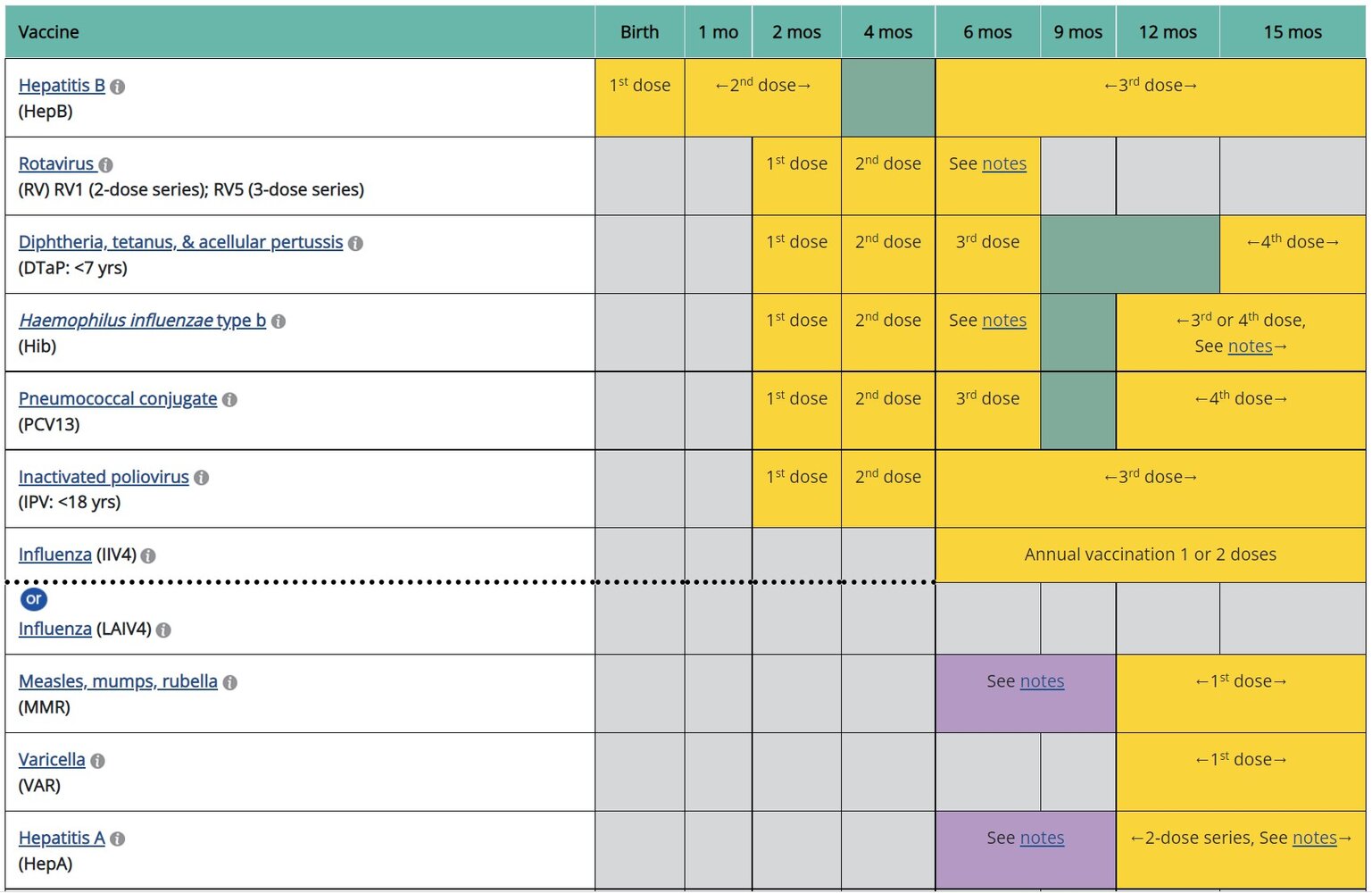
Further notes: Materials developed and hosted by the CDC and available free of charge on the CDC website. Reference to specific commercial products, manufacturers, companies, or trademarks does not constitute its endorsement or recommendation by the U.S. Government, Department of Health and Human Services, or Centers for Disease Control and Prevention.
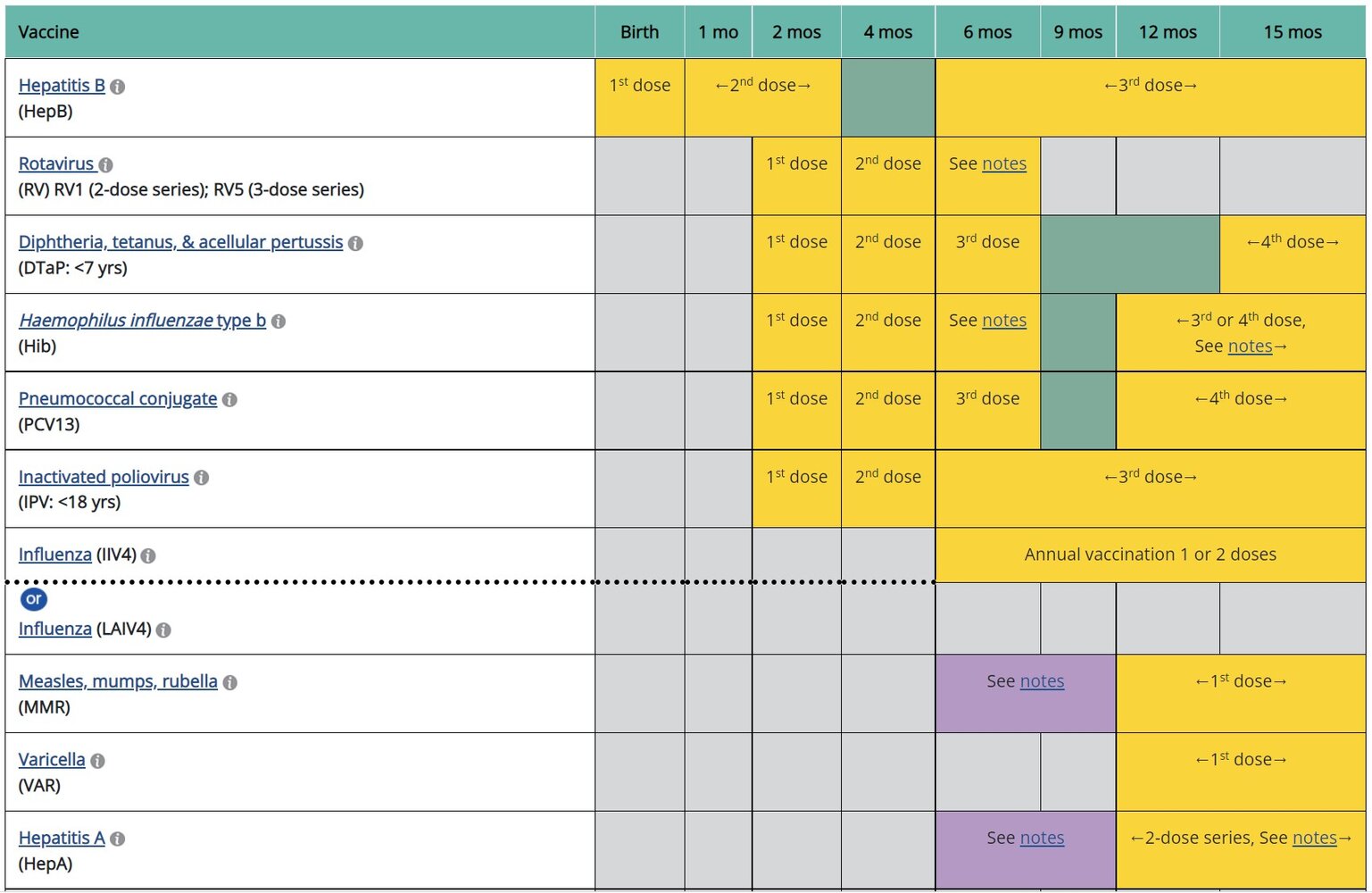
Further notes: Materials developed and hosted by the CDC and available free of charge on the CDC website. Reference to specific commercial products, manufacturers, companies, or trademarks does not constitute its endorsement or recommendation by the U.S. Government, Department of Health and Human Services, or Centers for Disease Control and Prevention.
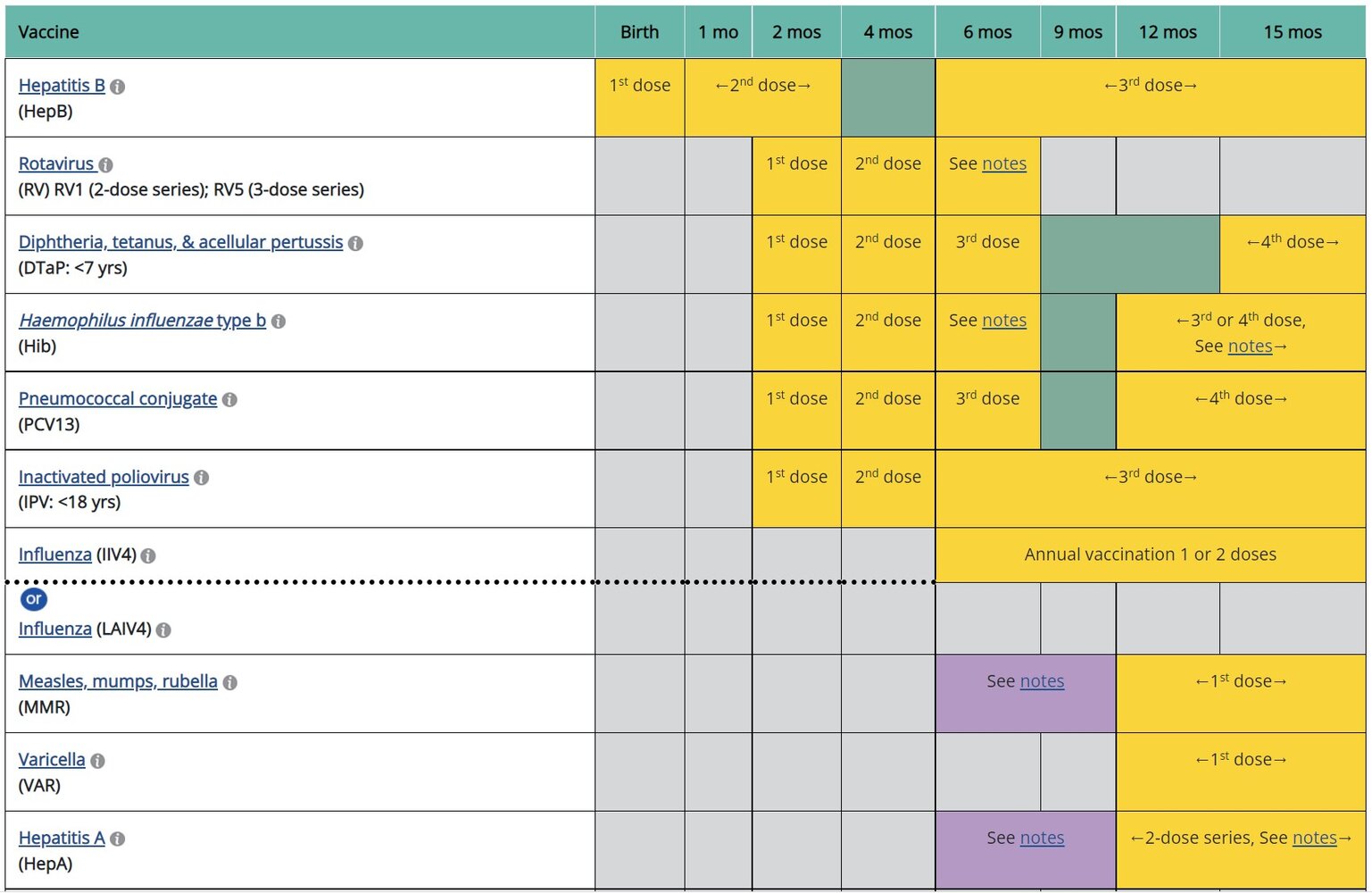
Further notes: Materials developed and hosted by the CDC and available free of charge on the CDC website. Reference to specific commercial products, manufacturers, companies, or trademarks does not constitute its endorsement or recommendation by the U.S. Government, Department of Health and Human Services, or Centers for Disease Control and Prevention.
General principles
Routine immunization [1][2][3]
- Immunizations are a vital component of primary prevention; see “Pathogens affecting unvaccinated individuals.”
- Follow the recommended ACIP immunization schedules.
- Age-appropriate vaccines should be administered at the same visit when feasible; see simultaneous vaccination and combination vaccines.
- Be aware of contraindications for each vaccine. [4]
- Identify individuals with risk factors and/or medical indications that necessitate altered immunization schedules.
- See “Immunization schedule by medical indication.”
- See the “Special patient groups” section
- Educate individuals on the disease that each vaccine aims to prevent and the possible adverse effects; provide Vaccine Information Statements.
- Report any vaccine-related adverse events to the Vaccine Adverse Event Reporting System (see “Tips and links”).
Vaccine dose is not adjusted for weight but may vary based on age.
It is US federal law to provide a Vaccine Information Statement before the administration of every vaccine. [5]
Vaccinations against multiple diseases at the same visit [1]
Simultaneous vaccination
Administration of > 1 vaccine on the same day, but in different syringes and at different anatomical locations
- May include a combination of inactivated vaccines, live attenuated vaccines, or immunoglobulins
- Most vaccines can be administered simultaneously; exceptions include:
- Pneumococcal conjugate vaccine (PCV15 or PCV20 or PCV21) and PPSV23: Do not administer simultaneously. [6]
- Pneumococcal conjugate vaccine (PCV15 or PCV20 or PCV21) and MenACWY-D: Do not administer simultaneously. [6]
If injectable or nasally administered live vaccines are not administered on the same day, they must be administered ≥ 4 weeks apart. [1]
Live oral vaccines (e.g., rotavirus vaccine) may be administered on the same day or at any interval before or after other live vaccines. [1]
Combination vaccines [1]
Combination of different vaccine components in a single product
- Preferred over simultaneous single-component vaccines, when feasible
- Examples of commonly used combination vaccines:
- DTaP-IPV-Hib
- DTaP-HepB-IPV
- DTaP-IPV-HepB-Hib
- DTaP-IPV
- MMRV [2][7]
- HepA-HepB
Timing and spacing of vaccines [1]
- Follow the ACIP recommendations for the minimum age for the first dose and minimum intervals between doses to ensure optimal protection.
- Unapproved delayed or alternate immunization schedules put individuals at risk.
Delayed or missed vaccines (undervaccination) [2][3]
- Follow recommended catch-up immunization schedules for undervaccinated individuals.
- Do not restart the immunization series from the beginning.
- Continue with the next dose in the immunization series.
Vaccines administered before the recommended minimum age or interval [1]
In general, any vaccine administered ≥ 5 days earlier than the minimum age or interval is considered invalid and needs to be repeated.
- First dose administered ≥ 5 days earlier than the recommended minimum age
- Repeat the dose when or after the individual attains the minimum recommended age.
- For live vaccines, repeat the first dose ≥ 28 days after the invalid first dose.
- Additional doses administered ≥ 5 days earlier than the recommended minimum interval
- Repeat the dose; the minimum interval restarts from when the invalid dose was administered.
Doses administered ≤ 4 days before the minimum age or interval (grace period) are considered valid. [1]
Further notes: Materials developed and hosted by the CDC and available free of charge on the CDC website. Reference to specific commercial products, manufacturers, companies, or trademarks does not constitute its endorsement or recommendation by the U.S. Government, Department of Health and Human Services, or Centers for Disease Control and Prevention.
Further notes: Materials developed and hosted by the CDC and available free of charge on the CDC website. Reference to specific commercial products, manufacturers, companies, or trademarks does not constitute its endorsement or recommendation by the U.S. Government, Department of Health and Human Services, or Centers for Disease Control and Prevention.
Further notes: Materials developed and hosted by the CDC and available free of charge on the CDC website. Reference to specific commercial products, manufacturers, companies, or trademarks does not constitute its endorsement or recommendation by the U.S. Government, Department of Health and Human Services, or Centers for Disease Control and Prevention.
ACIP immunization schedule
This table provides an overview of the ACIP immunization schedule. See the latest CDC recommendations for detailed guidance. [8][9][10]
- See also:
- Immunizations in pregnancy
- Immunizations in preterm infants
- Immunizations in men who have sex with men
- Immunizations in individuals with HIV
- Immunizations for health care personnel
- Immunizations before travel
- Contraindications for vaccination
Any mention of vaccine trade names is only for the purposes of identification and should not be considered an endorsement.
For catch-up vaccines, continue with the next dose in the immunization series. Do not restart the immunization series from the beginning. [11]
| Overview of ACIP immunization schedule [2][3] | ||||
|---|---|---|---|---|
| Routine immunization schedule | Catch-up immunization schedule and immunization schedule by medical indication | Special considerations | ||
| Respiratory syncytial virus prophylaxis and vaccination | RSV prophylaxis (children) [12] |
|
|
|
| RSV vaccine (adults) [15] |
|
|
|
|
| Hepatitis B vaccine (HepB) |
|
|
|
|
| Tetanus, diphtheria, and acellular pertussis vaccines | Diphtheria, tetanus, acellular pertussis vaccine (DTaP) |
|
|
|
| Tetanus, diphtheria, acellular pertussis vaccine (Tdap) and tetanus, diphtheria vaccine (Td) |
|
|
||
| Inactivated poliovirus vaccine (IPV) |
|
|
|
|
| Rotavirus vaccine (RV) |
|
|
|
|
| Haemophilus influenzae type b vaccine (Hib vaccine) |
|
|
|
|
|
Pneumococcal vaccines See “Tips and Links” for CDC's mobile app for pneumococcal vaccines. |
Children (PCV15, PCV20) [18][19] |
|
|
|
| Adults (PCV15, PCV20, PCV21, PPSV23) [20][21] |
|
|
||
| Hepatitis A vaccine (HepA) |
|
|
|
|
|
Measles, mumps, rubella vaccine (MMR) or Measles, mumps, rubella, varicella vaccine (MMRV) |
|
|
|
|
| Varicella vaccine (VAR) |
|
|
|
|
| Human papillomavirus 9-valent vaccine (HPV vaccine) |
|
|
|
|
| Meningococcal vaccines [26] | Meningococcal conjugate vaccines (MenACWY vaccines) |
|
|
|
| Meningococcal B vaccine (MenB vaccine) [28] |
|
|
||
|
Zoster recombinant vaccine (RZV) |
|
|
|
|
| Annual influenza vaccine [30][31] |
|
|
|
|
| COVID-19 vaccines [33] | Children 6 months to < 5 years of age |
|
|
|
| Children ≥ 5 years of age and adults |
|
|||
| Mpox vaccine [35] |
|
|
|
|
| Dengue vaccine [36] |
|
|
|
|
Unapproved, delayed, or alternate immunization schedules put individuals at risk for vaccine-preventable conditions and complications. [1]
Egg allergy is not a contraindication for any influenza vaccination. [30][38]
Further notes: Materials developed and hosted by the CDC and available free of charge on the CDC website. Reference to specific commercial products, manufacturers, companies, or trademarks does not constitute its endorsement or recommendation by the U.S. Government, Department of Health and Human Services, or Centers for Disease Control and Prevention.
Further notes: Materials developed and hosted by the CDC and available free of charge on the CDC website. Reference to specific commercial products, manufacturers, companies, or trademarks does not constitute its endorsement or recommendation by the U.S. Government, Department of Health and Human Services, or Centers for Disease Control and Prevention.
Further notes: Materials developed and hosted by the CDC and available free of charge on the CDC website. Reference to specific commercial products, manufacturers, companies, or trademarks does not constitute its endorsement or recommendation by the U.S. Government, Department of Health and Human Services, or Centers for Disease Control and Prevention.
Further notes: Materials developed and hosted by the CDC and available free of charge on the CDC website. Reference to specific commercial products, manufacturers, companies, or trademarks does not constitute its endorsement or recommendation by the U.S. Government, Department of Health and Human Services, or Centers for Disease Control and Prevention.
Further notes: Materials developed and hosted by the CDC and available free of charge on the CDC website. Reference to specific commercial products, manufacturers, companies, or trademarks does not constitute its endorsement or recommendation by the U.S. Government, Department of Health and Human Services, or Centers for Disease Control and Prevention.
Immunizations at each health maintenance or well-visit encounter
The youngest recommended age for routine immunization is shown in this table. Refer to the ACIP immunization schedule for details on age ranges, catch-up immunizations, and special considerations.
For individuals ≥ 6 months of age, recommend age-appropriate COVID-19 vaccination and yearly influenza vaccination during influenza season.
The use of combination vaccines can decrease the number of injections needed at each encounter. Combination vaccines are frequently used for the 2-month, 4-month, 6-month, and 4–6-year immunizations. They may also be used for catch-up immunizations.
| Immunizations at each health maintenance or well-visit encounter [2][3] | ||
|---|---|---|
| Newborn follow-up at 2 weeks |
|
|
| 2 months |
|
|
| 4 months |
|
|
| 6 months |
|
|
| 9 months |
|
|
| 12 months |
|
|
| 15 months |
|
|
| 18 months |
|
|
| 24, 30, and 36 months |
|
|
| 4–6 years |
|
|
| 6–10 years |
|
|
| 11 years |
|
|
| 12–15 years |
|
|
| 16 years |
|
|
| 17 years |
|
|
| Immunizations in adults | All adults |
|
| Additional immunizations in adults ≥ 50 years of age |
|
|
Further notes: Materials developed and hosted by the CDC and available free of charge on the CDC website. Reference to specific commercial products, manufacturers, companies, or trademarks does not constitute its endorsement or recommendation by the U.S. Government, Department of Health and Human Services, or Centers for Disease Control and Prevention.
Further notes: Materials developed and hosted by the CDC and available free of charge on the CDC website. Reference to specific commercial products, manufacturers, companies, or trademarks does not constitute its endorsement or recommendation by the U.S. Government, Department of Health and Human Services, or Centers for Disease Control and Prevention.
Special patient groups
- Adjustments to the routine immunization schedule are needed for certain indications.
- An overview of recommendations for vaccinating preterm infants, pregnant individuals, and those with HIV infection is detailed in this section.
- See also “Immunizations before travel.”
- See “Immunization schedule by medical indication” and the latest CDC recommendations for adjustments in:
- Patients with any of the following:
- Altered immunocompetence (e.g., those with HIV, AIDS, asplenia, or complement deficiencies; those taking immunosuppressants) [39]
- End-stage renal disease and those receiving hemodialysis
- Heart disease
- Lung disease
- Chronic liver disease, alcohol use disorder
- Diabetes
- Health care personnel
- Men who have sex with men
- Patients with any of the following:
Immunizations in individuals with HIV [2][3][40][41]
- Inactivated vaccines are generally safe.
- If feasible, vaccination of individuals with HIV should be done before they become immunosuppressed.
- The immune response may be diminished if a vaccine is administered during a period of intense immunosuppression.
- See the latest CDC recommendations for details.
Exceptions to the routine immunization schedule
The routine ACIP immunization schedule is applicable to individuals with HIV with the following exceptions:
-
Varicella vaccine, MMR vaccine, and dengue vaccines
- Contraindicated in individuals with CD4 percentage < 15% or CD4 count < 200/mm3 or an AIDS-defining condition.
- In individuals with CD4 percentage ≥ 15% and CD4 count ≥ 200/mm3 for ≥ 6 months:
- A 2-dose series of MMR is recommended for individuals with no evidence of immunity to MMR.
- Use shared-decision making to determine the need and schedule for the varicella vaccine (in adults) and dengue vaccine.
- The combination MMRV vaccine is contraindicated in all individuals with HIV.
-
Influenza vaccine
- Live attenuated influenza vaccine is contraindicated in all individuals with HIV.
- Inactive influenza vaccine should be given instead.
-
RZV [42]
- 2 doses, 2–6 months apart (regardless of previous history of shingles)
- Minimum age for first dose: ≥ 19 years of age
- HPV vaccine: Use a 3-dose series regardless of age at first immunization.
- Rotavirus vaccine: Use with caution in infants.
-
Refer to the latest CDC recommendations for adjustments to the immunization schedule for: [40][43]
- Pneumococcal vaccines
- MenACWY vaccine [26]
- Hib vaccine
- COVID-19 vaccine
- RSV vaccine
- Mpox vaccine
- HPV vaccine
- HepA vaccine
- HepB vaccine
Live vaccines are contraindicated in individuals with a CD4 count < 200/mm3 or CD4 percentage < 15%. Certain live vaccines (e.g., live attenuated influenza vaccine, MMRV) are contraindicated in all individuals with HIV, regardless of CD4 count and percentage. [2][3][43]
The efficacy of immunizations is reduced in individuals with HIV as a result of impaired immune function. [44]
Immunizations in preterm infants [45]
- Premature infants weighing < 2,000 g (< 4 lb 5 oz) at birth should receive the first HepB dose at 1 month or at hospital discharge, whichever is first. [2]
- Preterm infants should receive all other recommended vaccinations according to chronological age unless contraindicated.
Immunizations in pregnancy and lactation [2][46][47]
Prior to pregnancy [46][48]
- Recommend all routine age-appropriate immunizations.
-
Annually assess immunization status for MMR, varicella, HepB, and Tdap ; [46][48][49]
- Nonimmune women should receive appropriate vaccinations. [46]
- If live vaccines are administered, advise individuals to avoid conceiving for 1–3 months. [46][50][51]
- Recommend current COVID-19 vaccination. [46]
- Recommend influenza vaccination (especially if pregnancy is expected during flu season). [46]
- Smallpox vaccine is contraindicated in women who are trying to conceive. [46]
During pregnancy [2][46][47]
-
For all pregnant individuals, recommend:
- Tdap vaccine once every pregnancy, preferably at 27–36 weeks' gestation [46][47]
- A single dose of RSV vaccine (ABRYSVO) only if the following criteria are met: [2][52]
- RSV vaccine not received during a prior pregnancy
- Gestational age between 32 weeks and 36 6/7 weeks during RSV season
- Inactivated influenza vaccine ; (IIV3 or RIV3) during flu season (safe in all trimesters) [46][53]
- Current COVID-19 vaccination if not up to date
- HepB vaccine if not previously vaccinated [2]
- Consider additional immunizations based on risk factors, e.g.:
- High-risk for HAV infection: HepA
- High-risk for invasive meningococcal disease: meningococcal vaccines
- Increased risk for exposure to poliovirus: IPV
- Certain travel vaccines
- Avoid contraindicated vaccines.
- Live attenuated vaccines are contraindicated as they carry a theoretical risk of fetal infection (e.g., congenital rubella syndrome; , congenital varicella syndrome). [24][46][47][48]
- Vaccines lacking safety data in pregnant individuals: HPV vaccine, RZV, PreHevbrio HepB vaccine [2][47]
MMR vaccine, varicella vaccine, HPV vaccine, and live attenuated influenza vaccine are not recommended during pregnancy. [46]
After pregnancy and/or during lactation [46]
Lactation is not a contraindication for most vaccines.
- If live attenuated vaccines were deferred during pregnancy, administer them postpartum.
- Contraindicated: smallpox vaccine
- Avoid the yellow fever vaccine unless the benefits outweigh the risks.
Women who lack immunity to rubella and/or varicella on prenatal screening (see “Prenatal care”) should be vaccinated postpartum.
Always consider if the benefits of immunization outweigh the risks during pregnancy and lactation; check contraindications. [48]
Immunizations for health care personnel (HCP) [54][55]
The following immunizations are an essential part of minimizing the risk of occupational exposure to and transmission of vaccine-preventable diseases in HCP.
Vaccine recommendations for all HCP [2][55]
- All HCP should receive routine and catch-up vaccinations according to the ACIP immunization schedule.
- In HCP who do not have evidence of pathogen-specific immunity , the following vaccines are recommended:
- HepB vaccine; followed by post-vaccination serology 1–2 months after the last dose
- Annual influenza vaccine [31]
- MMR vaccine
- Varicella vaccine
- One-time Tdap (if not previously administered); followed by Tdap or Td boosters every 10 years
- COVID-19 vaccines
Additional vaccines in high-risk groups [2][54]
- Individuals with altered immunocompetence [2][54]
- Additional vaccinations and/or boosters may be required, including:
- Pneumococcal vaccine
- Meningococcal vaccines
- Hib vaccine
- See “Immunization schedule by medical indication” for details.
- Additional vaccinations and/or boosters may be required, including:
- HCP who work with individuals at risk for HAV infection : HepA vaccine is recommended.
- Laboratory workers who handle highly infectious pathogens: Additional vaccinations and/or boosters against specific pathogens are recommended.
- HCP planning travel abroad: Relevant travel vaccinations should be completed prior to travel.
Verify immunization requirements with the local occupational health department.
Immunizations in men who have sex with men [2][56]
- Compared to other forms of unprotected sex, unprotected anal sex has the highest risk of HIV transmission. [56][57]
- Routine and catch-up vaccinations should be given according to the ACIP immunization schedule, especially:
- HepA vaccine and HepB vaccine
- HPV vaccine
- Individuals with additional risk factors, e.g., immunosuppression due to HIV
- Adjustments to the immunization schedule may be required.
- See “Immunization schedule by medical indication” for details.
Further notes: Materials developed and hosted by the CDC and available free of charge on the CDC website. Reference to specific commercial products, manufacturers, companies, or trademarks does not constitute its endorsement or recommendation by the U.S. Government, Department of Health and Human Services, or Centers for Disease Control and Prevention.
Further notes: Materials developed and hosted by the CDC and available free of charge on the CDC website. Reference to specific commercial products, manufacturers, companies, or trademarks does not constitute its endorsement or recommendation by the U.S. Government, Department of Health and Human Services, or Centers for Disease Control and Prevention.
Related One-Minute Telegram
- One-Minute Telegram 143-2026-3/3: Vax-ing and waning: the rise and fall of newborn HBV vaccination
- One-Minute Telegram 128-2025-1/3: No observed link between aluminum-adsorbed vaccines and chronic childhood diseases
Interested in the newest medical research, distilled down to just one minute? Sign up for the One-Minute Telegram in “Tips and links” below.
External Resources
- Sign up for the One-Minute Telegram
- CDC Vaccine Schedules Mobile Application
- CDC Pneumococcal Vaccine Recommendations Website
- CDC Mobile Application to Determine Appropriate Pneumococcal Vaccine Administration
- CDC Child & Adolescent Immunization Schedule
- CDC Adult Immunization Schedule
- ACIP Recommendations on Immunizations for Health Care Personnel
- CDC Pretravel Vaccination According to Destination
- CDC Travel Health Kits
- Vaccine Adverse Event Reporting System
References
- Wodi AP, Issa AN, Moser CA, Cineas S. "Advisory Committee on Immunization Practices Recommended Immunization Schedule for Adults Aged 19 Years or Older — United States, 2025". MMWR Morb Mortal Wkly Rep. 74(2). :30-33. (2025)
- Issa AN, Wodi AP, Moser CA, Cineas S. "Advisory Committee on Immunization Practices Recommended Immunization Schedule for Children and Adolescents Aged 18 Years or Younger — United States, 2025". MMWR Morb Mortal Wkly Rep. 74(2). :26-29. (2025)
- O’Leary ST, Campbell JD, et al. "Recommended Childhood and Adolescent Immunization Schedule: United States, 2025: Policy Statement". Pediatrics. 155(2). (2025)
- "2024 CDC Recommended Child and Adolescent Immunization Schedule for ages 18 years or younger". https://web.archive.org/web/20240403173747/https://www.cdc.gov/vaccines/schedules/downloads/child/0-18yrs-child-combined-schedule.pdf. [2023-11-16]
- "CDC/ACIP Vaccines & Immunizations: Immunization Schedules". https://web.archive.org/web/20250318202018/https://www.cdc.gov/vaccines/hcp/imz-schedules/index.html. [2024-11-21]
- "CDC/ACIP Vaccines & Immunizations: Catch-up Immunization Schedule for Children and Adolescents". https://web.archive.org/web/20250318202347/https://www.cdc.gov/vaccines/hcp/imz-schedules/child-adolescent-catch-up.html. [2024-11-21]
- "ACIP and AAP Recommendations for the Use of the Monoclonal Antibody Nirsevimab for the Prevention of RSV Disease". https://web.archive.org/web/20230823135855/https://publications.aap.org/redbook/resources/25379/ACIP-and-AAP-Recommendations-for-Nirsevimab?searchresult=1?autologincheck=redirected
- O’Leary ST, Yonts AB, Gaviria-Agudelo C, Kimberlin DW, Paulsen GC. "Summer 2023 ACIP Update: RSV Prevention and Updated Recommendations on Other Vaccines". Pediatrics. (2023)
- Fleming-Dutra KE, Jones JM, Roper LE, et al. "Use of the Pfizer Respiratory Syncytial Virus Vaccine During Pregnancy for the Prevention of Respiratory Syncytial Virus–Associated Lower Respiratory Tract Disease in Infants: Recommendations of the Advisory Committee on Immunization Practices — United States, 2023". MMWR Morb Mortal Wkly Rep. 72(41). :1115-1122. (2023)
- Britton A, Roper LE, Kotton CN, et al. "Use of Respiratory Syncytial Virus Vaccines in Adults Aged ≥60 Years: Updated Recommendations of the Advisory Committee on Immunization Practices — United States, 2024". MMWR Morb Mortal Wkly Rep. 73(32). :696-702. (2024)
- "About Young Children with a Contraindication to Pertussis-Containing Vaccines". https://web.archive.org/web/20250326164025/https://www.cdc.gov/pertussis/hcp/vaccine-recommendations/td-offlabel.html. [2024-06-26]
- Galiatsatos P, Kachalia A, Belcher HME, et al. "Health equity and distributive justice considerations in critical care resource allocation". Lancet Respir Med. 8(8). :758-760. (2020)
- MMWR Office. "ACIP Updates: Recommendations for Use of 20-Valent Pneumococcal Conjugate Vaccine in Children ― United States, 2023". MMWR Morb Mortal Wkly Rep. 72(39). :1072. (2023)
- "Catch-Up Guidance for Healthy Children 4 Months through 4 Years of Age, Pneumococcal Conjugate Vaccine: PCV". https://web.archive.org/web/20240621150958/https://www.cdc.gov/vaccines/schedules/downloads/child/job-aids/pneumococcal.pdf. [2023-12-01]
- "Expanded Recommendations for Use of Pneumococcal Conjugate Vaccines Among Adults Aged ≥50 Years: Recommendations of the Advisory Committee on Immunization Practices — United States, 2024". https://web.archive.org/web/20250114172817/https://www.cdc.gov/mmwr/volumes/74/wr/mm7401a1.htm. [2025-01-09]
- Kobayashi M, Farrar JL, Gierke R, et al. "Use of 15-Valent Pneumococcal Conjugate Vaccine and 20-Valent Pneumococcal Conjugate Vaccine Among U.S. Adults: Updated Recommendations of the Advisory Committee on Immunization Practices — United States, 2022". MMWR Morb Mortal Wkly Rep. 71(4). :109-117. (2022)
- "Centers for Disease Control and Prevention (CDC) MMRV Vaccine and Febrile Seizures". https://web.archive.org/web/20220617000038/https://www.cdc.gov/vaccinesafety/vaccines/mmrv/mmrv-febrile-seizures.html. [2020-06-04]
- "Prevention of Measles, Rubella, Congenital Rubella Syndrome, and Mumps, 2013: Summary Recommendations of the Advisory Committee on Immunization Practices (ACIP)". https://web.archive.org/web/20241226075912/https://www.cdc.gov/mmwr/preview/mmwrhtml/rr6204a1.htm. [2013-06-14]
- "CDC/ACIP Vaccines & Immunizations: Routine Measles, Mumps, and Rubella Vaccination". https://web.archive.org/web/20250318195052/https://www.cdc.gov/vaccines/vpd/mmr/hcp/recommendations.html. [2021-01-26]
- Committee on Infectious Disease, American Academy of Pediatrics. "Red Book: 2024-2027 Report of the Committee on Infectious Diseases, 33rd Edition". American Academy of Pediatrics. (2024). ISBN: 9781610027373
- Marin M, Marlow M, Moore KL, Patel M. "Recommendation of the Advisory Committee on Immunization Practices for Use of a Third Dose of Mumps Virus–Containing Vaccine in Persons at Increased Risk for Mumps During an Outbreak". MMWR Morb Mortal Wkly Rep. 67(1). :33-38. (2018)
- Mbaeyi SA, Bozio CH, Duffy J, et al. "Meningococcal Vaccination: Recommendations of the Advisory Committee on Immunization Practices, United States, 2020". MMWR Recomm Rep. 69(9). :1-41. (2020)
- Collins JP, Crowe SJ, Ortega-Sanchez IR, et al. "Use of the Pfizer Pentavalent Meningococcal Vaccine Among Persons Aged ≥10 Years: Recommendations of the Advisory Committee on Immunization Practices ― United States, 2023". MMWR Morb Mortal Wkly Rep. 73(15). :345-350. (2024)
- Schillie S, Loehr J, Chen WH, et al. "New Dosing Interval and Schedule for the Bexsero MenB-4C Vaccine: Updated Recommendations of the Advisory Committee on Immunization Practices — United States, October 2024". MMWR Morb Mortal Wkly Rep. 73(49). :1124-1128. (2024)
- Anderson TC, Masters NB, Guo A, et al. "Use of Recombinant Zoster Vaccine in Immunocompromised Adults Aged ≥19 Years: Recommendations of the Advisory Committee on Immunization Practices — United States, 2022". MMWR Morb Mortal Wkly Rep. 71(3). :80-84. (2022)
- Grohskopf LA, Ferdinands JM, Blanton LH, Broder KR, Loehr J. "Prevention and Control of Seasonal Influenza with Vaccines: Recommendations of the Advisory Committee on Immunization Practices — United States, 2024–25 Influenza Season". MMWR Recomm Rep. 73(5). :1-25. (2024)
- American Academy of Pediatrics (AAP). "Recommendations for Prevention and Control of Influenza in Children, 2025–2026: Policy Statement". Pediatrics. (2025)
- "Different Types of Flu Vaccines". https://www.cdc.gov/flu/vaccine-types/index.html. [2024-11-03]
- Panagiotakopoulos L, Moulia DL, Godfrey M, et al. "Use of COVID-19 Vaccines for Persons Aged ≥6 Months: Recommendations of the Advisory Committee on Immunization Practices — United States, 2024–2025". MMWR Morb Mortal Wkly Rep. 73(37). (2024)
- "COVID-19 Vaccines for Moderately to Severely Immunocompromised People". https://web.archive.org/web/20240907000512/https://www.cdc.gov/covid/vaccines/immunocompromised-people.html. [2024-08-30]
- "Interim Clinical Considerations for Use of JYNNEOS Vaccine for Mpox Prevention in the United States". https://web.archive.org/web/20240918001131/https://www.cdc.gov/poxvirus/mpox/clinicians/vaccines/vaccine-considerations.html. [2024-08-26]
- Paz-Bailey G, Adams L, Wong JM, et al. "Dengue Vaccine: Recommendations of the Advisory Committee on Immunization Practices, United States, 2021". MMWR Recomm Rep. 70(6). :1-16. (2021)
- "Dengue: Lab Testing Requirememts". https://web.archive.org/web/20230331130723/https://www.cdc.gov/dengue/vaccine/hcp/testing.html. [2022-05-10]
- "Vaccine Recommendations and Guidelines of the ACIP. Timing and Spacing of Immunobiologics. General Best Practice Guidelines for Immunization: Best Practices Guidance of the Advisory Committee on Immunization Practices (ACIP)". https://web.archive.org/web/20240910152618/https://www.cdc.gov/vaccines/hcp/acip-recs/general-recs/timing.html. [2022-09-08]
- Bouhuys M, Lexmond WS, van Rheenen PF. "Pediatric Inflammatory Bowel Disease". Pediatrics. 151(1). (2022)
- "Vaccine Recommendations and Guidelines of the ACIP - Contraindications and Precautions". https://web.archive.org/web/20170913010854/https://www.cdc.gov/vaccines/hcp/acip-recs/general-recs/contraindications.html. [2017-01-30]
- "Vaccine Information Statements (VISs). Facts About VISs". https://web.archive.org/web/20221104143955/https://www.cdc.gov/vaccines/hcp/vis/about/facts-vis.html. [2021-12-17]
- "Administering Pneumococcal Vaccines". https://web.archive.org/web/20240620155700/https://www.cdc.gov/vaccines/vpd/pneumo/hcp/administering-vaccine.html. [2023-09-21]
- "Vaccine Recommendations and Guidelines of the ACIP: Altered Immunocompetence". https://web.archive.org/web/20221028174117/https://www.cdc.gov/vaccines/hcp/acip-recs/general-recs/immunocompetence.html. [2022-09-08]
- "Vaccine Recommendations and Guidelines of the ACIP: Altered Immunocompetence". https://web.archive.org/web/20230317144823/https://www.cdc.gov/vaccines/hcp/acip-recs/general-recs/immunocompetence.html. [2023-02-10]
- Horberg M, Thompson M, Agwu A, et al. "Primary Care Guidance for Providers Who Care for Persons With Human Immunodeficiency Virus: 2024 Update by the HIV Medicine Association of the Infectious Diseases Society of America". Clin Infect Dis. (2024)
- "Clinical Considerations for Use of Recombinant Zoster Vaccine (RZV, Shingrix) in Immunocompromised Adults Aged ≥19 Years". https://www.cdc.gov/shingles/vaccination/immunocompromised-adults.html. [2022-01-20]
- "Prevention and Treatment of Opportunistic Infections in Adults and Adolescents With HIV 2024". https://web.archive.org/web/20250409091555/https://clinicalinfo.hiv.gov/en/guidelines/hiv-clinical-guidelines-adult-and-adolescent-opportunistic-infections/immunizations. [2024-12-16]
- Kerneis S, Launay O, Turbelin C, et al. "Long-term Immune Responses to Vaccination in HIV-Infected Patients: A Systematic Review and Meta-Analysis". Clin Infect Dis. 58(8). :1130-1139. (2014)
- "CDC Vaccines and Immunizations: Special situations". https://www.cdc.gov/vaccines/hcp/imz-best-practices/special-situations.html. [2023-02-10]
- "Guidelines for Vaccinating Pregnant Women". https://web.archive.org/web/20250326184834/https://www.cdc.gov/vaccines-pregnancy/hcp/vaccination-guidelines/index.html. [2024-07-12]
- Sur DKC, Chande ND. "Immunizations in Pregnancy: Updated Recommendations". Am Fam Physician. 102(4). :205-206. (2020)
- ACOG. "ACOG Committee Opinion No. 762: Prepregnancy Counseling". Obstet Gynecol. 133(1). :e78-e89. (2019)
- Johnson K, Posner SF, Biermann J, et al. "Recommendations to improve preconception health and health care--United States. A report of the CDC/ATSDR Preconception Care Work Group and the Select Panel on Preconception Care.". MMWR. Recommendations and reports : Morbidity and mortality weekly report. Recommendations and reports. 55(RR-6). :1-23. (2006)
- Committee on Practice Bulletins. "Practice Bulletin No. 151: Cytomegalovirus, Parvovirus B19, Varicella Zoster, and Toxoplasmosis in Pregnancy". Obstetrics & Gynecology. 125(6). :1510-1525. (2015)
- Marin M, Güris D, Chaves SS, et al. "Prevention of varicella: recommendations of the Advisory Committee on Immunization Practices (ACIP)". MMWR Recomm Rep. 56(RR-4). :1-40. (2007)
- "FDA Approves First Vaccine for Pregnant Individuals to Prevent RSV in Infants". https://web.archive.org/web/20230822052005/https://www.fda.gov/news-events/press-announcements/fda-approves-first-vaccine-pregnant-individuals-prevent-rsv-infants
- Ellington S, Olson CK. "Safety of mRNA COVID-19 vaccines during pregnancy". Lancet Infect Dis. (2022)
- Advisory Committee on Immunization Practices., Centers for Disease Control and Prevention (CDC). "Immunization of health-care personnel: recommendations of the Advisory Committee on Immunization Practices (ACIP)". MMWR Recomm Rep. 60(RR-7). :1-45. (2011)
- "Recommended Vaccines for Healthcare Workers". https://web.archive.org/web/20230421184127/https://www.cdc.gov/vaccines/adults/rec-vac/hcw.html. [2016-05-02]
- "Gay and Bisexual Men's Health For Your Health: Recommendations for A Healthier You". https://web.archive.org/web/20230421190704/https://www.cdc.gov/msmhealth/for-your-health.htm. [2022-09-16]
- "HIV Transmission - Centers for Disease Control and Prevention". https://www.cdc.gov/hiv/basics/transmission.html#:~:text=Most%20people%20who%20get%20HIV,can%20help%20prevent%20HIV%20transmission.. [2020-10-28]