Summary

This article provides an overview of the most common thyroid disorders (hypothyroidism and hyperthyroidism) and thyroid function testing.

For more information on specific conditions, see the articles on “Hypothyroidism,” "Hyperthyroidism and thyrotoxicosis,” “Thyroid nodules,” and “Thyroid cancer.”

Overview of thyroid-related disorders

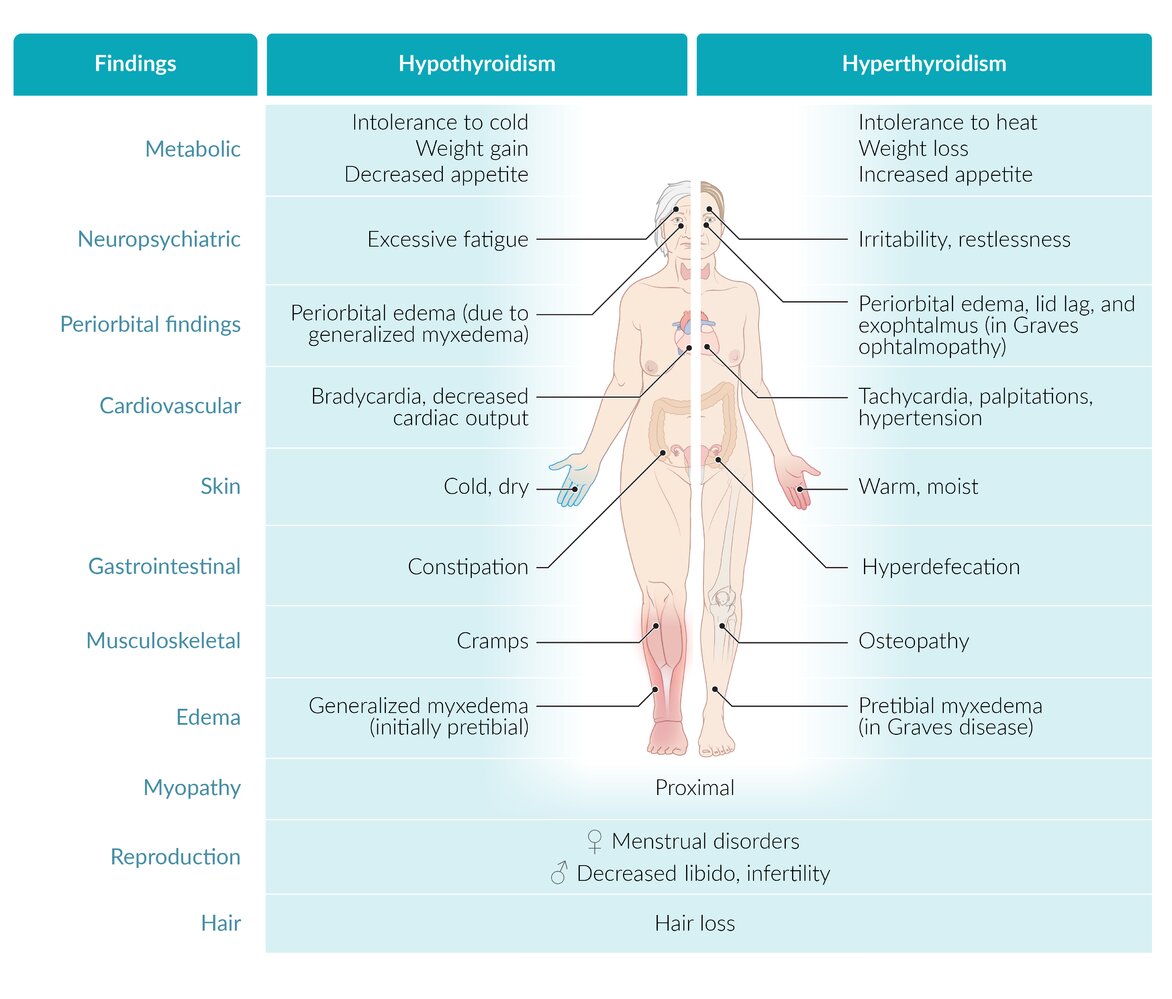
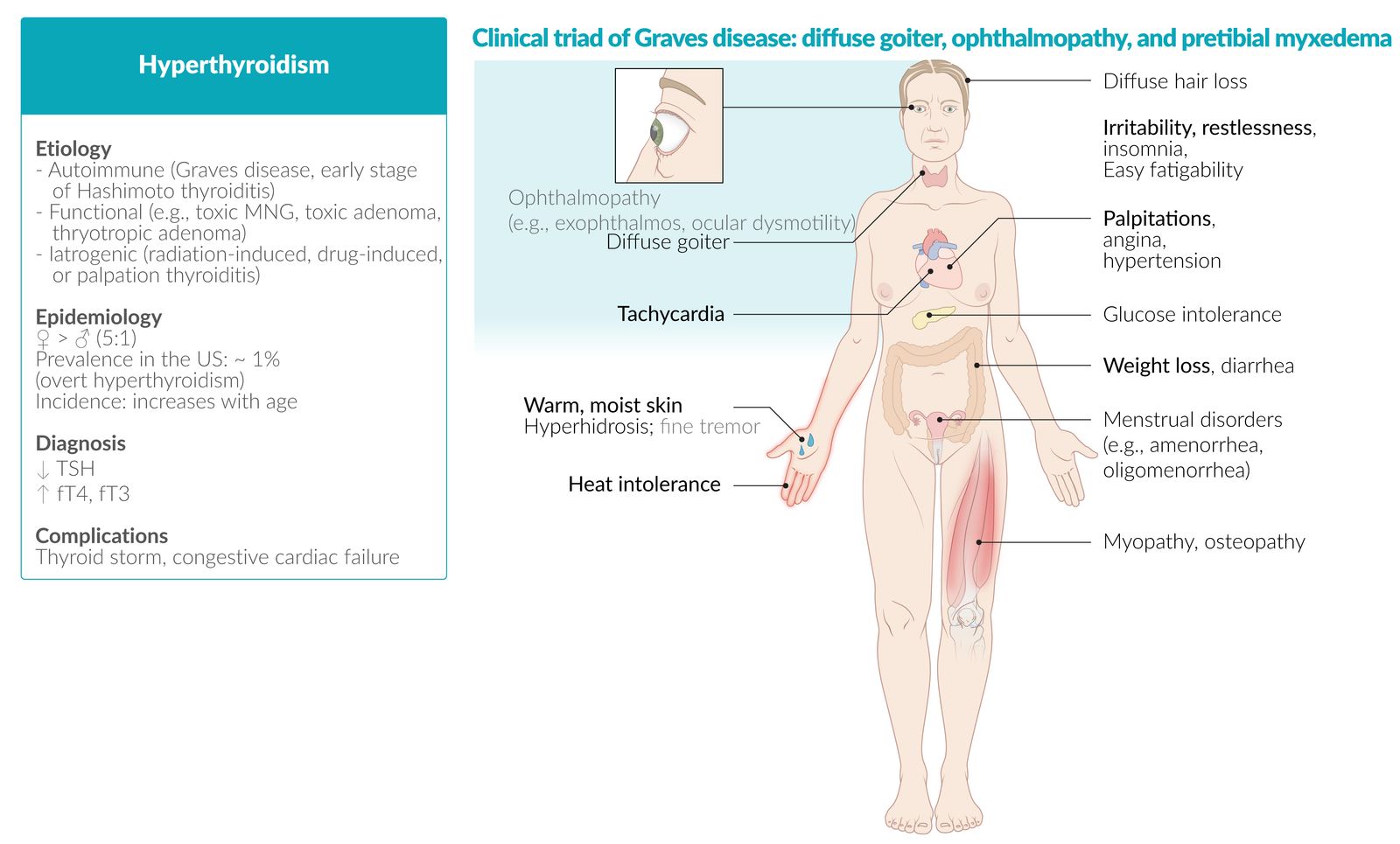
Overview of clinical features in thyroid-related disorders
Hypothyroidism Hyperthyroidism
Ocular
  • Periorbital edema
  • Lid lag
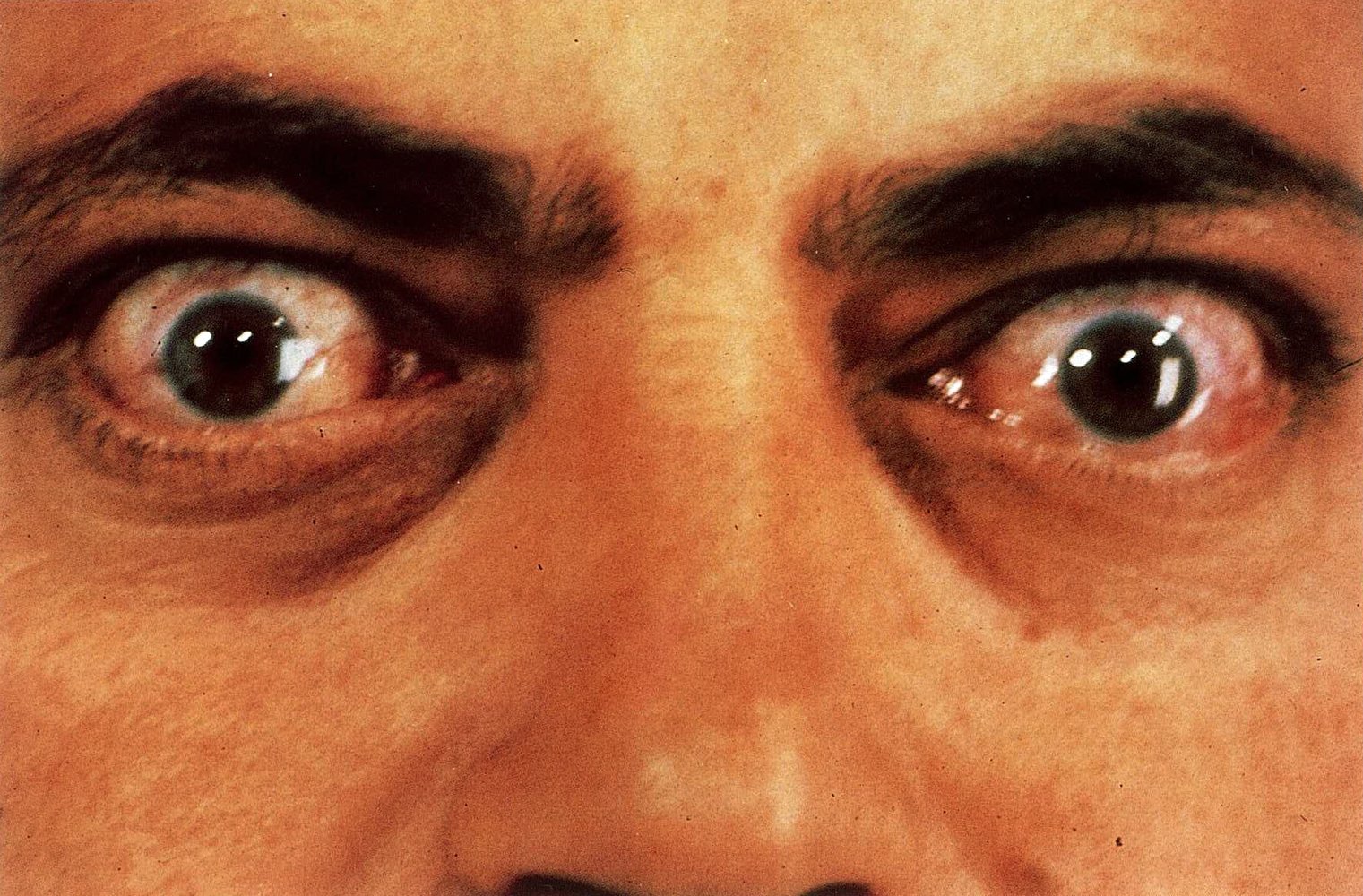
  • Lid retraction (“staring look”)
  • Graves ophthalmopathy (exophthalmos, periorbital edema)
Vocal
  • Hoarse voice, difficulty articulating words
  • Tremulous voice
Dermatological
  • Cold, dry skin
  • Decreased sweating
  • Puffy appearance
  • Pretibial edema
  • Coarse hair
  • Hair loss
  • Brittle nails
  • Warm, moist skin
  • Excessive sweating
  • Infiltrative dermopathy, especially in the pretibial area (pretibial myxedema)
  • Fine hair
  • Diffuse hair loss
  • Onycholysis
Thyroid
  • Goiter (in Hashimoto thyroiditis)
  • Atrophic thyroid (in atrophic thyroiditis)
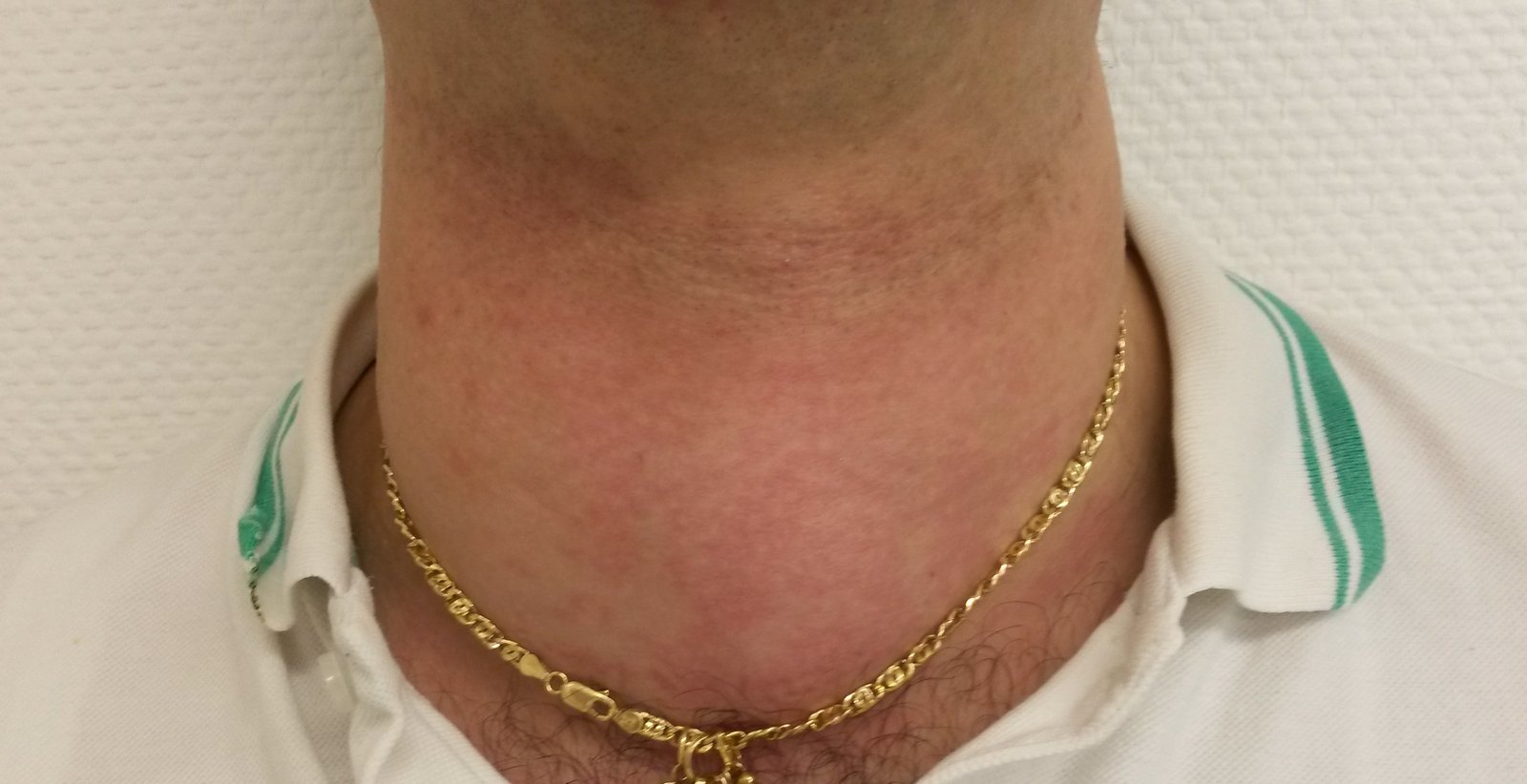
  • Diffuse, smooth, nontender goiter, often with audible bruit (in Graves disease)
Metabolic
  • Cold intolerance
  • Fatigue, decreased physical activity
  • Weight gain (despite decreased appetite)
  • Heat intolerance
  • Weakness, fatigue
  • Weight loss (despite increased appetite)
Cardiovascular
  • Bradycardia
  • Myxedematous heart disease (dilated cardiomyopathy, bradycardia, dyspnea)
  • Decreased cardiac output
  • Tachycardia
  • Palpitations, irregular pulse
  • Hypertension with widened pulse pressure
    • Increased systolic pressure
    • Decreased diastolic pressure
  • Abnormal heart rhythms (e.g., atrial fibrillation)
  • Chest pain
Musculoskeletal
  • Hypothyroid myopathy (proximal muscle weakness with elevated creatine kinase levels)
  • Entrapment syndromes (e.g., carpal tunnel syndrome)
  • Myoedema
  • Hyperthyroid myopathy (proximal muscle weakness with normal creatinine kinase levels)
  • Osteopathy (osteoporosis)
Gastrointestinal
  • Constipation
  • Frequent bowel movements (due to intestinal hypermotility)
Reproductive
  • Abnormal menstrual cycle (secondary amenorrhea or menorrhagia)
  • Galactorrhea
  • Decreased libido, erectile dysfunction, delayed ejaculation, and infertility in men
  • ♀: oligo/amenorrhoea, anovulatory infertility, dysfunctional uterine bleeding
  • ♂: gynecomastia, decreased libido, infertility, erectile dysfunction
Neuropsychiatric
  • Impaired cognition (concentration, memory)
  • Somnolence
  • Depression
  • Hyporeflexia
  • Woltman sign
  • Anxiety
  • Restlessness
  • Insomnia
  • Tremulousness (e.g., fine tremor in outstretched fingers)
  • Hyperreflexia

For further information, see “Hypothyroidism” and "Hyperthyroidism and thyrotoxicosis.”

Thyroid function tests

Overview of thyroid function tests in thyroid disorders
Etiology Thyroid function tests
TSH level Free T4 Free T3
Overt hypothyroidism Primary hypothyroidism
  • Hashimoto thyroiditis (most common cause)
  • Iatrogenic (e.g., following thyroidectomy or radioiodine therapy)
  • Antithyroid medication (e.g., amiodarone, lithium)
  • Transient hypothyroidism (e.g., silent thyroiditis, subacute granulomatous thyroiditis, postpartum thyroiditis)
Secondary hypothyroidism
  • Pituitary disorders (e.g., pituitary adenoma)
  • Infiltrative diseases
  • Iatrogenic (e.g., following pituitary surgery)
Tertiary hypothyroidism
  • Hypothalamic disorders
Subclinical hypothyroidism
  • Asymptomatic
  • Same etiology as primary hypothyroidism
  • Mildly ↑
  • Normal
Euthyroid sick syndrome Low T3 syndrome
  • Occurs in severe illness or severe physical stress (most common in intensive care patients)
  • Normal
  • Normal
Low T3 low T4 syndrome
Primary hyperthyroidism
  • Graves disease
  • Toxic MNG
  • Toxic adenoma (see “Thyroid nodules” and “Thyroid cancer”)
  • Postpartum thyroiditis
  • Subacute granulomatous thyroiditis (de Quervain thyroiditis)
Secondary hyperthyroidism
  • Thyrotropic adenoma
  • Normal/↑
Subclinical hyperthyroidism
  • Same etiology as primary hyperthyroidism
  • Normal

For further information, see “Diagnostics” in “Hypothyroidism” and “Overview” in "Hyperthyroidism and thyrotoxicosis.”